


The offer is signed. The start date is set. And before that person walks in the door, or logs on from their home office, the welcome kit is the first physical signal of what kind of company they’ve just joined.
Get it right, and it accelerates belonging. Get it wrong, or worse, have it arrive after they’ve already started, and that early momentum is gone before it began.
For an HR team onboarding 30 to 100 people a month, the challenge isn’t designing one great kit. The challenge is delivering that same experience consistently, across geographies, roles, and office locations, without the program becoming a part-time logistics job for your team.
The goal isn’t a box of stuff. It’s a repeatable system that makes every new hire feel valued and prepared, on day one, every time.
Is a New Employee Welcome Kit Useful For Your Company?
A new employee welcome kit serves as an introductory chapter of an employee’s journey with your company. It’s like blending in a warm welcome with your employee orientation to lay the foundation for a positive work environment. The welcome kit can include essentials like:
- A welcome letter.
- An employee handbook detailing company policies and benefits.
- A dash of company swag to create immediate connection and pride in the company brand.
From my experience, welcome kits play a crucial role in making new hires feel genuinely valued and welcomed from day one. They can also serve as a tangible expression of your company’s culture and the value you place on team members. So, adding high-quality, practical merchandise like custom notebooks or eco-friendly merch, can further enhance your new hire’s onboarding experience.
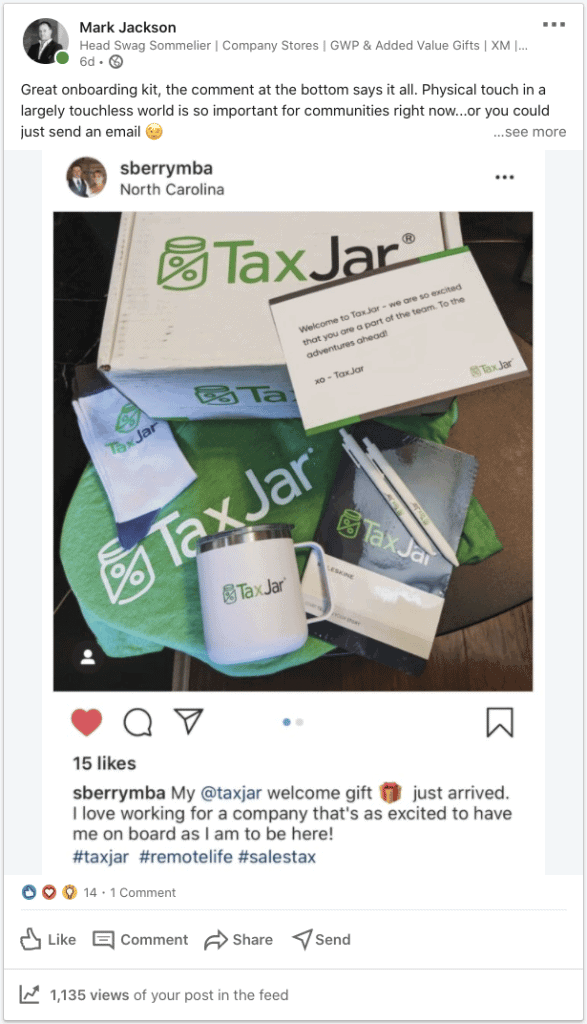
Source: LinkedIn
A 4-Layer Framework for an Effective Enterprise Welcome Kit
Instead of thinking about a list of items, think in four layers, each one serving a distinct purpose in the new hire’s first experience.
Layer 1: The Practical Layer, Day-One Essentials
High-quality, functional items that solve immediate needs and get used daily.
- Premium notebook and pen. A durable, professional notebook and quality pen are tools they can use from their first meeting. Quality signals care in a way a cheap ballpoint doesn’t.
- Insulated drinkware. A well-made branded water bottle or coffee mug travels with people. It appears on desks, in meetings, at coffee shops. It’s the highest-visibility item in most kits.
- Essential tech accessories. A USB-C hub, a webcam cover, a quality mousepad. Small items that anticipate daily needs before the new hire has to ask.
Layer 2: The Identity Layer, Brand and Culture Immersion
This layer connects new hires to who you are and makes them feel like they’re part of the team before they’ve attended their first all-hands.
- Laptop stickers. A sheet of company logos and values stickers allows for personalization. Small item, strong signal.
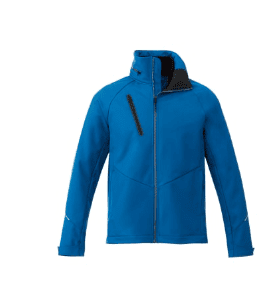
- High-quality branded apparel. The centerpiece of most kits. A comfortable hoodie, a backpack, soft t-shirt, a professional quarter-zip. Quality is non-negotiable here. A great piece of apparel becomes a wardrobe staple. A cheap one gets discarded within a month.
- A printed culture guide. A beautifully designed booklet covering mission, values, and what it actually looks like to work there carries more weight than an email link to the employee handbook.
- Office supplies: Equipping your new employees with branded office supplies like branded notebooks, custom pens, and sticky notes helps you blend practicality with a sense of belonging
Tip: Use SwagDrop to customize and order high-quality branded gifts that can leave a lasting impression on new hires. Each item can be tailored to match your company’s branding and values.
Why Most Welcome Kit Programs Break at Scale
The traditional model, design a kit, source the items, order in bulk, distribute, works when you’re onboarding ten people a year. It starts breaking down the moment scale becomes a factor. Here’s what typically goes wrong:
Inconsistent quality across cohorts
One hiring wave gets a premium hoodie. The next gets a cheaper version because the original was out of stock. The kit stops being a consistent brand signal and starts reflecting whoever had time to reorder.
HR becomes a logistics operation
Someone on your team is spending hours sourcing items, chasing suppliers, managing packing parties, and coordinating shipments. That is time that should be on people operations, not boxes.
Inventory becomes a liability
Bulk orders require upfront commitment. Sizes get guessed wrong. Branded items become obsolete when logos refresh. As SwagDrop’s 2026 Company Swag Study found, 52.5% of employees rarely use, donate, or discard the last branded item they received. At scale, that’s a significant portion of your welcome kit budget funding items that go straight to a closet.
Remote and cross-border employees get a worse experience
The kit that looks great when handed over in an office often arrives at a Canadian employee’s door with unexpected duties owing or gets delayed at a distribution bottleneck.
A scalable welcome kit program removes the operational burden from your team and eliminates the financial risk of bulk inventory. The framework below is built for that.
The Shift That Changes Everything: The Store Link as the Gift Moment
The traditional welcome kit model delivers a pre-packed box with items someone else chose in sizes someone else guessed. Most new hires receive it, appreciate the gesture, and quietly set aside the hoodie that doesn’t fit.
There’s a better model, and the emotional impact is actually stronger.
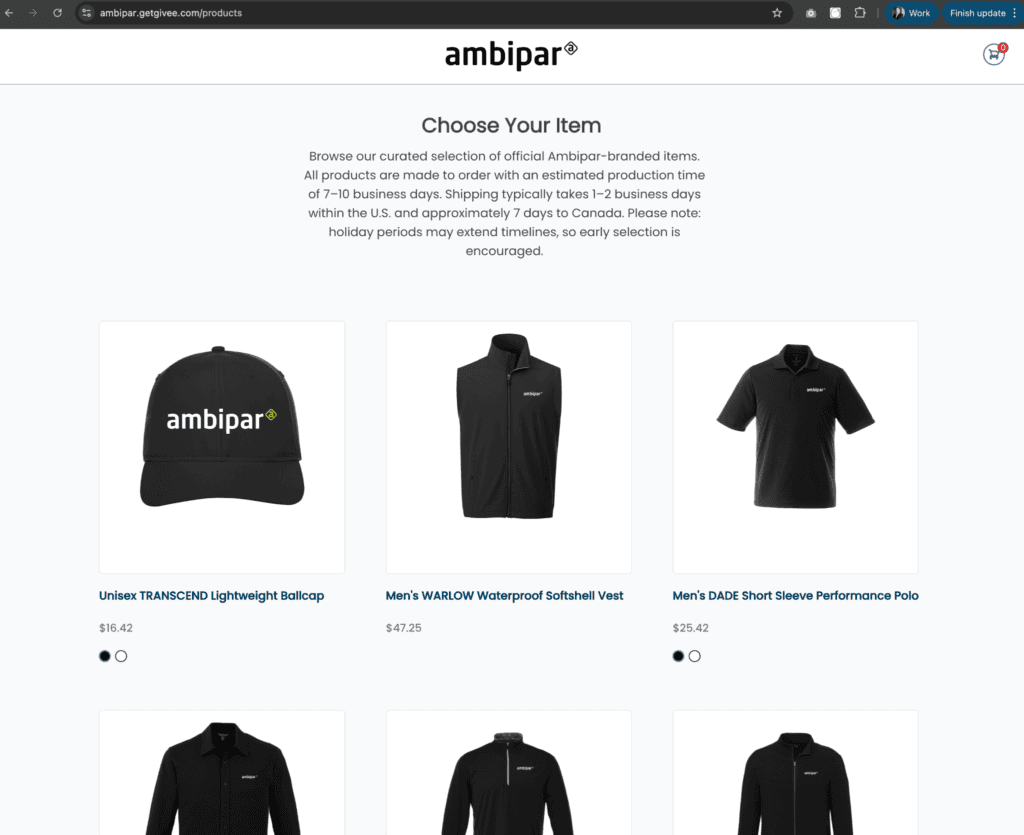
Instead of a pre-packed box, new hires receive a welcome email with a link to a private company swag store with a credit pre-loaded. They choose their own apparel in their own size. They pick the items that fit how they work.
The invite link is the gift moment. The emotional impact happens when they open the store and realize they get to choose, not when the parcel arrives. This is a fundamentally different experience from receiving a box with one item in one size that someone else decided.
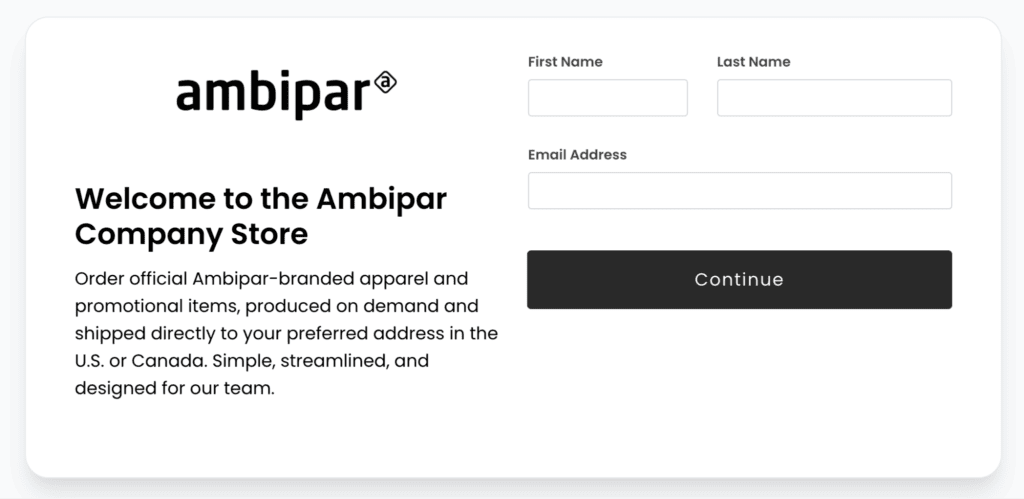
It also solves the operational problems completely. Nothing is produced until something is claimed. No inventory sits in a warehouse. No sizes get guessed wrong. When your brand refreshes, you update the store, there’s nothing to write off.
What to Look for in a Welcome Kit Program Partner
When evaluating a partner to run your program, the question isn’t what products they carry. It’s how they operate.
- White-glove service, not software. The partner should run the entire program, sourcing, production, fulfillment. Your team should not be configuring a platform or managing logistics.
- On-demand production. Items produced only as they are claimed. No inventory risk, no dead stock, no write-offs when the brand changes.
- Direct, scalable shipping. A proven system for shipping to employees wherever they are, in-office, remote, US or Canada, without cross-border duty issues.
- Opinionated guidance. A good partner tells you what works and what doesn’t, based on experience across hundreds of programs. Not just execution, judgment.
How SwagDrop Runs Enterprise Welcome Kit Programs
SwagDrop is not a SaaS platform. There’s no software to license, no seats to manage, no implementation project. It’s a managed program service, you define the experience, we build and run the operation.
You define the kit. We deliver it, every time.
You work with us to design the catalog, the credit amount, and the unboxing experience. We handle everything else, store build, product configuration, quality control, fulfillment, and direct-to-employee shipping across the US and Canada.
What this looks like in practice
Most enterprise welcome kit programs we run include a store with six to eight items across the four layers: a drinkware option, two or three apparel choices (so employees pick what fits their life), a practical tech accessory, and a printed welcome element. The credit amount is set at program design, employees see the store, make their selections, and production starts immediately.
Admin’s/HR’s role after launch: zero. The program runs itself.
Timelines that are realistic
Stores are typically ready within one week of artwork approval, artwork review takes around two days, production approval around three. From first conversation to live program is usually ten to fourteen days.
Cross-border handled by design
For organizations with employees in both the US and Canada, we run separate fulfillment streams. US orders fulfilled in the US. Canadian orders fulfilled in Canada. No customs delays, no duties at the door, no employee frustration. The program looks and feels identical on both sides of the border.
30 years of pattern-matched guidance
We’ve run enough of these programs to know what tends to work and what tends to fail, which catalog items have the highest claim rates, how to structure credits so employees feel genuinely gifted rather than handed a budget, and where programs in fast-growing organizations most commonly go off track. We don’t just execute. We tell you what we think.
Book a conversation with Mark to design your welcome kit program.
Frequently Asked Questions
How is a managed on-demand program different from just ordering bulk kits?
With a bulk order, you buy inventory upfront, guess sizes, and distribute manually, paying for items whether or not they’re claimed. With a managed on-demand program, new hires receive a store link, choose what they want in their size, and production starts only after they’ve selected. You pay only for what’s claimed, nothing sits in storage, and the experience is better for the employee.
How do we handle welcome kits for remote employees?
SwagDrop’s on-demand model is built for remote employees. Items ship directly from production to the employee’s door, no HQ coordination required. Whether a new hire is in the same city as headquarters or across the country, the experience is identical.
Will Canadian employees be charged duties?
Not with SwagDrop. Canadian orders are fulfilled from within Canada. No cross-border duties, no surprise charges at the door. This is one of the most common pain points with US-centric vendors, here is how to avoid it.
Is there a minimum order quantity?
No. SwagDrop’s on-demand model fulfills a single welcome kit just as easily as five hundred. You don’t pre-commit to any quantity, and your cost per kit doesn’t depend on hitting a volume threshold.
How long does it take to set up a welcome kit program?
Artwork approval takes approximately two days. Store build takes approximately three. Most programs are live within one week of artwork approval. End-to-end from first conversation to launch is typically ten to fourteen days with SwagDrop.
What happens when our brand refreshes?
You update the store. Because nothing is pre-produced, there’s no inventory to write off. The new brand assets go in, the old ones come out, and every subsequent kit reflects the current brand automatically.
Can we include a personalized note from the manager?
Yes. Manager notes, CEO messages, team-specific welcome copy, all of it can be built into the store experience so every new hire sees a message tailored to them.