


The first piece of branded merchandise a new employee receives sets a tone. It signals whether the company thought about them specifically, or whether someone ordered 500 of the same thing and hoped for the best.
For companies onboarding 30 to 100 new hires a month — across multiple locations, remote setups, and a mix of US and Canadian employees — that first impression is also a logistics operation. And the model behind it either scales cleanly or quietly collapses under its own weight.
This is a direct comparison of two onboarding models: fixed new hire kits assembled and shipped per cohort, and a standing new hire swag store where each employee selects their own items on day one.
What Each Model Looks Like in Practice
Fixed New Hire Kit
A curated box — typically 3 to 6 branded items — assembled in advance and shipped to each new hire before or on their start date. HR or an ops team manages address collection, kit assembly, and shipping coordination. Every new hire in a given cohort receives the same box.
New Hire Swag Store
A branded store, configured specifically for onboarding, where each new hire receives a store link as part of their day-one welcome. They select their own items, choose their own sizes, and enter their own shipping address. SwagDrop builds and manages the store; HR loads credits per new hire and the operation runs without cohort-by-cohort coordination.
Head-to-Head: New Hire Kit vs Swag Store
| Factor | Fixed New Hire Kit | New Hire Swag Store |
| New hire gets to choose items | No | Yes |
| Size accuracy for apparel | Forecasted or collected manually | Employee selects at checkout |
| Address collection | Required per cohort | Employee enters at checkout |
| HR effort per onboarding cohort | High | Minimal after initial setup |
| Scales with hiring volume | No — effort grows with headcount | Yes — store handles any volume |
| Works for remote/distributed hires | Requires manual coordination | Yes — ships direct to any address |
| US + Canada without customs duties | Depends on vendor | Yes — domestic routing by default |
| Day-one delivery timing | Dependent on kit production lead time | Store link delivers instantly; item ships after redemption |
| Risk of kit arriving late | High at volume | None — link is the gift moment |
| Dead stock / unused inventory | Yes — pre-produced regardless of fit | None — produced only after redemption |
| Budget committed upfront | Yes — full cohort cost | No — pay per redemption |
| Consistent experience across locations | Difficult at scale | Yes — same store, every hire, everywhere |
Where Fixed Kits Break at Onboarding Scale
The Address Problem Repeats Every Cohort
A new hire kit requires a current, confirmed shipping address before production starts. For a single cohort of 10, that is manageable. For a company adding 60 new hires a month across 12 cities, it is a recurring administrative burden — a Google Form, a follow-up email, a spreadsheet match, a shipping manifest — repeated every single cycle. When new hires have already started and welcome kits haven’t arrived, the cause is almost always address collection delays or production lead time compressed by late submissions.
Sizing for Apparel Cannot Be Forecasted Reliably
Most new hire kits include at least one apparel item — a hoodie, a t-shirt, a branded jacket. That means HR needs a size for every incoming hire before production begins. Some companies ask during the offer stage. Some send a follow-up form. Some guess based on role or location. None of these methods are reliable at volume, and the result is either sizes that run out mid-cohort or branded apparel that goes straight to a drawer because it does not fit.
Kit Production Lead Time Creates Day-One Risk
A fixed kit requires production, assembly, and shipping before the hire’s start date. At low volume, the timeline is manageable. At 50 to 100 hires a month, the margin for error shrinks.
- Offer acceptance dates shift.
- Start dates change.
- Remote hires in Canada add cross-border variables.
The kit that was supposed to arrive on day one arrives on day five — or not at all — and the first impression lands wrong.
Cohort Thinking Breaks for Continuous Hiring
Kit models are built around cohort logic: a batch of hires starts together, gets the same box, and ships at the same time. Companies that hire continuously — rolling starts throughout the month — do not have cohorts. They have individual hires starting every few days, and running a discrete kit operation per person at that cadence is not sustainable.
Why a New Hire Swag Store Solves the Onboarding Problem Specifically
The Store Link Is the Day-One Moment
In a store-based model, the new hire receives a branded store link as part of their welcome communications — before they have even logged into their laptop. The act of choosing their own items, in their own sizes, from a curated catalog the company put together for them, is the gift experience. The physical items arrive later. The emotional impact happens immediately.
This matters specifically for onboarding because the day-one experience is disproportionately weighted in how new hires form their first impression of the company. A store link that says “here is a budget, choose what you want” communicates more intentionality than a box of items someone else picked.
No Cohort Coordination Required
Once the store is live, every new hire — whether they start on the 3rd or the 27th, whether they are in Toronto or Austin — goes through the same process. HR loads a credit to the store for each new hire. The hire receives the link. They redeem. The item ships directly to their address. There is no batch coordination, no address collection cycle, no manifest to manage. Sending swag to remote employees without collecting addresses manually is not a workaround in this model — it is just how the store works.
US and Canada, No Customs Exposure
For companies with new hires in both countries, a standing store with domestic routing means Canadian new hires receive their items from Canadian facilities. No cross-border shipment, no customs duty at the door on day one. The cross-border errors that show up in kit-based onboarding programs — duties billed to the employee, packages held at customs, delayed arrivals — are structurally eliminated.
Budget Only Spends on What Gets Claimed
With a fixed kit, every unit produced is a dollar committed — whether the hire stays past their first week, whether they wanted the item, whether they even redeemed the welcome experience at all. With a swag store, the budget only draws down when the employee redeems. New hires who leave during the first 30 days, defer their start date, or simply do not redeem do not consume the budget.
When a Fixed New Hire Kit Still Makes Sense
A fixed kit is not the wrong answer in every scenario. It works well when:
- The headcount is small and predictable. Under 10 new hires a month, kit coordination is not a burden.
- Every hire receives an identical, non-sized item. If the kit contains only non-apparel items — a branded notebook, a custom tumbler, a tech accessory — size forecasting is not a variable and kit production is straightforward.
- All hires are co-located and starting together. A cohort of 20 hires all starting at the same office on the same date is the scenario a kit is built for.
The model breaks when volume increases, locations multiply, apparel is included, or hiring is continuous rather than cohort-based.
How SwagDrop Runs New Hire Swag Stores
For companies evaluating what should actually go into an onboarding program, the new hire welcome kit guide covers catalog curation, budget structuring, and what items consistently perform well in enterprise onboarding programs.
SwagDrop provides a white-glove, managed swag program built precisely around the on-demand, store-based model. We help companies with 500 to 5,000 employees eliminate the waste of inventory forecasting and transition into a streamlined, employee-driven experience.
SwagDrop has been running store-based, on-demand programs since 2008 — years before purpose-built swag platforms existed.
One of our earliest was for TD Bank: a bilingual online store built, tested, and launched in under one week, enabling 1,102 branches across Canada to order size-specific T-shirts for 22,000 branch employees. The result was a 25%+ reduction in order volume versus the original bulk estimate, with zero dead stock.
“He always comes to the table with great ideas, quality products and a willingness to meet constraints and deadlines.” — Mary Desjardins-Therrin, Executive Director, TD Friends of the Environment Foundation, TD Bank (8 years, 8 months, Greater Toronto Area) — LinkedIn recommendation for Mark Jackson, President, SwagDrop, October 19, 2010
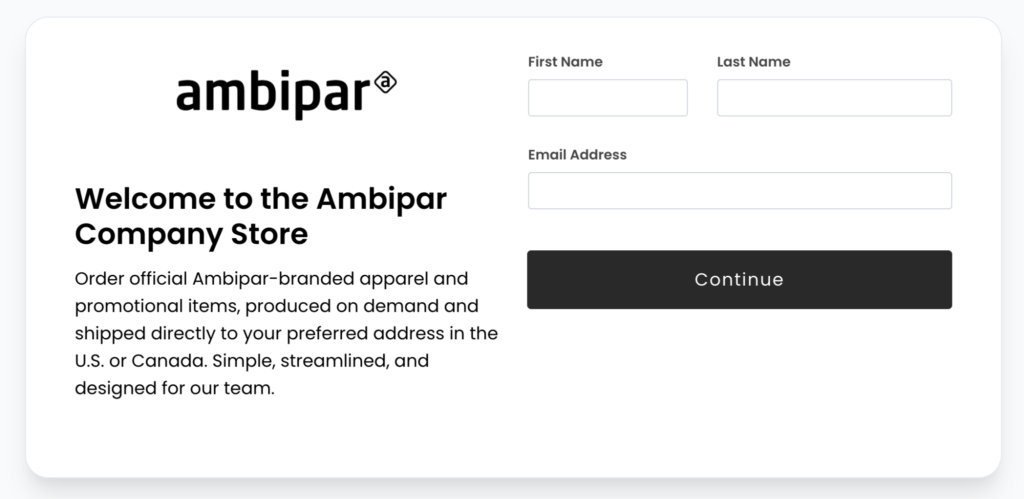
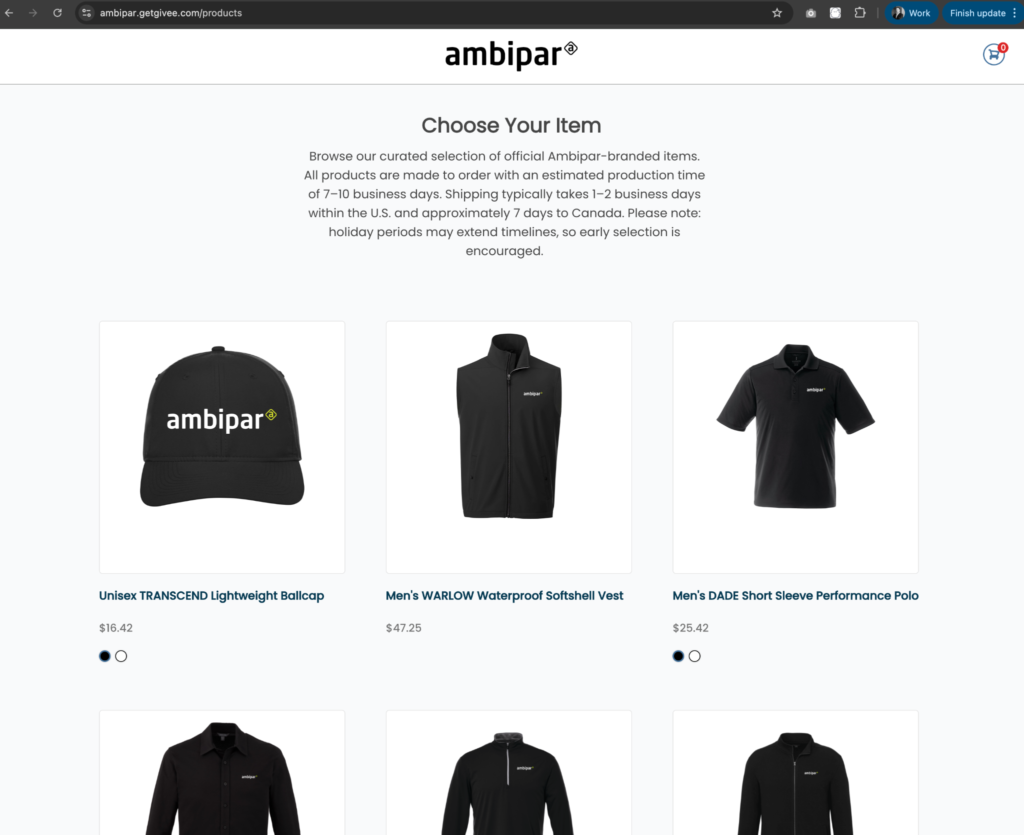
Swag On Demand Company Store Sample:
You Define It, We Run It
SwagDrop is not a SaaS platform. We are a promotional products company with over 30 years in the industry that uses technology to make your program easier to run, not to add another software subscription to your budget. There are no seat fees, no license fees, no platform charges, no contract. You pay for the product and the shipping. That’s it. You tell us the goals, the audience, and the per-employee budget. We build the store, curate the products, and manage everything from production through direct-to-employee fulfillment.
Opinionated Guidance from 30+ Years of Experience
We don’t just take orders, we provide opinionated guidance from our institutional knowledge. With over three decades of experience in branded merchandise, we tell our clients what works and what doesn’t. We know which items thrive in an on-demand environment, how to structure your catalog to maximize redemptions, and how to avoid common operational pitfalls.
In-Country Fulfillment by Default
SwagDrop routes US employee orders to US facilities and Canadian employee orders to Canadian facilities. This ensures that every shipment is treated as a domestic delivery. By eliminating cross-border freight, we guarantee your Canadian employees receive a premium experience free of unexpected duties at the door.
Book a call with Mark to map out the right model for your onboarding volume.
Frequently Asked Questions
What is the main difference between a fixed new hire kit and a new hire swag store?
A fixed new hire kit is a pre-assembled box of branded items shipped to each new hire — every person in a cohort receives the same items, chosen by HR. A new hire swag store, as SwagDrop builds and manages them, is a branded store where each new hire receives a store link, selects their own items, chooses their own sizes, and enters their own shipping address. The store runs continuously — no cohort coordination, no batch address collection, no kit assembly.
At what hiring volume does a swag store make more sense than a fixed kit?
There is no hard threshold, but SwagDrop typically sees the operational case for a standing store become clear at 20 or more new hires per month, particularly when hiring is continuous rather than cohort-based, or when new hires are distributed across multiple locations. At that volume, the address collection, size coordination, and kit production cycle that a fixed kit requires becomes a recurring HR time burden that the store model eliminates entirely.
How does a new hire swag store handle the day-one timing problem?
In SwagDrop’s store model, the store link itself is the day-one deliverable. It goes out with welcome communications — before the hire’s first login, before the physical items arrive. The new hire browses the catalog, selects their items, and enters their address. Production begins after redemption; the physical gift ships directly to wherever they are working. The first impression is delivered the moment the link lands. Late kit arrivals, which are one of the most common onboarding complaints, are not a variable in this model.
Can a new hire swag store serve both US and Canadian new hires from the same program?
Yes. SwagDrop routes orders domestically by default — US new hires fulfill from US facilities, Canadian new hires from Canadian facilities. No shipment crosses the border, which means Canadian employees never receive a customs duty bill as part of their welcome experience. Running a single onboarding program across both countries without customs exposure is one of the clearest operational advantages of SwagDrop’s store model versus a kit shipped from a single US warehouse.
What happens to the budget for new hires who leave before redeeming or defer their start date?
In a fixed kit model, the kit is produced and shipped regardless — the budget is spent whether the hire redeems the experience or not. In SwagDrop’s store model, the budget is only drawn down when the new hire actively redeems. If a hire defers, leaves during the first 30 days, or does not redeem, that credit is not consumed. For companies with any meaningful early-attrition rate or start-date variability, the pay-per-claim model recovers real budget that a kit operation would have spent regardless.
SwagDrop’s 2026 Employee Swag & Choice Gap Study was conducted by Pollfish in May 2026, surveying 1,000 Canadian employees at companies with 250 or more employees. This is the first large-scale Canadian dataset measuring the employee experience of corporate branded merchandise programs from the recipient’s perspective.