


It is a familiar scenario during annual or quarterly planning: HR proposes a company-wide gifting initiative to boost morale, and the CFO immediately pushes back. They don’t object to the recognition itself; they object to the financial waste. They ask how much of the last bulk order is still sitting unredeemed in a storage closet, and HR rarely has a good answer.
When you manage a workforce of 500 to 5,000 employees across the US and Canada, purchasing merchandise upfront is a massive financial liability. You are paying for items before you know if anyone actually wants them or what sizes they need.
To secure executive approval for future initiatives, People Operations teams must adopt a more financially responsible framework. If you want to eliminate waste and keep the CFO happy, you need a system where you only pay for claimed employee gifts. The budget model transitions from a sunk-cost gamble into a precise, redemption-based operation.
New national research confirms how deep the mismatch runs — and why employees themselves are demanding the right to choose.
SwagDrop’s 2026 Employee Swag & Choice Gap Study (Pollfish, n=1,000 Canadian employees, 250+ employee companies, May 2026) found that when given three options, 78.6% of employees preferred to choose their own item from a curated selection, 16.1% preferred a company-chosen item, and 5.3% said they would rather receive nothing at all than a generic branded item. This is the first time the opt-out question has been asked in any branded merchandise survey in the Canadian market. No comparable competitor study — including Snappy’s 2025 US Holiday Gifting Survey or the ASI 2023 Ad Impressions Study — has offered employees this option.
Why the Traditional Swag Budgeting Process Breaks Down
The standard approach to corporate gifting is inherently flawed from a financial perspective because it relies on 100% upfront capital deployment.
When HR attempts to execute a program via the legacy bulk-order route, they issue a purchase order for thousands of items at once. The company pays for the inventory, the inbound freight, and the storage. If an employee ignores the gift, leaves the company, or requires a size that was under-forecasted, the money spent on that specific item is permanently lost.
Furthermore, if those bulk items are shipped across the border from the US to Canada, hidden costs like customs duties and brokerage fees destroy the original budget projections. The financial risk is entirely on the employer.
The Model Shift: Moving to a Claim-Based Structure
The most effective way to eliminate wasted spend is to change when the money actually leaves the company. Instead of paying to produce inventory before distribution, enterprise teams are shifting to an on-demand production model driven by employee choice.
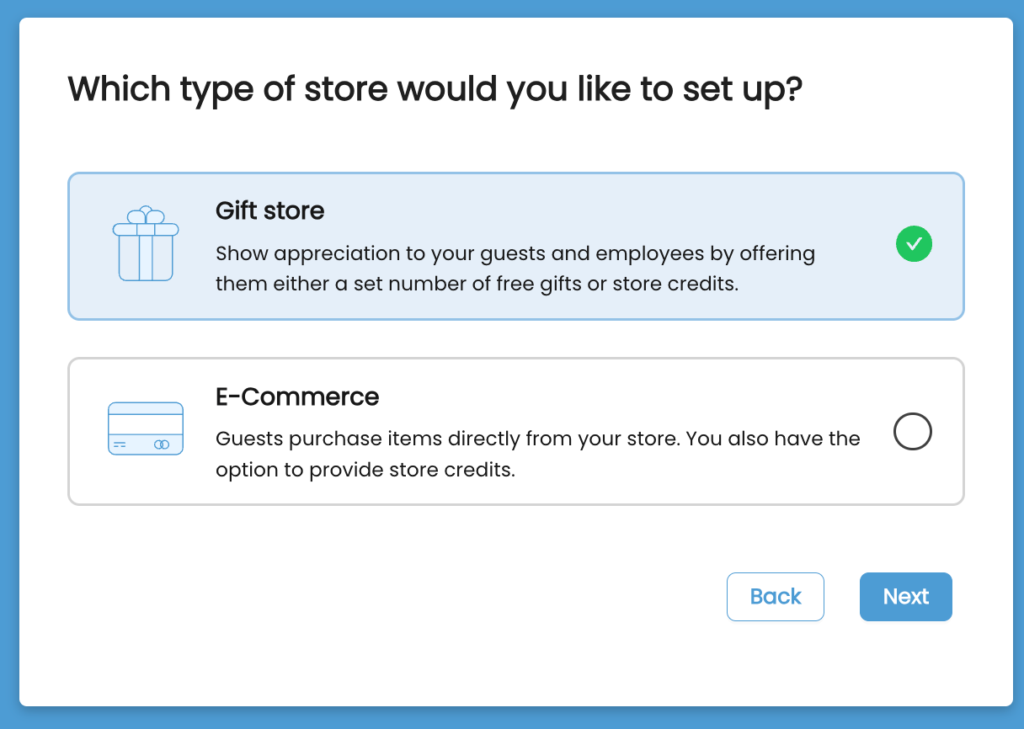
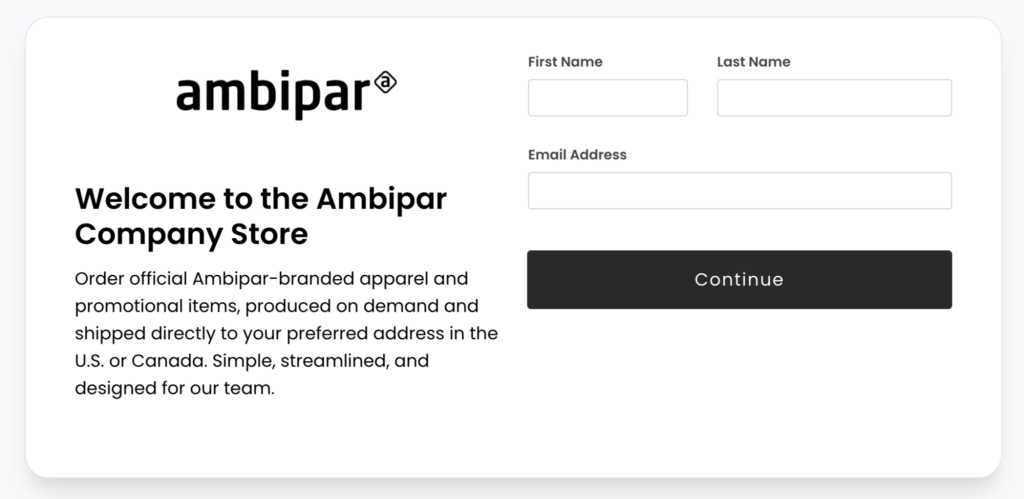
In a claim-based structure, the company sets a maximum budget allocation, but no physical goods are produced upfront. Eligible employees receive a link to an internal store where they can browse a curated catalog.
The financial magic happens here: the cost is only incurred when an employee actively logs in, selects their preferred item, enters their size, and confirms their shipping address. If an employee never claims their gift, the company never pays for it.
4 Steps to Implement a Claim-Based Gifting Program
To transition away from bulk POs and move toward an efficient, redemption-driven operation, follow these practical steps.
1. Shift from a Bulk PO to a Per-Employee Budget Ceiling
Instead of asking finance for $50,000 to buy 1,000 jackets, ask for a $50 per-employee allowance for a specific campaign. Explain that the capital will only be deployed incrementally as gifts are successfully claimed. This drastically lowers the perceived financial risk and aligns perfectly with a CFO’s desire to tie spending directly to utilization.
2. Leverage an On-Demand Production Catalog
To make a claim-based budget work, you cannot use a vendor that requires inventory minimums. Build a catalog utilizing a store-based, on-demand production model. Offer a tight selection of high-quality items—such as premium drinkware, apparel, or bags—that can be produced one-by-one as orders flow in.
3. Use the Invite Link as the “Gift Moment”
When you don’t order items in advance, you can’t hand out physical boxes on launch day. Instead, anchor the celebration around the invitation itself. When the email arrives in their inbox offering them a customized choice, that becomes the psychological reward. The gesture lands instantly, even though production and shipping will take standard timeframes to fulfill.
“Only 1 in 6 Canadian employees at large organizations is comfortable with the current model — where HR picks the item and employees receive it. The rest want either a choice or nothing.”
— SwagDrop Employee Swag & Choice Gap Study, Canada, n=1,000, May 2026
4. Route Fulfillment Domestically to Protect the Budget
A claim-based budget fails if hidden fees inflate the final invoice. For North American workforces, ensure that US orders are produced and shipped within the US, and Canadian orders are handled strictly within Canada. This prevents unpredictable cross-border duties from wrecking your carefully planned per-employee cost.
What to Look for in a Claim-Based Swag Partner
Evaluating vendors for this specific financial model requires looking past the product catalog and digging into their operational infrastructure. At a minimum, any partner you consider should provide:
- No-Minimum, On-Demand Production: The vendor must be able to produce and ship single units as employees claim them, without forcing you to pre-purchase stock.
- Store-Based Redemption Workflows: A seamless, digital storefront where employees can securely choose their items and input shipping details.
- Clear Redemption Reporting: Visibility into exactly who has claimed their gift and who hasn’t, allowing you to accurately track the deployed budget.
- In-Country Fulfillment Networks: The capability to operate domestic fulfillment in both the US and Canada to guarantee flat, predictable landed costs.
How SwagDrop Executes Claim-Based Budgets
SwagDrop operates a white-glove, managed swag program that aligns perfectly with a CFO’s demand for efficiency. We help companies with 500 to 5,000 employees transition out of wasteful bulk ordering and into a precise, store-based, on-demand production model.
You Define the Guardrails, We Run the Operations
SwagDrop is not a self-serve software platform you have to learn to configure. You tell us the audience, the per-employee budget, and the campaign goals. We build the store, curate the on-demand catalog, and handle all the backend production and direct-to-employee shipping.
Opinionated Guidance from 30+ Years of Experience
We provide more than just execution. With over three decades of experience in branded merchandise, we offer opinionated guidance on what actually works. We advise HR teams on which products yield the highest claim rates, how to structure timelines, and how to effectively nudge employees who haven’t redeemed their items.
“He always comes to the table with great ideas, quality products and a willingness to meet constraints and deadlines.”
— Mary Desjardins-Therrien, Executive Director, TD Friends of the Environment Foundation, TD Bank (8 years, 8 months, Greater Toronto Area) — LinkedIn recommendation for Mark Jackson, President, SwagDrop, October 19, 2010
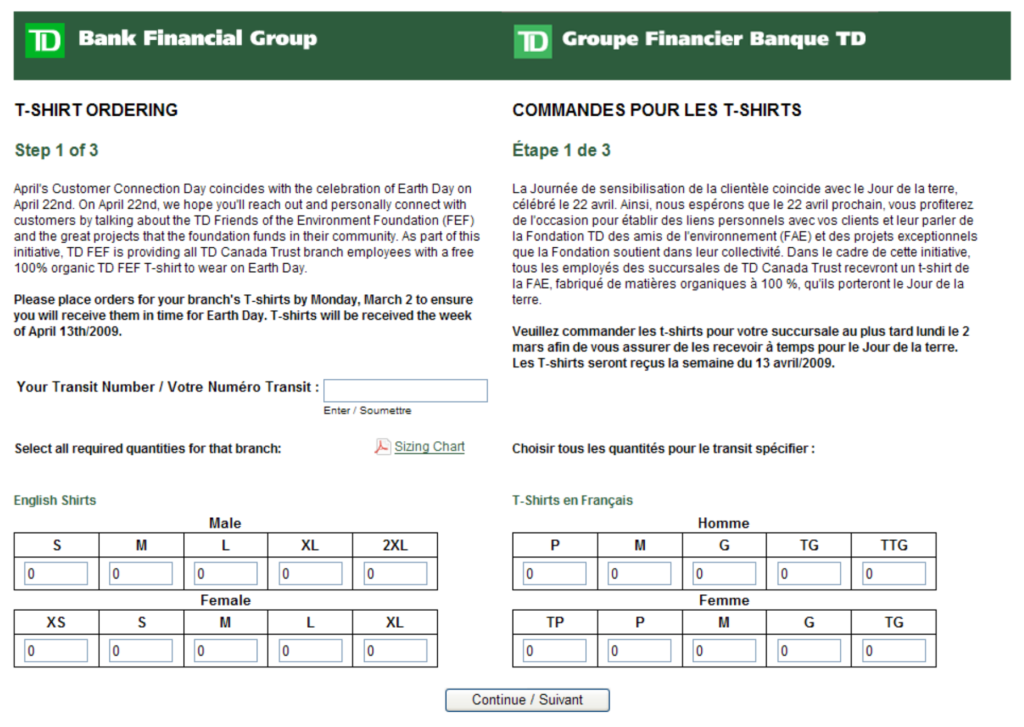
SwagDrop has been running store-based, on-demand company swag programs since 2008 — years before purpose-built swag platforms existed. The TD Bank program, built and launched in under one week, enabled 1,102 branches across Canada to order size-specific items for 22,000 employees, producing a 25%+ reduction in order volume versus the original bulk estimate with zero dead stock.
Protected Budgets via Domestic Fulfillment
To ensure your claim-based budget remains predictable, SwagDrop routes orders based on geography. US employees are serviced by US facilities, and Canadian employees are serviced by Canadian facilities. By eliminating cross-border shipping entirely, we ensure your budget goes toward the actual gift—not surprise customs duties or international freight.
On a Concluding Note
You no longer have to gamble your HR budget on bulk orders that might sit unclaimed in a storage closet. Moving to a claim-based, on-demand budget model allows you to deploy capital efficiently and only pay for the gifts your employees actually redeem. It is the financially responsible way to scale corporate recognition without the waste.