

It is a common scenario in mid-market companies: leadership wants to celebrate a company milestone, a successful rebrand, or the end of a strong quarter. They assign HR a budget and a directive to “pick a great premium gift for the whole team.”
On the surface, sending everyone a branded jacket or a high-end tech accessory sounds like a generous, straightforward initiative. But for the HR or People Operations professional tasked with executing this across a distributed workforce of 500 to 5,000 employees, that request is an operational trap.
When you manage teams spanning the US and Canada, the problem with choosing one employee gift for entire company rollouts is that the “one-size-fits-all” approach is a logistical illusion. What looks like a simple bulk order quickly devolves into a mess of size-guessing, spreadsheet wrangling, and cross-border customs disasters.
To deliver an enterprise-level gifting program that actually lands with employees, companies must stop trying to find the perfect physical item and instead focus on delivering a better mechanism for choice.
The Breakdown of the Current “Single Item” Model
The traditional approach to corporate gifting is built around administrative convenience: issue one purchase order, buy one SKU in bulk, ship it to a central office, and distribute it from there. When this model collides with a modern, distributed workforce, it fails in three predictable ways.
The Sizing Guesswork Trap
If the company selects apparel, HR is forced to either guess the size breakdown or send out a massive company-wide survey. Because bulk orders require long lead times, the inventory is often ordered before the data is perfectly collected. Unisex sizing rarely fits everyone comfortably, leading to a high volume of unworn, wasted inventory sitting in storage closets.
The Personal Utility Gap
Not everyone lives in a climate that requires a heavy jacket, and not everyone needs another branded backpack. When leadership dictates a single item, it ignores personal utility. The item arrives as an unrequested corporate mandate rather than a thoughtful gesture. If the employee doesn’t find the item useful, the budget spent on them is entirely wasted.
The Cross-Border Customs Disaster
Ordering a single bulk run of items usually means shipping them to a central US location and distributing them from there. When half your workforce sits in Canada, mailing those identical items north triggers international customs inspections. The packages are delayed, and Canadian employees are frequently slapped with a surprise duty bill at their front door just to receive their “free” corporate gift.
The Model Shift: On-Demand, Employee-Choice Stores
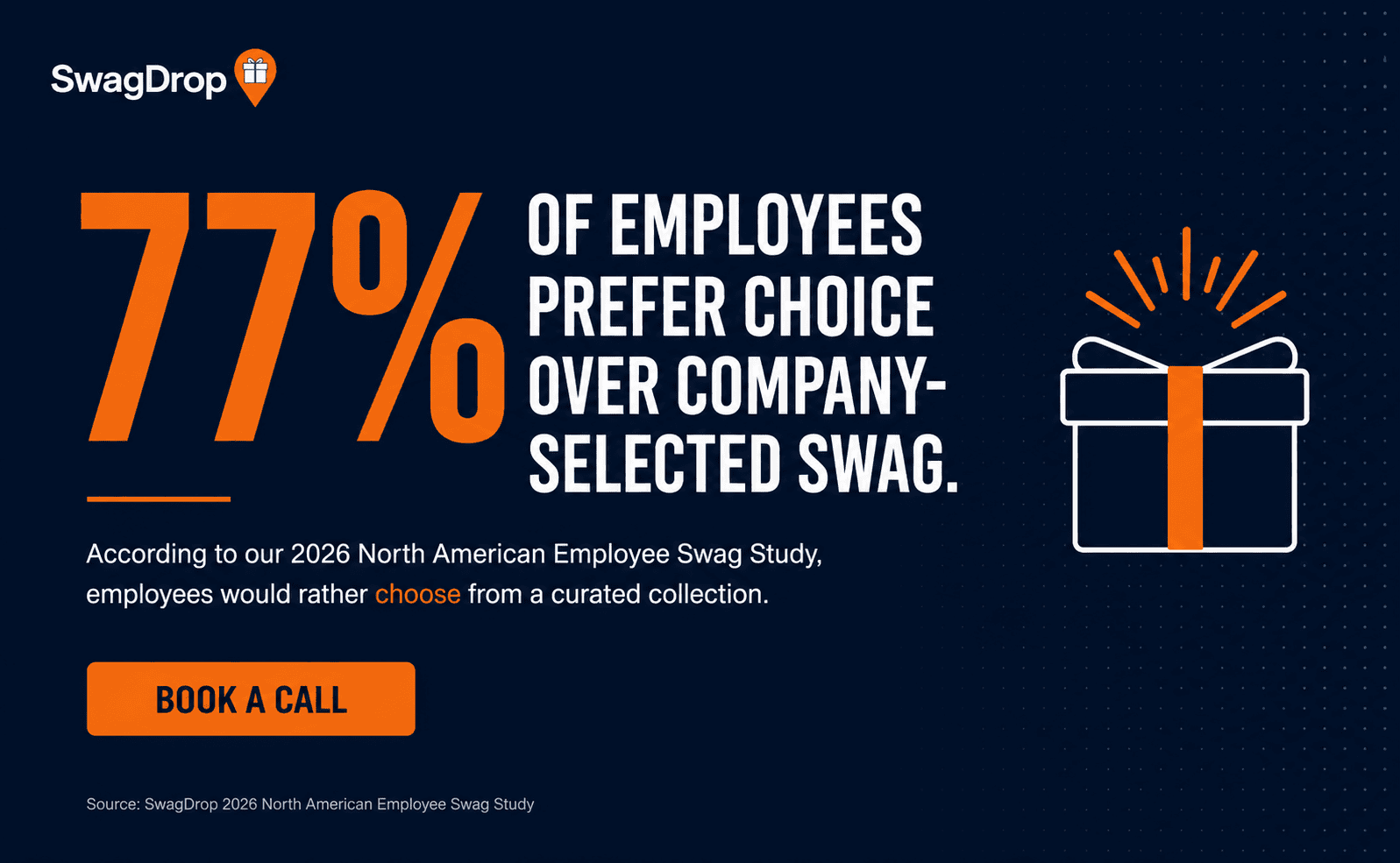
The most successful enterprise teams realize that you do not need to pick the perfect gift for 1,000 people. You just need to offer a curated selection and let the employees choose it themselves.
To achieve this without creating an administrative nightmare, companies must shift from a bulk-purchasing model to a store-based, on-demand production model.
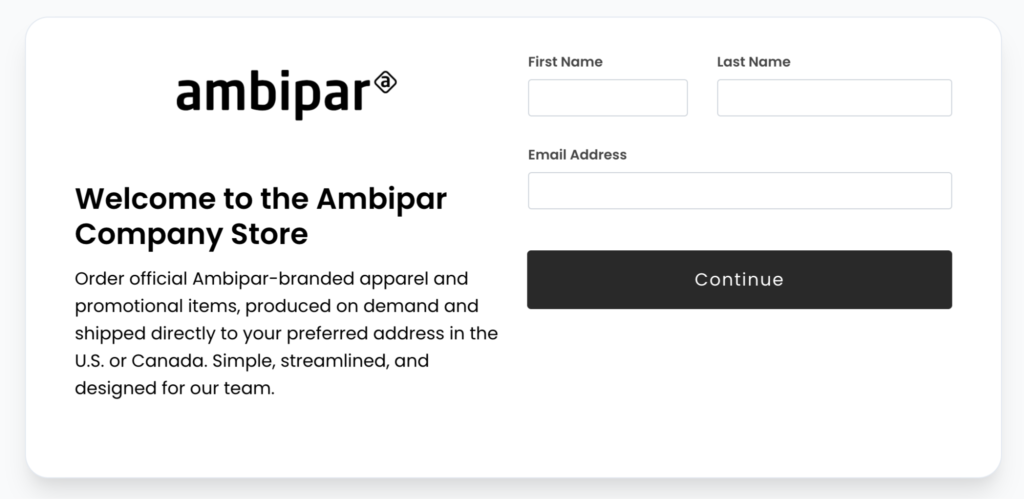
Instead of an unsolicited box arriving on a desk, the employee receives a personalized email invitation. They click a link, browse a high-quality, pre-approved collection, for example, offering the choice between a premium jacket, a high-end tumbler, or a durable weekender bag, select their exact preference and size, and input their current shipping address.
For time-sensitive initiatives, the invite link itself becomes the gift moment. The psychological reward happens when the employee is given the power to choose. This effectively removes the deadline pressure of having physical items land on everyone’s doorstep on the exact same day, allowing production and shipping to happen naturally in the background.
Operational Guide: How to Execute an Employee-Choice Program
Moving from a single bulk order to an employee-driven choice model requires a structural shift. Here are the concrete steps HR and Marketing teams can take to operate this successfully at scale.
1. Shift from a Bulk PO to a Program Budget
Instead of seeking approval to buy 1,000 jackets upfront, secure a per-employee budget allocation. Define the audience (e.g., all full-time employees) and the spend limit. In a true on-demand model, you only pay for the items that are actually claimed, instantly reducing the financial risk of wasted inventory.
2. Curate a Parity Catalog
Build a tight catalog of 3 to 5 premium items. Crucially, this catalog must be executable locally. Select items that can be reliably sourced, printed, and shipped by domestic suppliers in both the US and Canada. The goal is to provide variety while ensuring the options feel equivalent in value.
3. Remove HR from Address Collection
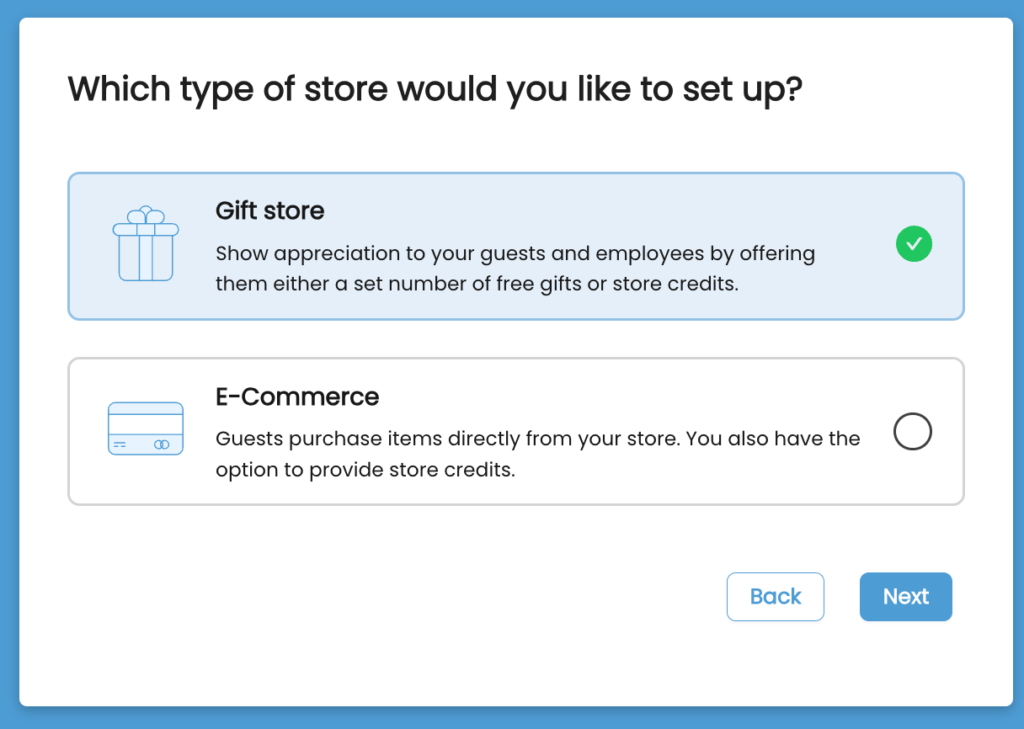
Do not manage addresses in a spreadsheet. Hybrid and remote employees move frequently. By using a store-based model, employees enter their own current shipping destination at the moment of checkout, ensuring accuracy and completely removing HR from the logistics chain.
4. Separate Fulfillment by Country
To prevent the cross-border disasters of the bulk model, structure your fulfillment domestically. Ensure that US employee orders are routed to a US production facility, and Canadian employee orders are routed to a Canadian production facility. This ensures every parcel is a domestic shipment, bypassing international duties entirely.
What to Expect from a Good Swag Vendor
Executing an employee-choice program requires more than just a promotional products website; it requires operational infrastructure. When evaluating partners, look for these specific capabilities:
- Store-Based Workflows: The ability to easily spin up a customized employee-facing store where users can browse, select, and check out using zero-dollar credits.
- On-Demand Production: Items are produced only when an employee redeems their gift, eliminating minimum order quantities and the need to pre-purchase stock.
- Direct-to-Employee Shipping: Moving parcels straight from the production floor directly to the employee’s home address.
- True In-Country Fulfillment: Confirmed domestic production and shipping within both the US and Canada to protect your budget from unpredictable cross-border fees.
How SwagDrop Runs Employee Swag Programs
This specific scenario, the headache of picking, sizing, and shipping a single item for a massive team, is exactly why SwagDrop was built as a managed, white-glove service rather than a self-serve SaaS platform. We help companies with 500 to 5,000 employees transition away from bulk-order guesswork and into a precise, employee-driven store model.
You Define the Program, We Run the Operations
We take the operational burden off your team. You define the budget, the audience, and the catalog guardrails. SwagDrop builds the customized employee store, sets up the products, and manages the on-demand production and tracking. You do not manage the platform; SwagDrop handles the execution.
In-Country Fulfillment by Default
To ensure your employees actually receive their gifts without friction, SwagDrop routes US orders to US facilities and Canadian orders to Canadian facilities. By producing and shipping domestically across North America, we ensure your Canadian employees never receive a surprise duty bill at the door.
Opinionated Guidance from 30+ Years of Experience
Because we rely on over 30 years of pattern recognition in branded merchandise, we provide highly opinionated guidance. We will actively steer you away from products that historically see low utilization or items that cause local sourcing nightmares. We ensure your curated catalog is locally executable in both the US and Canada so that the employee experience is identical, but the fulfillment remains strictly domestic.
By stepping away from the “one gift for everyone” mentality and partnering with an experienced operator, you stop managing spreadsheets and start delivering a swag experience that employees actually value.
On a Concluding Note
The perfect single gift for 1,000 different employees simply does not exist. Attempting to force a one-size-fits-all item onto a distributed North American team only creates sizing issues and cross-border customs disasters. By embracing an on-demand, store-based model, you stop guessing what your team wants and start delivering the ultimate gift: the power to choose.