

HR teams running swag programs for 500 to 5,000 employees eventually hit the same fork in the road. Do you build a standing company swag store, a permanent, employee-facing program that runs year-round, or do you keep sending one-time kits for each occasion?
Both models work.
The question is which one holds up as the program grows, the workforce gets more distributed, and leadership keeps adding occasions to the calendar.
Understanding the Two Corporate Swag Models
Company Swag Store
A standing company branded swag store where employees access a curated catalog, select items, choose sizes, and enter their own shipping address. The store runs continuously, not tied to a single event or deadline. The budget is loaded per employee or per program. New occasions get new credit allocations, not new logistics operations. If employees want more than their budget covers, our Stripe integration makes it easy to add a credit card and grab extra merch at checkout.
One-Time Kit Send
A single, curated physical box assembled and shipped to employees for a specific moment, a new hire’s first day, an annual all-hands gift, a product launch celebration. Every kit is picked, packed, and shipped as a discrete project. When the moment passes, the operation ends.
Company Swag Store vs One-Time Kits: Head-to-Head Comparison
| Factor | Company Swag Store | One-Time Kit Send |
| Setup effort | SwagDrop handles | Lower per event, repeated each time |
| Scales with headcount | Yes, store handles 500 or 5,000 | No, each new send is a new project |
| Employee gets to choose | Yes | No |
| Size accuracy | Perfect, employee selects | Forecasted, HR guesses |
| Works for distributed/remote teams | Yes, employees enter own address | Requires address collection each time |
| US + Canada without duties | Yes, domestic routing by default | Depends on vendor and model |
| Dead stock risk | None | High for apparel and sized items |
| Multiple occasions per year | One store, multiple credit loads | Separate operation per occasion |
| Budget control | Pay-per-claim, unspent budget stays | Full budget committed upfront |
| HR admin load per occasion | Low | High |
| Best for | Ongoing programs, distributed teams, repeat gifting | Fixed headcount, single moment, identical items |
When One-Time Kits Make Sense
One-time kits are not obsolete. They are the right call in specific, bounded situations.
Fixed headcount, identical items. If 200 people are attending an offsite and every person gets the same branded jacket and notebook, a kit makes operational sense.
- The quantity is defined.
- The items are identical.
- There is no sizing ambiguity if you collect sizes in advance.
High-touch executive gifting. A curated box sent to 25 senior leaders with personalized items and a CEO note is a different object than a scalable employee program. The craft of the kit is the point.
Single, time-bound moments with no repeat. An acquisition announcement gift, a company anniversary milestone, a product launch send, if the moment happens once and there is no ongoing program behind it, a kit is appropriate. Where kits break down is when they get used as the default model for recurring, distributed, large-scale employee programs, which is exactly the scenario most HR teams are actually running.
Where One-Time Kits Break at Scale
The Address Problem Gets Worse Every Cycle
Every kit sent requires a current address for every recipient. For a 1,000-person workforce, that is a Google Form, a follow-up email chain, a spreadsheet, and someone on HR’s team matching addresses to a shipping manifest. Then doing it again three months later for the next occasion. Sending company swag to remote employees without collecting addresses manually is one of the clearest operational advantages of a standing store, employees enter their own details at checkout, every time.
Sizing Errors Compound
A one-time kit for apparel requires HR to forecast the size curve across the company. SwagDrop’s 2026 Employee Swag & Choice Gap Study, a Pollfish survey of 1,000 Canadian employees at companies with 250 or more employees, fielded May 2026, found that 73.7% of employees said the last piece of branded merchandise they received did not match what they would have chosen for themselves.
Size misordering is a major driver of that gap. A standing store eliminates it entirely because employees who would rather choose their own swag select their own size at checkout.
Each New Occasion Is a New Project
With a one-time kit model, every gifting moment, onboarding, a work anniversary recognition, a holiday gift, a rebrand rollout, requires its own logistics operation. A standing store absorbs all of these into a single infrastructure. New occasions get new credit allocations, not new vendor conversations, new pick-and-pack operations, and new address collection cycles.
Budget Committed Upfront, Waste Inevitable
Every kit produced is a dollar spent, whether the employee wanted the item or not. The hidden costs of bulk swag programs, dead stock, returned boxes, sizes that never get claimed, are baked into the kit model structurally. A standing store operates on a pay-per-claim basis: only items employees actually redeem draw down the budget. Programs typically see a 5–15% non-redemption, budget that stays in the company’s account rather than going to a recycling bin.
When a Standing Store Makes More Sense Than It First Appears
New Hire Onboarding at Ongoing Volume
If a company is onboarding 20 to 100 new hires per month, running a discrete kit operation for each cohort is an HR time sink. A new hire welcome kit delivered through a standing store means every new hire gets a store link on day one, selects their own items in their own sizes, and the kit ships directly to wherever they are working. No HR coordination per cohort.
Rebrands and Catalog Transitions
When a rebrand hits, a one-time kit model locks the company into whatever inventory was ordered before the new assets were finalized. A rebrand rollout through a standing store means the catalog updates digitally, new logo files replace old ones, new products are added, old ones are removed, without producing a single unit of obsolete inventory. The Better Business Bureau’s 2026 North American rebrand ran exactly this way across 100+ offices in the US and Canada: zero obsolete stock, zero cross-border duty charges for Canadian offices, one store serving the entire organization.
Distributed Workforces Across US and Canada
Kits sent to Canadian employees from US warehouses trigger customs duties at the door, a cost that lands on the employee, not the program budget, and one that reflects poorly on the program. A standing store with domestic routing in both countries avoids cross-border swag mistakes entirely: US orders fulfill from US facilities, Canadian orders from Canadian facilities.
Multiple Gifting Occasions Per Year
If a company runs onboarding gifts, a mid-year recognition program, and a year-end holiday gift, three occasions across the year, that is three separate kit operations under the episodic model, or one standing store with three credit load events. The store model does not get harder as occasions multiply. The kit model does.
How to Decide: A Practical Decision Framework
Use a one-time kit when:
- Headcount is fixed and known
- Every recipient receives an identical item
- The occasion happens once with no repeat
- The gifting is high-touch executive-level (25 people, not 2,500)
Use a standing store when:
- Workforce is distributed across multiple locations or remote
- Program covers 500+ employees
- Multiple gifting occasions happen across the year
- Apparel is included and sizes need to be employee-selected
- US and Canada both need to be served without customs exposure
- HR cannot absorb a manual logistics operation per occasion
Use both when:
- A specific event (conference, offsite) justifies a kit, while the broader employee program runs through the store year-round
How SwagDrop Structures Both Company Swag Store vs One-Time Kits
SwagDrop provides a white-glove, managed swag program built precisely around the on-demand, store-based model. We help companies with 500 to 5,000 employees eliminate the waste of inventory forecasting and transition into a streamlined, employee-driven experience.
SwagDrop has been running store-based, on-demand programs since 2008, years before purpose-built swag platforms existed.
One of our earliest was for TD Bank: a bilingual online store built, tested, and launched in under one week, enabling 1,102 branches across Canada to order size-specific T-shirts for 22,000 branch employees. The result was a 25%+ reduction in order volume versus the original bulk estimate, with zero dead stock.
“He always comes to the table with great ideas, quality products and a willingness to meet constraints and deadlines.”, Mary Desjardins-Therrin, Executive Director, TD Friends of the Environment Foundation, TD Bank (8 years, 8 months, Greater Toronto Area), LinkedIn recommendation for Mark Jackson, President, SwagDrop, October 19, 2010
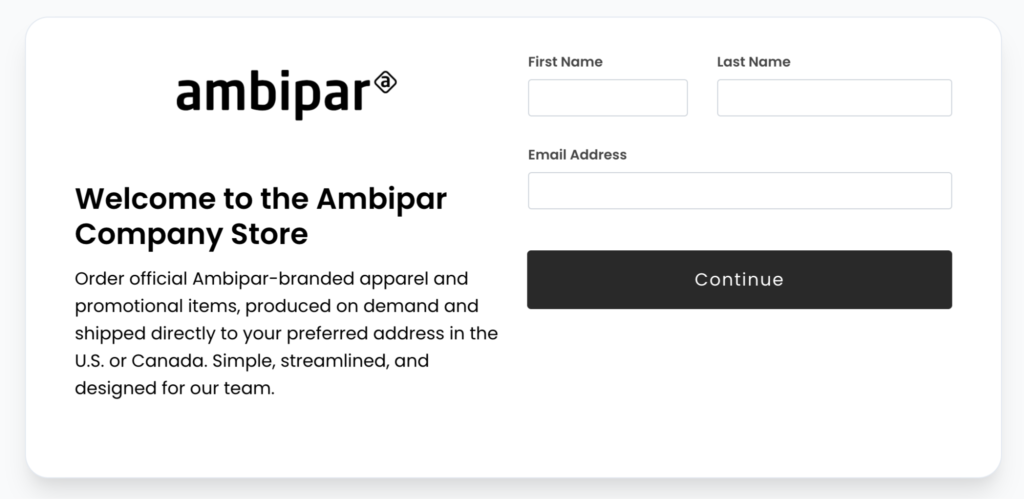
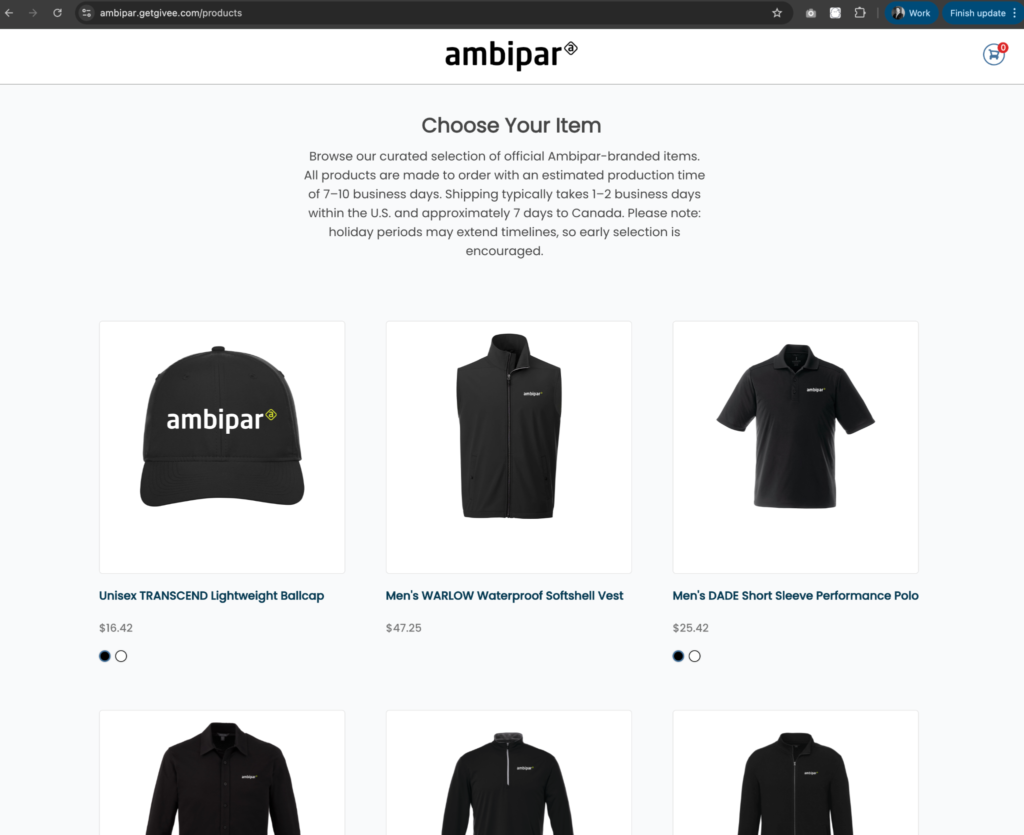
Swag On Demand Company Store Sample:
You Define It, We Run It
SwagDrop is not a SaaS platform. We are a promotional products company with over 30 years in the industry that uses technology to make your program easier to run, not to add another software subscription to your budget. There are no seat fees, no license fees, no platform charges. You pay for the product and the shipping. That’s it. You tell us the goals, the audience, and the per-employee budget. We build the store, curate the products, and manage everything from production through direct-to-employee fulfillment.
Opinionated Guidance from 30+ Years of Experience
We don’t just take orders, we provide opinionated guidance from our institutional knowledge. With over three decades of experience in branded merchandise, we tell our clients what works and what doesn’t. We know which items thrive in an on-demand environment, how to structure your catalog to maximize redemptions, and how to avoid common operational pitfalls.
In-Country Fulfillment by Default
SwagDrop routes US employee orders to US facilities and Canadian employee orders to Canadian facilities. This ensures that every shipment is treated as a domestic delivery. By eliminating cross-border freight, we guarantee your Canadian employees receive a premium experience free of unexpected duties at the door.
For guidance on what to look for when evaluating enterprise swag vendors for either model, the key questions center on domestic fulfillment capability, pay-per-claim budget structure, and whether address collection is handled by the vendor or offloaded to HR.
Book a call with Mark to compare both models against your program numbers.
Frequently Asked Questions
What is the main operational difference between a company swag store and a one-time kit send?
A company swag store runs continuously, employees access it when a new credit is loaded, select their own items, and ship directly to their address. SwagDrop builds and manages these stores for companies with 500 to 5,000 employees. A one-time kit send is a discrete logistics operation: items are picked, packed, and shipped for a single occasion, then the operation ends. The store model absorbs multiple gifting occasions into a single infrastructure. The kit model requires a separate operation each time.
Can a company run both a standing store and occasional one-time kits?
Yes, and for many companies it makes sense to. SwagDrop typically recommends a standing store as the primary program infrastructure for ongoing employee gifting, onboarding, recognition, rebrands, while one-time kit sends remain available for bounded, fixed-headcount events like conferences or executive gifting. The store handles scale; the kit handles specific moments where every recipient gets an identical item.
Which model is better for onboarding new hires at ongoing volume?
A standing store is significantly more efficient for ongoing new hire onboarding. SwagDrop configures new hire stores so that every new employee receives a store link on day one, selects their own items and sizes, and their new hire welcome kit ships directly to their home, regardless of whether they are in the US or Canada. Running a discrete kit operation per onboarding cohort becomes a recurring HR admin burden at any meaningful monthly volume.
How does a swag store handle US and Canada without creating customs issues?
SwagDrop routes orders domestically by default: US employee orders fulfill from US facilities, Canadian employee orders from Canadian facilities. No order crosses the border, which means Canadian employees never receive a customs bill at their door. This is a structural capability of the store model, managing the same program across US and Canada without customs exposure is not possible under a bulk kit model shipping from a single US warehouse.
What happens to unspent budget in a standing swag store vs a one-time kit send?
In a one-time kit model, the full budget is committed when production begins, every unit is spent whether or not the employee wanted it. In SwagDrop’s standing store model, budget is only drawn down when an employee redeems. Programs typically see 5 to 15% non-redemption. That unredeemed share stays in the company’s account and can be rolled into a future program or a richer gift tier, it does not disappear into packaging.
SwagDrop’s 2026 Employee Swag & Choice Gap Study was conducted by Pollfish in May 2026, surveying 1,000 Canadian employees at companies with 250 or more employees. This is the first large-scale Canadian dataset measuring the employee experience of corporate branded merchandise programs from the recipient’s perspective.