


![Top 6 Employee Onboarding Best Practices [2026 Guide]](https://swagdrop.com/wp-content/uploads/2022/03/Top-6-employee-onboarding-best-practices.png)
Employee onboarding involves multiple strategies used to help new hires feel comfortable in a new job.
If you plan this process carefully and don’t rush it, people learn faster, connect with the team sooner, and stay longer.
In this guide, we’ll share simple onboarding practices that will help you win over new employees, like building a 30-60-90 day plan, assigning a buddy, checking in often, and using fun welcome swag.
We’ll also show you how to handle remote onboarding, what to do before day one, and the most common mistakes you need to avoid.
Table of Contents
Why Is Employee Onboarding Important?
What Are Employee Onboarding Best Practices?
What Are Remote Onboarding Best Practices?
How Is Remote Onboarding Different Than In-Office Onboarding?
What Are Preboarding Best Practices?
How Long Should Employee Onboarding Last?
What Are Common Onboarding Mistakes?
What Is Employee Onboarding?
Employee onboarding is the organized process of introducing new hires to a company, a new role, and the work environment. It usually involves administrative tasks, training, setting expectations, and building relationships, so new employees know how to get started and who to contact for help.
Why Is Employee Onboarding Important?
Employee onboarding matters because the first months set the tone for everything that follows. A good start helps new hires understand how things work, where they fit, and what success looks like.
1. Helps new hires become productive faster
Early structure gives new employees a sense of direction and shortens their learning curve.
Clear responsibilities and priorities show them what to focus on, while access to tools and role-specific guidance reduces guesswork.
Less confusion means faster progress and less time spent correcting mistakes.
2. Improves engagement and satisfaction
A welcoming start makes people feel like they’re part of the team from the first day instead of an outsider trying to catch up.
Regular check-ins open the door for questions and honest conversations that become part of the daily routine.
Onboarding also shows new hires how your team works and interacts, helping them settle in faster.
This sense of comfort improves engagement and increases employee satisfaction over time.
3. Encourages people to stay longer
The first few months usually decide whether someone sticks around or starts looking for a new job.
A good first impression paired with ongoing guidance and communication build trust in the company and make new team members feel valued early.
This positive experience pushes people to commit to their new role, improving employee retention.
According to Insight Global’s Employee Sentiment Report, four in five workers say they’d stay longer in a company with a better onboarding process.
4. Reduces costs and pressure on the team
When new hires find their footing faster, you avoid lost productivity that comes from endless questions and mistakes that pull the rest of the team away from their tasks.
Better retention also means you spend less time and money recruiting and training replacements and more time growing your business.
What Are Employee Onboarding Best Practices?
Employee onboarding best practices are proven strategies you can use to improve a new hire’s experience. They help employees understand their role better, build stronger bonds with the team, and feel more comfortable in their new work environment.
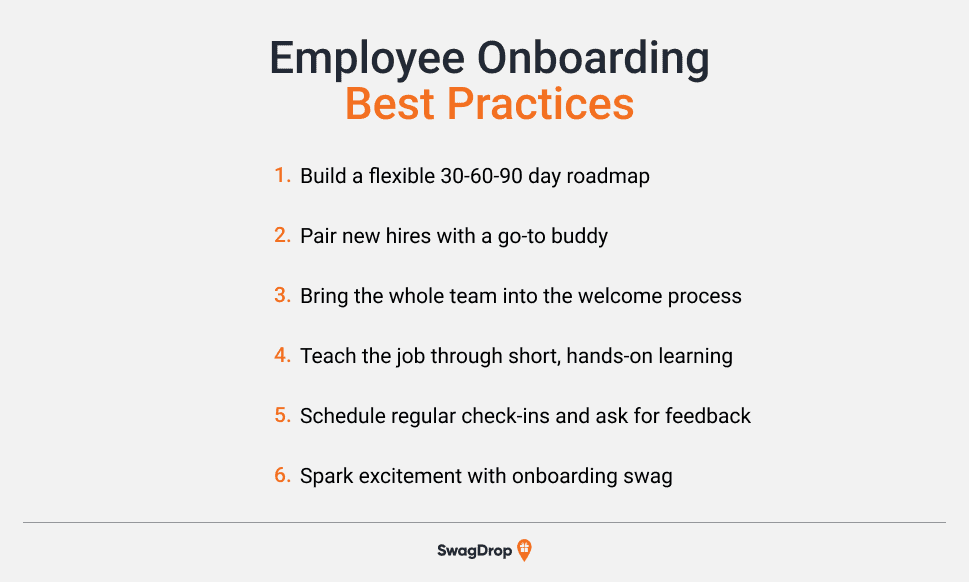
1. Build a flexible 30-60-90 day roadmap
Break the first three months into a simple onboarding checklist that new employees can follow to make the process more manageable.
Start with a basic template that focuses on admin tasks, learning, practice, and ownership, then personalize it based on the new role and team needs.
This onboarding plan helps new hires understand what matters now and what comes next, so they can prioritize accordingly.
2. Pair new hires with a go-to buddy
A buddy or a mentor makes the adjustment period less awkward. Having one trusted person to ask quick questions saves time and reduces hesitation.
Buddies also share the details that never show up in employee handbooks, like team habits or where to get the best coffee.
This one-on-one connection encourages new employees to relax, build relationships, and feel comfortable speaking up early on.
3. Bring the whole team into the welcome process
HR professionals and hiring managers shouldn’t be the only point of contact for newcomers. Early interactions with the rest of the team show new employees how people collaborate and communicate day to day.
Simple things like shared meetings, introductions, or team outings make company culture feel real and inspire people to connect.
Social onboarding also makes new hires feel welcome and included from the first week, helping them acclimate faster.
4. Teach the job through short, hands-on learning
People learn best by doing, not by sitting through never-ending presentations or reading thick and boring manuals.
Short training sessions focused on real tasks combined with hands-on practice help new team members absorb information faster.
This strategy also lets you adjust training based on the questions that come up, instead of waiting until small gaps turn into huge issues.
5. Schedule regular check-ins and ask for feedback
Regular check-ins keep things on track by catching and solving small problems or concerns early and building trust.
Short one-on-ones with new hires create a safe space for answering questions and discussing challenges, priorities, and progress.
You can also use this time to gather feedback on the onboarding program so you can make improvements and show new employees you value their opinion.
6. Spark excitement with onboarding swag
Starting a new job comes with a lot of unknowns. A new hire welcome kit featuring branded swag adds a fun element to the experience, easing some of that early anxiety.
Plus, when new employees see their teammates wearing the same hoodie or carrying the same backpack, they instantly feel like they belong.
In fact, a recent study by Quality Logo Products found that 73% of workers feel a sense of pride and belonging to the company after receiving a gift.
Why on-demand swag works even better
Traditional onboarding kits can miss the mark because it’s hard to guess preferences and sizes for someone you’ve just met.
On-demand swag eliminates guesswork by letting new team members pick branded products they actually like, in their preferred colors and sizes.
This choice creates excitement and makes the employee experience more personal and memorable.
How SwagDrop simplifies everything
Our SwagDrop team handles every aspect of your onboarding swag without you lifting a finger.
We build you a fully branded swag-on-demand shop in as little as one week. You just tell us your goals and budget, and we pick the products and design the storefront.
Once the onboarding store goes live, you can start sharing the link through welcome emails or internal channels. New hires browse the product collection, make their picks, and place the order.
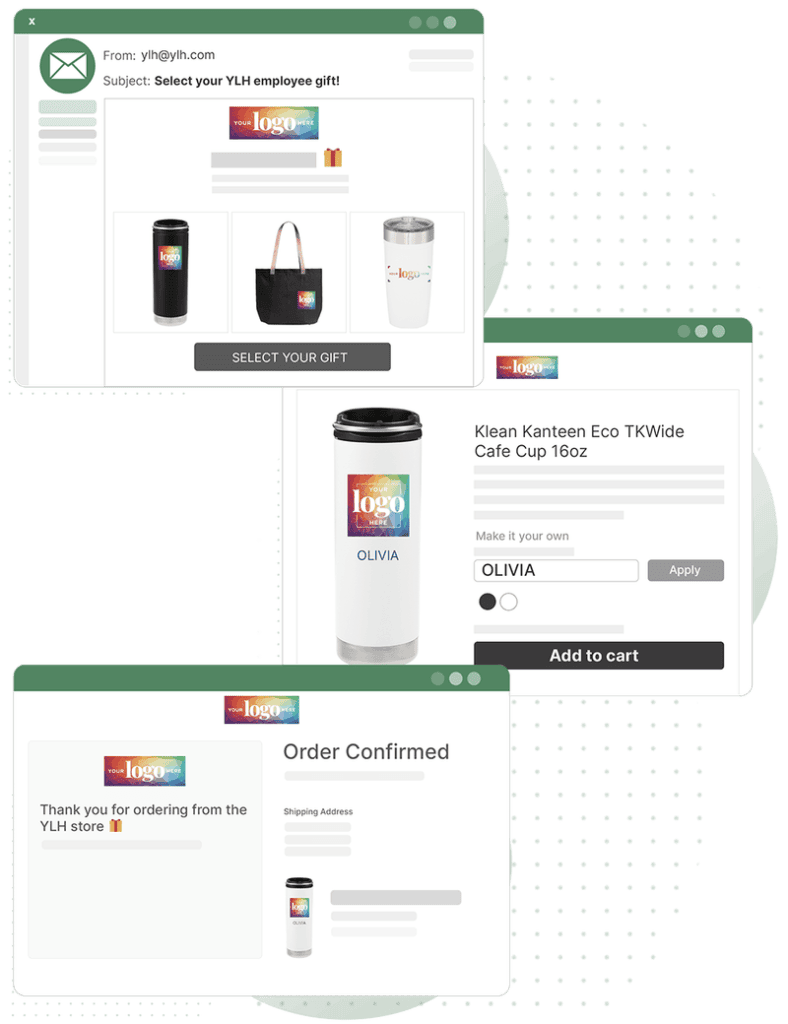
We then handle production, packing, and direct shipping to the employee’s doorstep. Your team doesn’t even need to track orders or answer questions because we’ve got that covered, too.
The best part is that you can use our print-on-demand shops for more than just welcoming new team members. We can create separate stores for employee rewards, client onboarding, Christmas gifting, and any other occasion.
What Are Remote Onboarding Best Practices?
Remote onboarding best practices help new hires feel less alone and confused, and more connected to the rest of the team when they work from home. You can simply adjust in-person strategies to fit remote workspaces.
- Send a warm welcome letter to the new employee soon after they accept your job offer to make them feel seen and valued and boost morale.
- Invite remote employees to pick their work-at-home kit from your on-demand swag shop to show thoughtfulness and improve their work experience.
- Use an onboarding software to automate task reminders, document sharing, and progress tracking, so remote hires always know what to do without turning to a nearby teammate for help.
- Keep in touch with new hires at all times using short check-in messages and casual video chats to recreate the everyday contact that happens naturally in the office.
- Create team bonding moments through fun virtual events like online happy hour, trivia night, karaoke, or escape room.
- Give remote employees access to online skill development opportunities to help them grow and build long-term loyalty.
How Is Remote Onboarding Different Than In-Office Onboarding?
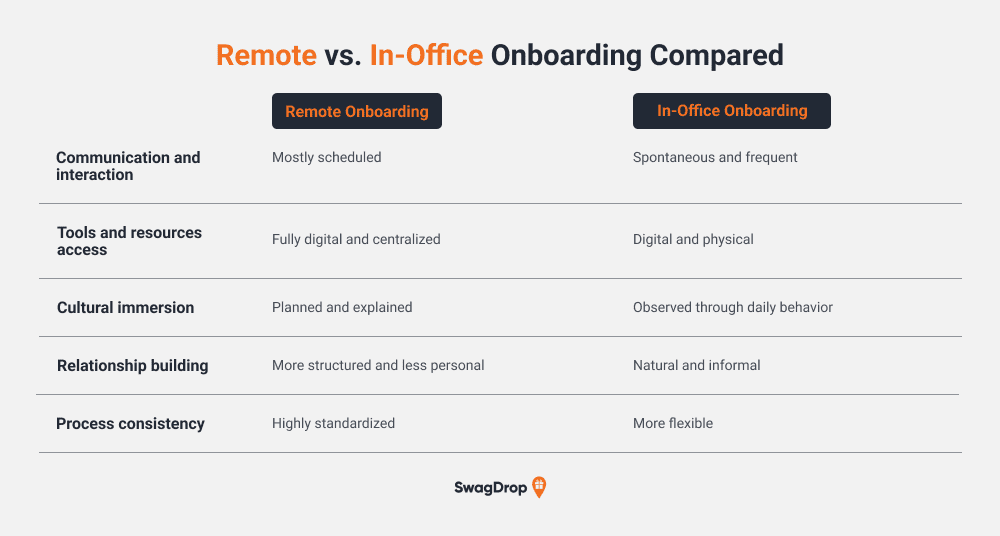
The main difference between in-office onboarding and remote onboarding comes down to how people connect, learn, and get context. Office environments rely on proximity, while remote workplaces require more planning because they don’t share the same space.
Communication and interaction
In an office, communication happens naturally. Questions pop up, answers come fast, and context fills the gaps.
Remote work eliminates that safety net because conversations always need a place and time. Scheduled video calls and internal communication channels help new hires keep in touch and feel less isolated.
Tools and resources access
Office hires usually learn the ropes by watching teammates work or asking for help on the spot.
Remote hires open their laptop and work solo, so they need easy access to all the tools and documents paired with short video tutorials.
Cultural immersion
In-person employees pick up a lot about the company culture just by being around others. They see how people share feedback, how meetings really run, what “normal” looks like day to day.
Remote employees miss those signals, so you need to explain company values and culture using examples, stories, and real scenarios.
Relationship building
Friendships form faster when people start their day chatting over coffee in the break room and go to grab lunch together.
Remote teams need to create space for connection on purpose. Small group calls, buddy chats, and after hours video meetups help relationships grow without pressure.
Process consistency
In an office, you can adjust your onboarding plan on the fly through face-to-face guidance and quick corrections.
Remote onboarding needs a more structured path. Clear steps, timelines, and checklists help new hires understand what comes next without constant back-and-forth.
What Are Preboarding Best Practices?
Preboarding best practices prepare new hires before the start date to ease up their nerves and make the first day less overwhelming.
- Send a friendly welcome email to let new employees know you’re excited they’re joining. A heartfelt message breaks the ice and makes a good first impression.
- Share useful information, like company values, dress code, and how the first day will play out, to eliminate some of the scary unknowns.
- Offer a brief preview of the onboarding plan so new team members know what to expect in the first few weeks.
- Give access to key documents, including the employee handbook, company policies, and benefits info, so new hires can review them at their own pace.
- Set up tools, accounts, and system access in advance to prevent awkward delays on the employee’s first day.
- Start building connections before day one by sharing team intros, scheduling a welcome meeting, and connecting new hires with their future buddy to answer casual questions.
How Long Should Employee Onboarding Last?
Employee onboarding can last one, two, or three months, but you should continue offering guidance and check in regularly until the end of the first year.
The early weeks focus on new hire orientation, role-specific toolkits, and expectations, while the following months help people take ownership of their work and settle into the team.
What Are Common Onboarding Mistakes?
Most onboarding problems come from rushing or assuming new hires will figure things out on their own. These missteps create confusion, slow down progress, and make the new job unnecessarily stressful.
- Skipping a real onboarding plan creates a shaky start. New employees arrive ready to learn but end up guessing what to do, who to ask, or what matters most.
- Cramming too much info into the first day overwhelms people. Back-to-back meetings, training sessions, and paperwork blur together, making it harder to remember key details later.
- Limiting interaction with team members makes new hires feel like outsiders. If you don’t give them the chance to connect early, they’ll hesitate to ask for help, collaborate, and bond with others.
- Leaving expectations fuzzy causes problems down the road. Without clear priorities and success markers, new employees face a lot of rework and uncomfortable conversations with managers.
- Failing to check in regularly allows small issues to grow quietly and build frustration. Questions pile up, confidence dips, misunderstandings linger, and, before you know it, people quit.
Tips, tricks, and inspiration delivered straight to your inbox.
Over to You!
An amazing employee onboarding process doesn’t happen by accident. You need to plan it carefully and make improvements along the way to keep engagement and retention up.
Follow our onboarding practices to help new hires understand their role, pull their weight, and build a strong connection to the company right away.
And don’t forget to lighten up the mood with cool welcome swag.
Book a call with us, and we’ll create a fun, personalized, and unforgettable onboarding experience for your new employees.