

Most enterprise swag programs treat tote bags as filler, the item you throw in when the budget has a few dollars left over. That framing undersells what a well-chosen branded tote actually does. A tote goes to the farmers market, the gym, the office, the grocery run, the conference. It carries a logo into every one of those environments without asking anything of the person carrying it.
SwagDrop works with HR and marketing teams at companies with 500 to 5,000 employees to build on-demand tote programs, canvas, recycled cotton, jute, insulated, crossbody, and oversized styles, delivered directly to each employee across the US and Canada. No inventory pre-bought. No sizes guessed. No swag closet filling up with bags nobody wanted.
16 Best Branded Tote Bags for Enterprise Programs
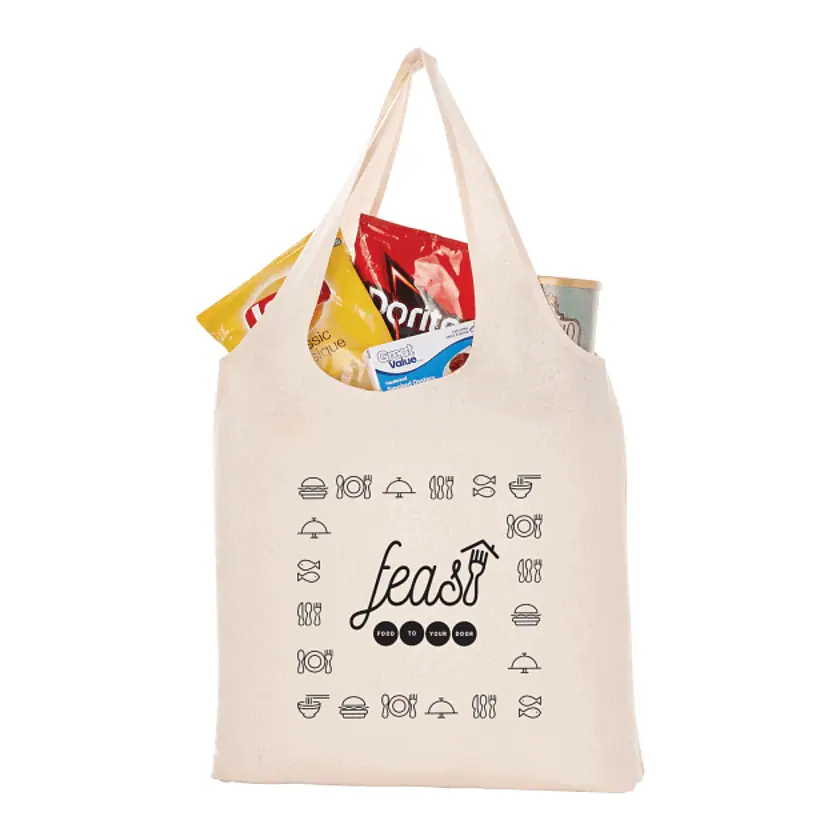
1. All-Purpose 5oz Cotton Canvas Tote
The All-Purpose 5oz Cotton Canvas Tote is the workhorse of any tote program. A clean 5oz cotton canvas construction with an open main compartment and 10-inch drop handles, holds its shape, takes a logo well, and earns daily use because it works for everything from office carry to weekend errands. The reusable cotton material positions it as a straightforward alternative to single-use plastic without making a statement about it.
Materials: 5oz cotton canvas
Ideal for: Company-wide programs, event giveaways, new hire kits, trade show distribution
Price: As low as $3.88
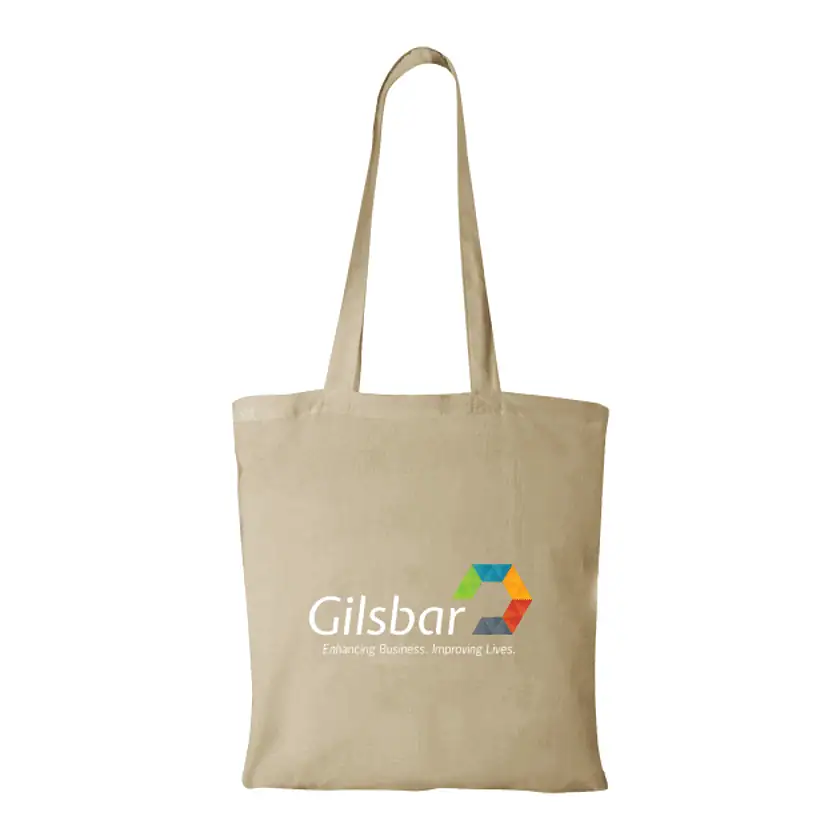
2. Carolina 4oz Cotton Canvas Tote
The Carolina 4oz Cotton Canvas Tote is a slimmer, lighter option with double 29-inch reinforced handles, designed for conventions and trade shows where people are collecting materials all day and don’t want something that adds bulk. The longer handle drop means it fits over a shoulder without thinking about it, which is exactly the carry style that earns repeat use after the event.
Materials: 100% cotton canvas
Ideal for: Convention distribution, trade show programs, conference kits
Price: As low as $3.92
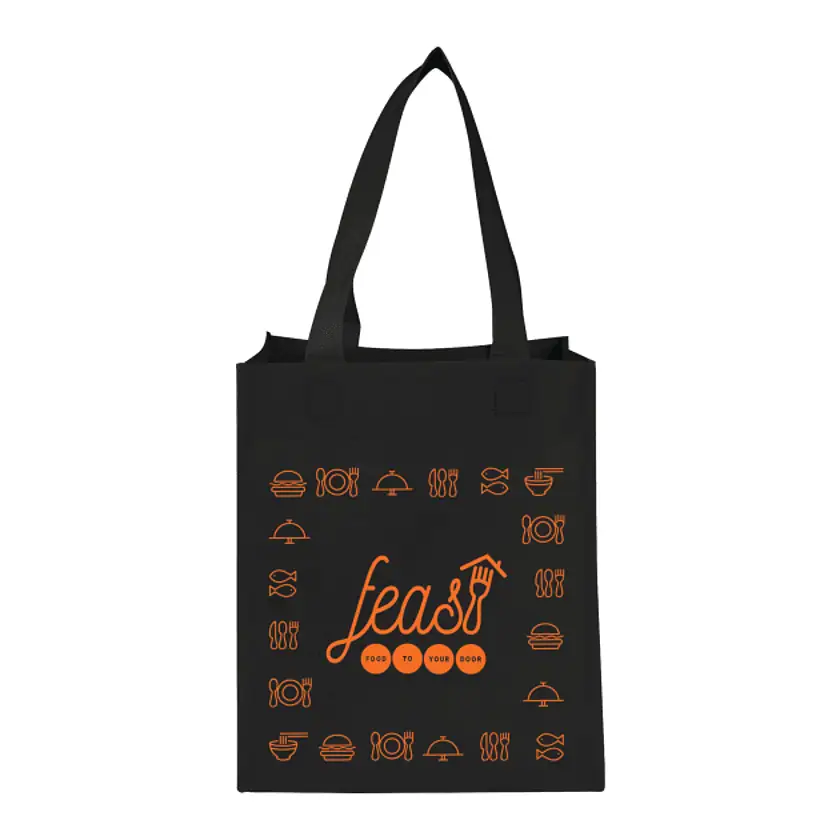
3. Basic Grocery Tote
The Basic Grocery Tote uses polypropylene construction, recyclable with #5 plastics, with a large open main compartment and an 8.5-inch handle drop. Lightweight and durable enough to replace the plastic bag at checkout repeatedly. The program case for this one is straightforward: it goes wherever groceries go, which is several times a week, a significant amount of brand impressions at very low cost per item.
Materials: Polypropylene (recyclable #5)
Ideal for: Large-scale employee programs, wellness initiatives, community giveaways
Price: As low as $2.28
4. Hercules Non-Woven Grocery Tote
The Hercules Non-Woven Grocery Tote uses 80G non-woven polypropylene with a supportive bottom board and reinforced 18.5-inch handles, built to hold a full grocery load repeatedly without the handles giving out. The bottom board is the detail that matters here: bags that collapse when loaded get left at home. A bag that holds its shape gets used every time.
Materials: 80G non-woven polypropylene
Ideal for: Company-wide programs, employee appreciation, sustainability-focused campaigns
Price: As low as $3.10
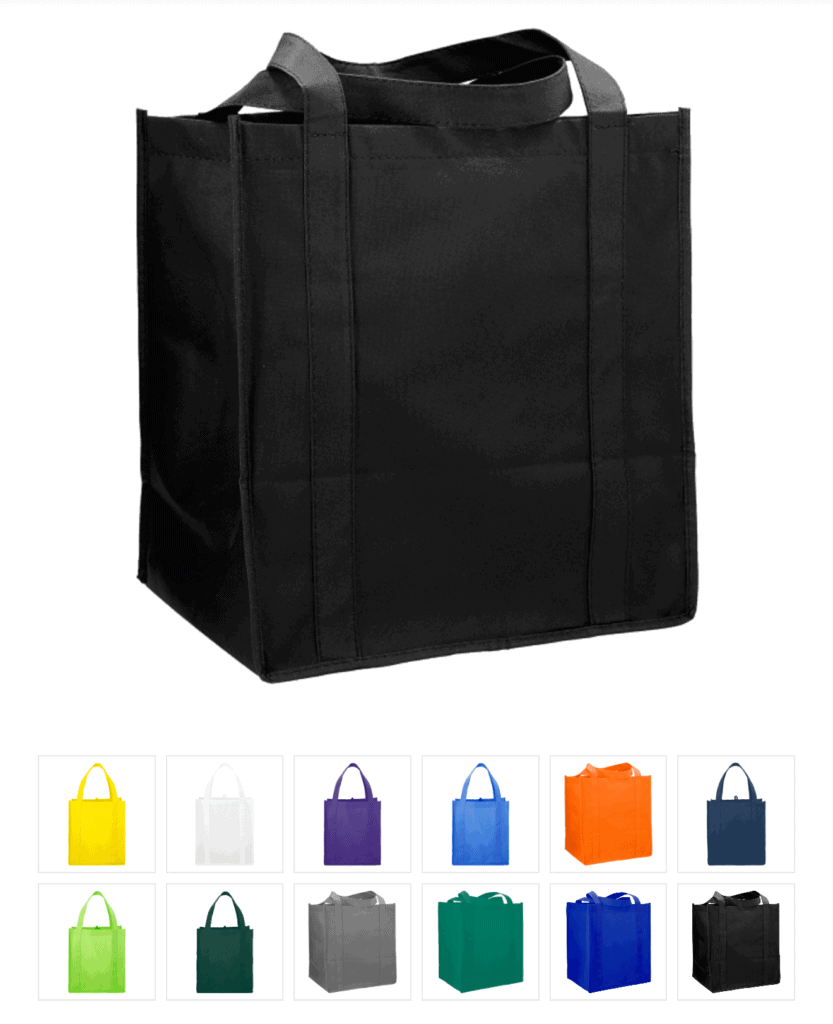
5. Little Juno Non-Woven Grocery Tote
The Little Juno Non-Woven Grocery Tote is compact non-woven polypropylene with dual 22-inch reinforced handles and a bottom board for structure. Its smaller footprint relative to the Hercules makes this the right choice for programs where the tote is a carry companion rather than the primary grocery bag, conferences, welcome kits, and daily carry. Fully customizable on both the gusset and handles.
Materials: 80G non-woven polypropylene (recyclable #5)
Ideal for: Conference kits, new hire welcome programs, employee gifting
Price: As low as $2.77
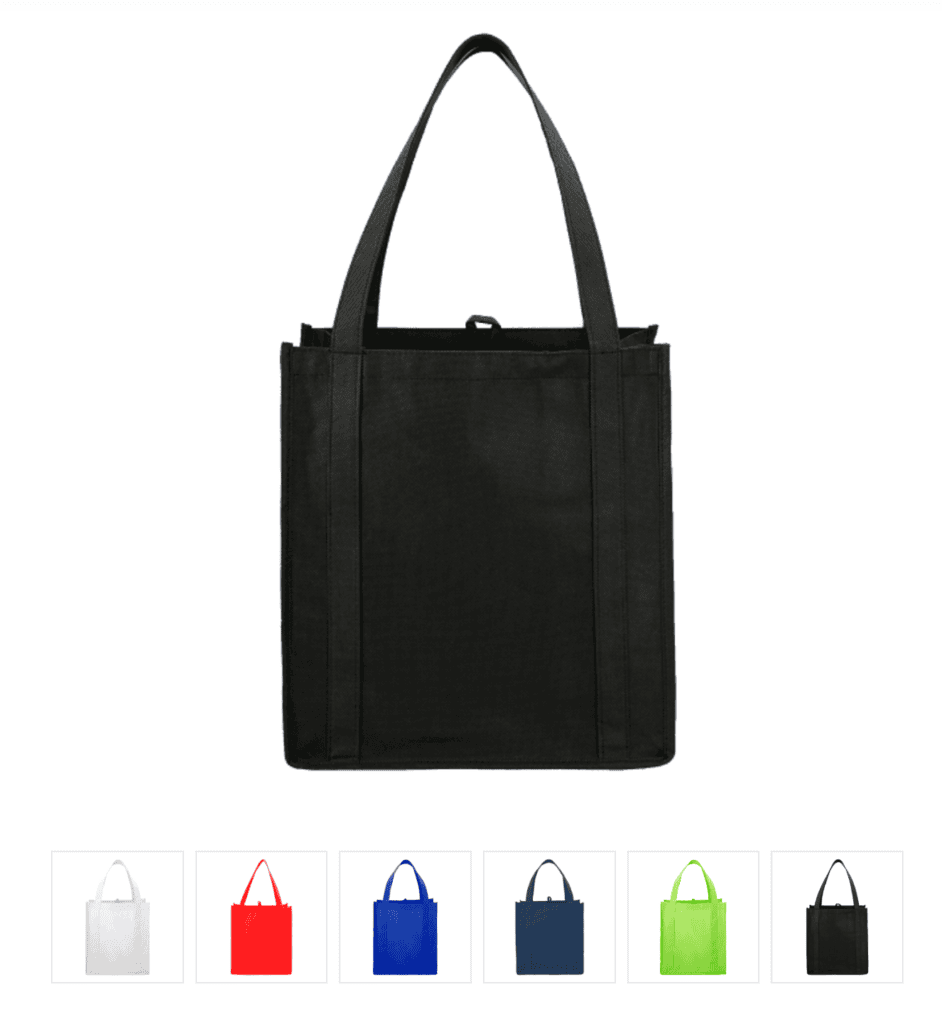
6. Eros Non-Woven Shopper Tote
The Eros Non-Woven Shopper Tote is a clean, open shopper in polypropylene with double 20-inch handles. Reusable and recyclable, sized for everyday carry. A strong option for programs that need volume at a practical price point without sacrificing the eco-conscious positioning.
Materials: Polypropylene (recyclable #5)
Ideal for: Large volume programs, trade show distribution, community gifting
Price: As low as $2.12
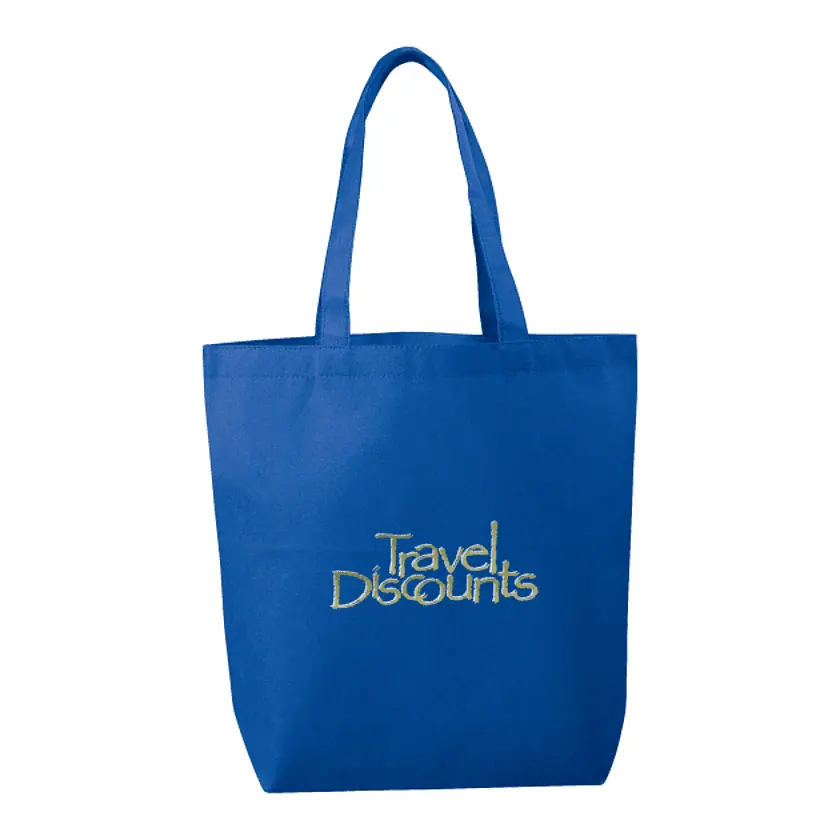
7. Herringbone Jute Tote
The Herringbone Jute Tote uses natural jute in a herringbone texture, with a large open main compartment sized for the beach, market, or weekend use. Jute reads as artisan and considered rather than promotional, which means it earns display rather than storage. A strong fit for brands where the environmental and aesthetic story matter equally.
Materials: Natural jute
Ideal for: Eco-conscious brand programs, wellness initiatives, summer employee gifting
Price: As low as $9
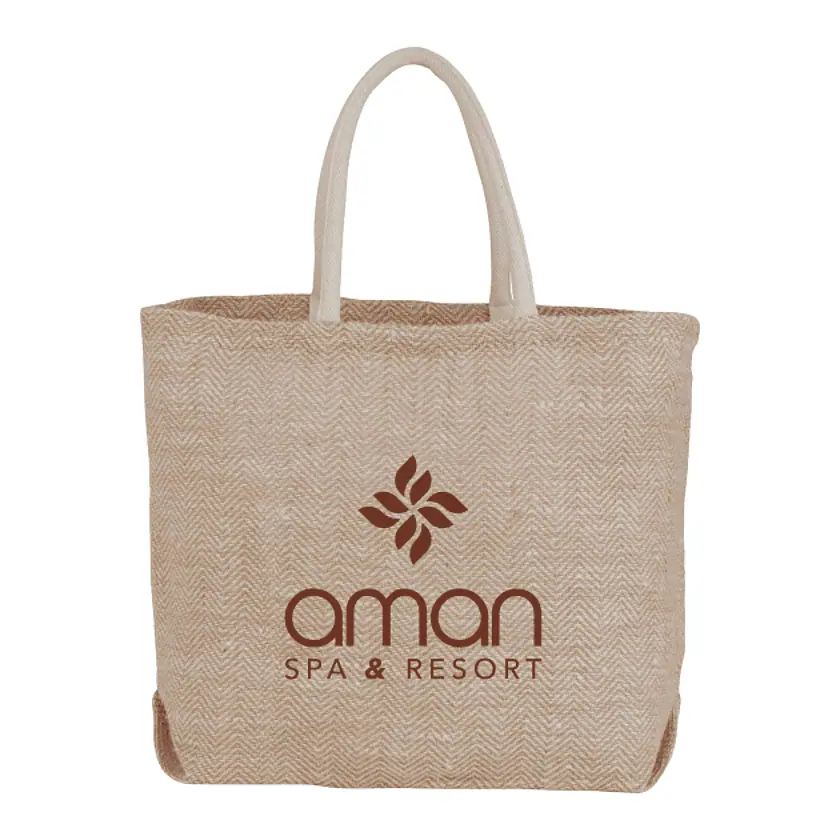
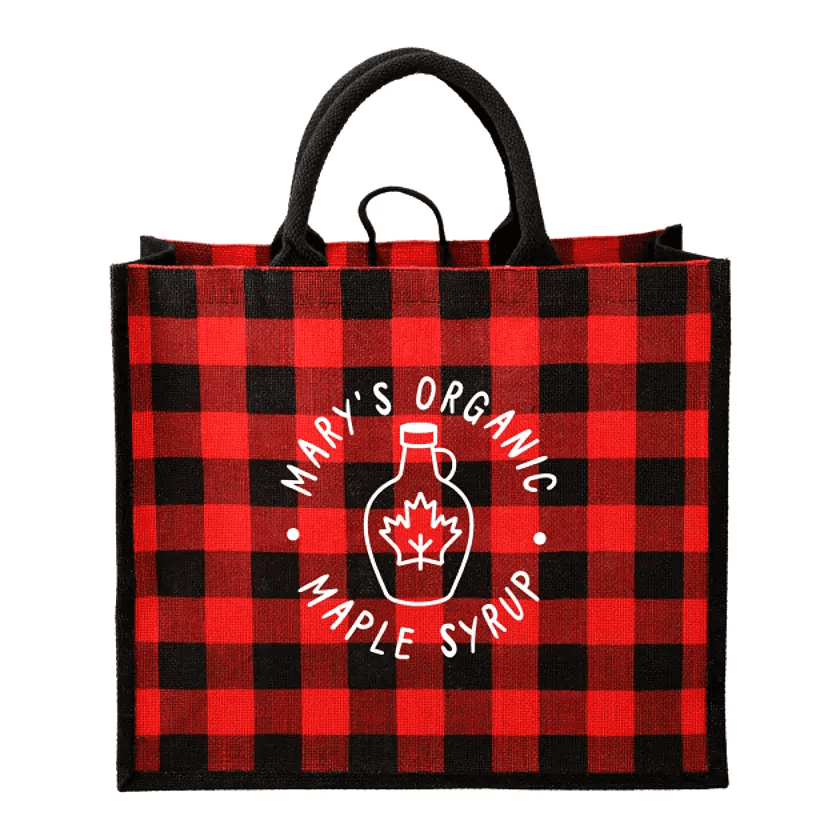
8. Buffalo Plaid Printed Jute Tote
The Buffalo Plaid Printed Jute Tote uses jute construction with a buffalo plaid print that does the visual work so the bag gets picked up and used independently of the logo. A good seasonal gifting option and a strong candidate for programs where the item’s own appeal drives engagement before the brand association does.
Materials: Jute
Ideal for: Seasonal programs, holiday gifting, wellness and outdoor-adjacent brands
Price: As low as $9.5
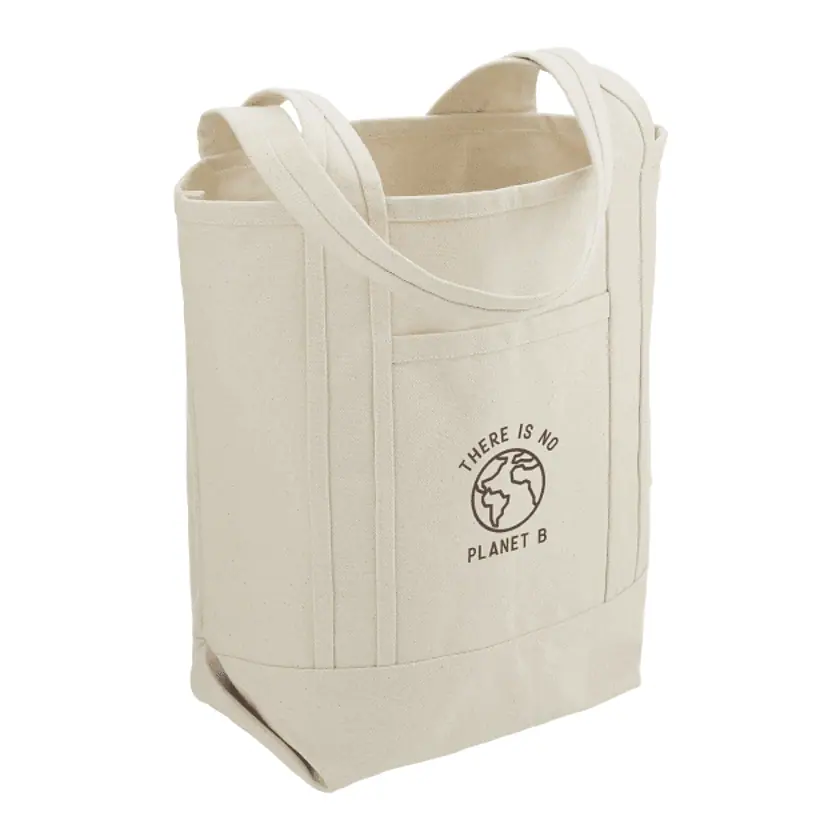
9. Organic Cotton Boat Tote
The Organic Cotton Boat Tote carries GOTS OE Certified Organic Cotton, a front slash pocket, and double 12.5-inch drop handles. Supported by 1% For The Planet, every purchase directs a portion to environmental nonprofits. For companies with an active sustainability commitment, this is the tote that makes that commitment specific rather than aspirational. The certification can be cited in program communications, not just mentioned.
Materials: GOTS OE Certified Organic Cotton
Ideal for: Sustainability programs, eco-conscious corporate culture, environmental brand alignment
Price: As low as $36.97
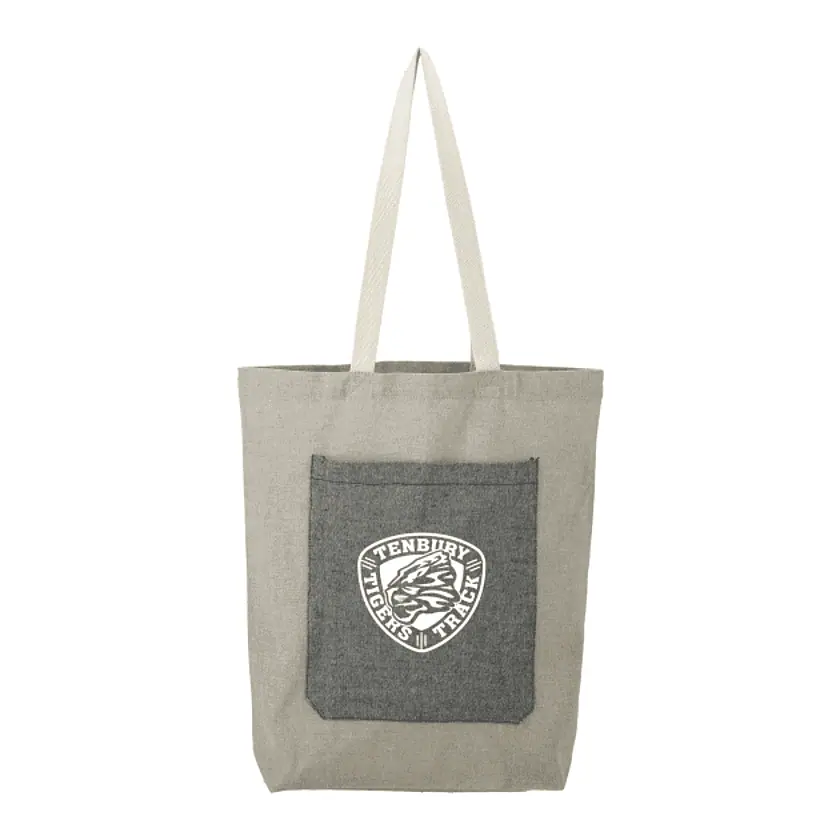
10. Recycled Cotton Pocket Tote
The Recycled Cotton Pocket Tote uses pre-consumer recycled cotton with double handles, a front slash pocket, and an open main compartment. It supports 1% For The Planet. The front pocket is the functional differentiator here, it solves the “where did I put my phone” problem that open totes create, which is why it earns more daily use than a basic canvas option.
Materials: Pre-consumer recycled cotton
Ideal for: Employee gifting, sustainability-focused programs, convention distribution
Price: As low as $5.29
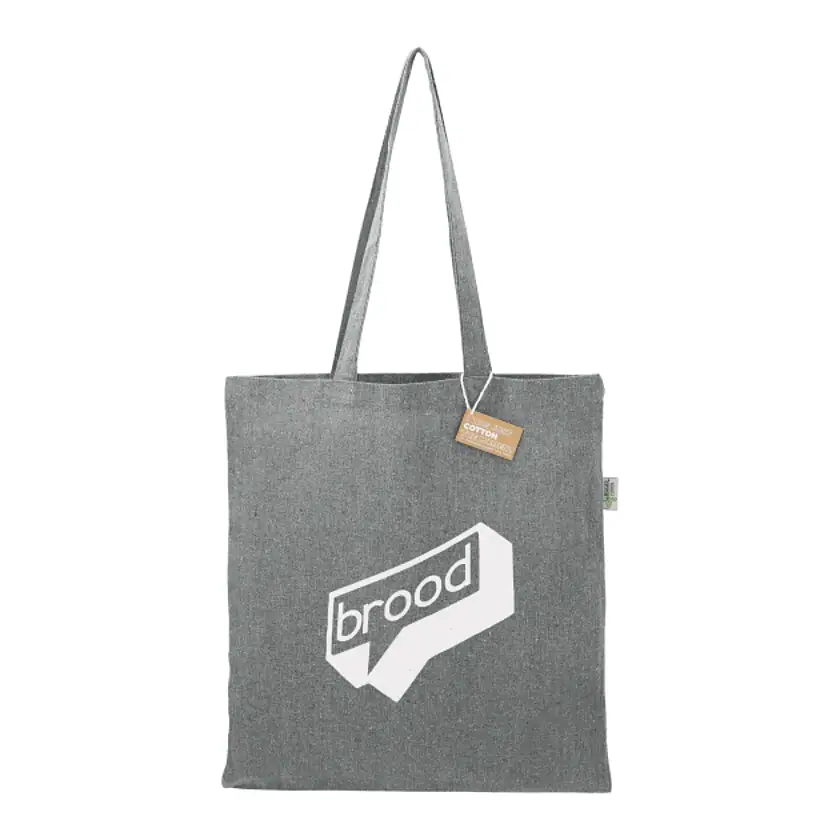
11. Recycled Cotton Convention Tote
The Recycled Cotton Convention Tote uses 7oz recycled cotton blended with recycled polyester, made from garment cutting waste, supported by 1% For The Planet. The slightly heavier weight gives it a quality feel that translates to post-event use. Unique color variations from the recycled material mean no two batches look identical, which reads as artisan rather than mass-produced.
Materials: 7oz recycled cotton and recycled polyester blend
Ideal for: Convention and conference programs, eco-conscious company events
Price: As low as $4.47
12. Recycled Cotton Grocery Tote
The Recycled Cotton Grocery Tote is the grocery-sized version of the recycled cotton construction: 7oz recycled cotton blended with recycled polyester, made from garment cutting waste, supported by 1% For The Planet. Durable and strong enough for repeated grocery use, which is where branded totes earn the most impressions per week over the life of the item.
Materials: 7oz recycled cotton and recycled polyester blend
Ideal for: Employee wellness programs, sustainability-focused company gifting
Price: As low as $6.42
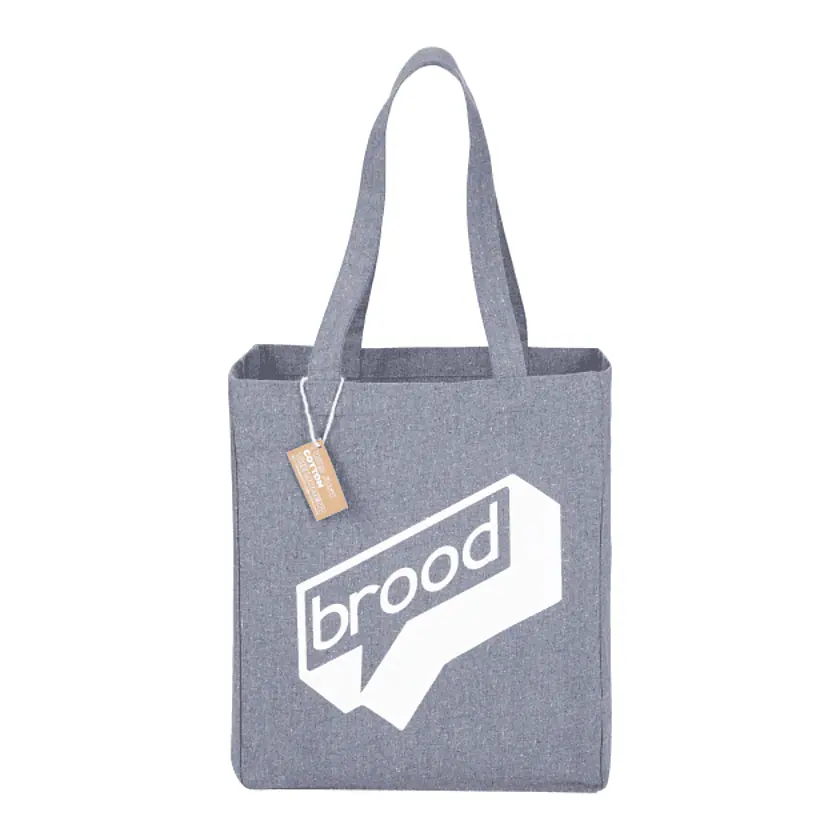
13. Recycled 5oz Cotton Twill Tote
The Recycled 5oz Cotton Twill Tote uses 70 to 80% recycled cotton with 20 to 30% RPET, made from pre-consumer waste, supported by 1% For The Planet. The twill weave gives it a slightly more refined texture than standard recycled cotton options, positioned between the convention tote and the grocery tote in terms of use case. A strong general-purpose option for programs that want recycled credentials without a rustic aesthetic.
Materials: 70-80% recycled cotton, 20-30% RPET
Ideal for: Convention programs, general employee gifting, eco-conscious brand programs
Price: As low as $3.71
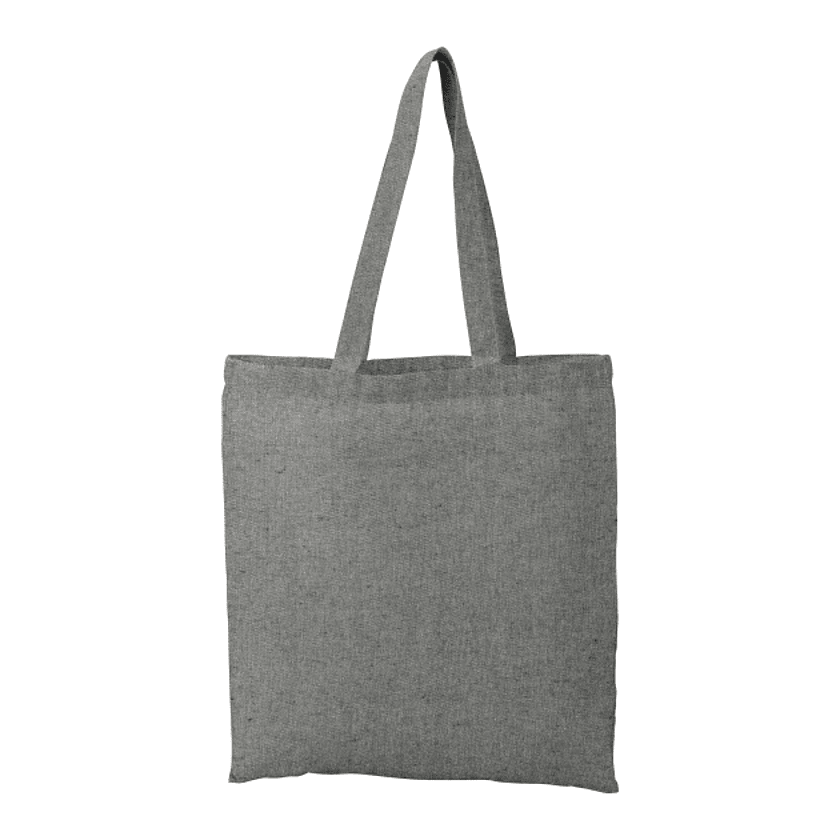
14. Recycled 5oz Cotton Twill Grocery Tote
The Recycled 5oz Cotton Twill Grocery Tote is the grocery-sized version of the recycled twill construction: 70 to 80% recycled cotton with 20 to 30% RPET, with a covered bottom board for structure, supported by 1% For The Planet. Built for the weekly shop, which means it gets seen at checkout several times a week by everyone in line behind the person carrying it.
Materials: 70-80% recycled cotton, 20-30% RPET
Ideal for: Employee wellness gifting, sustainability-forward programs, grocery-use cases
Price: As low as $5.72
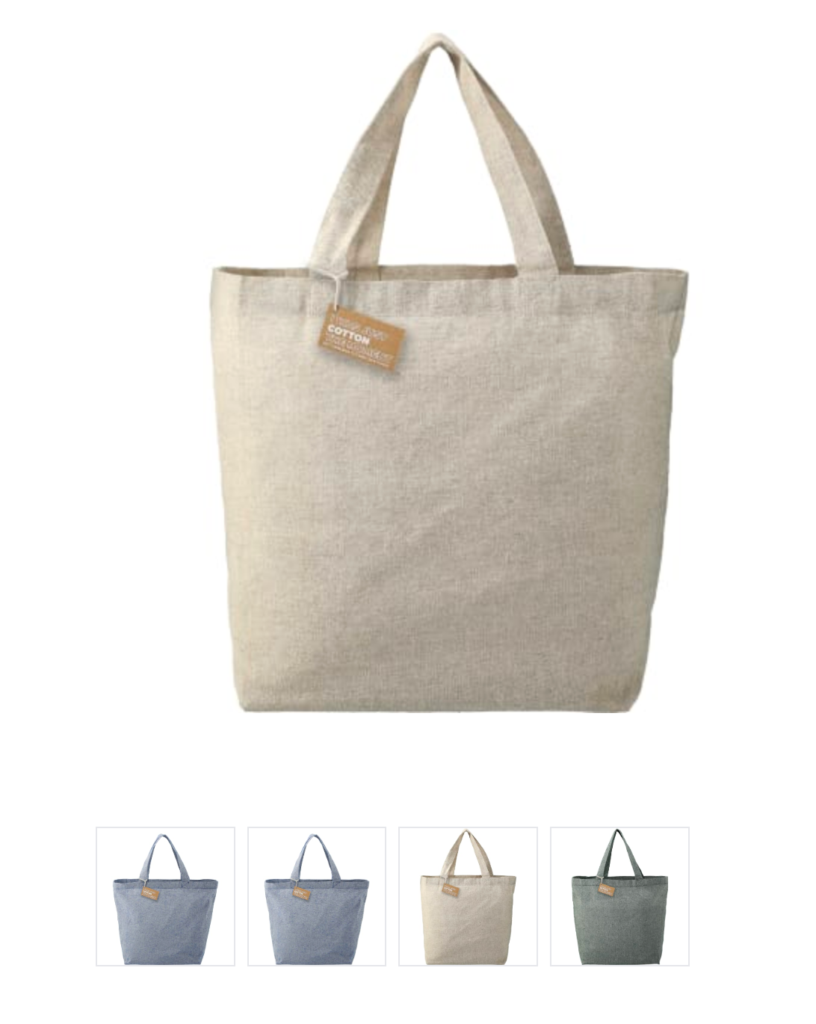
15. Hercules Insulated Grocery Tote
The Hercules Insulated Grocery Tote uses 80G non-woven polypropylene with a heat-sealed, water-resistant insulated lining, a zippered main compartment, and a front open pocket. The insulation keeps cold items cold from the store to the fridge, which is exactly the kind of daily utility that earns a permanent spot in someone’s car. A branded item that solves a real problem gets used without being thought about, which is when brand visibility is at its best.
Materials: 80G non-woven polypropylene with heat-sealed insulated lining
Ideal for: Employee gifting, wellness programs, outdoor and commuter audiences
Price: As low as $5.93
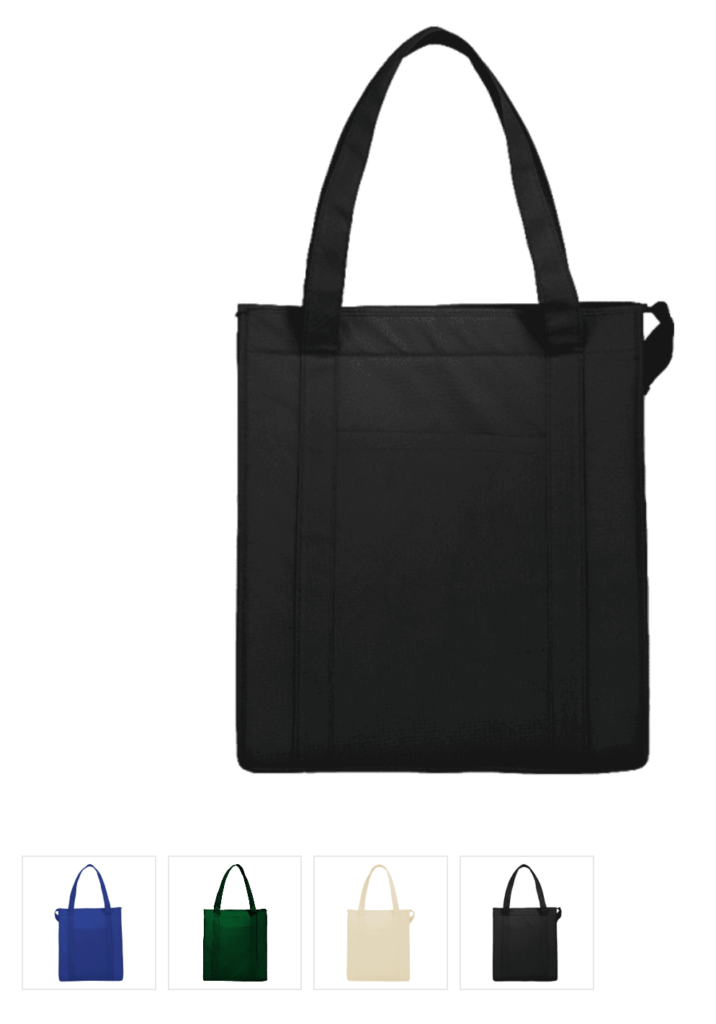
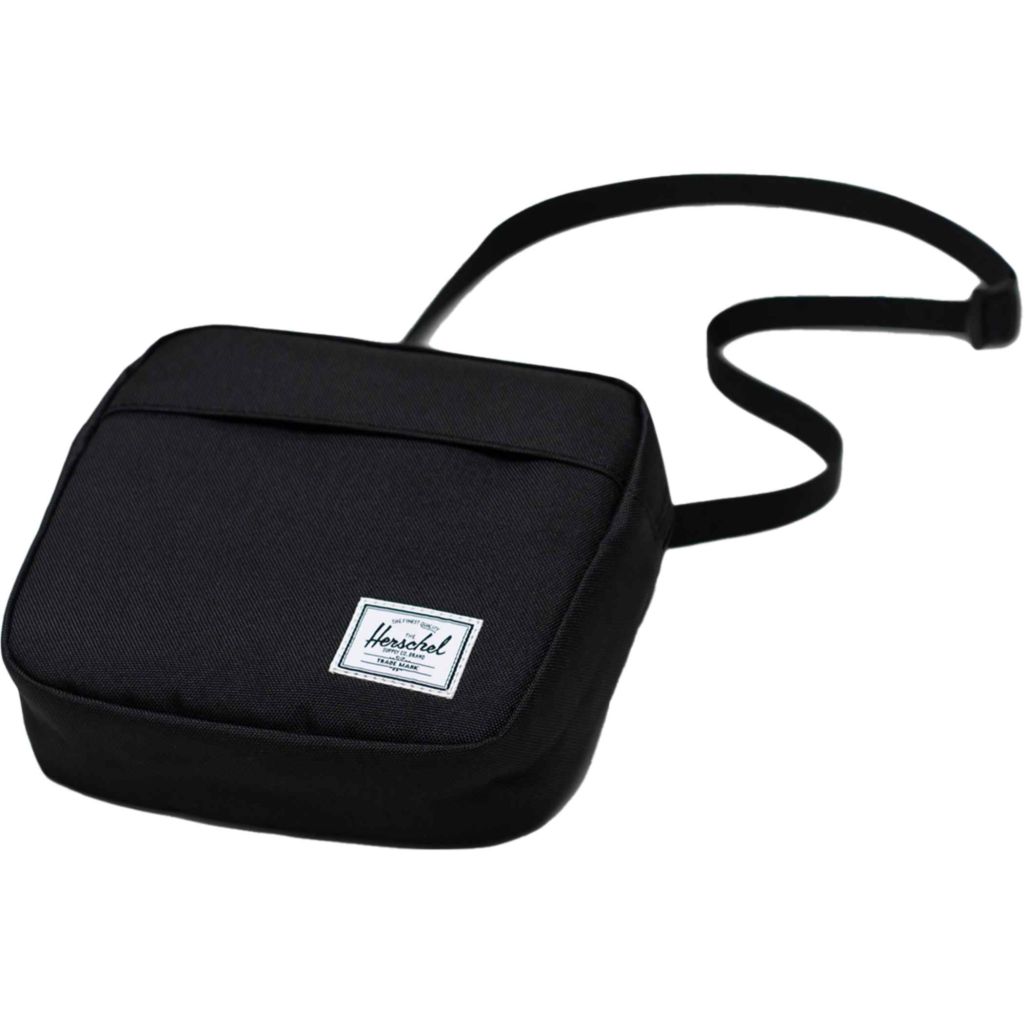
16. Herschel Recycled Classic Crossbody Tote
The Herschel Recycled Classic Crossbody Tote uses Herschel’s EcoSystem recycled fabrics in a compact crossbody format, designed for daily essentials, worn hands-free, and built to stay within reach rather than being set down and forgotten. The Herschel brand name does significant work independently of the logo: recipients recognize it as a quality item before they’ve processed the company branding on it. The premium tier of the tote catalog. See it alongside other luxury promotional products for executive gifting contexts.
Materials: Herschel EcoSystem recycled fabrics
Ideal for: Premium employee gifting, new hire welcome kits, executive gifting programs
Price: As low as $69.23
Why Tote Programs Fail When They’re Run as Inventory Orders
The typical tote program looks like this: someone picks one style, orders a thousand units at a negotiated bulk price, and distributes them at an event or through HR. The price per unit looks favorable. The waste doesn’t show up until later, in the storage room full of bags from the style nobody liked, in the employee who left the bag at the event because they already have three at home, in the rebrand that made the logo on all those bags wrong overnight.
As SwagDrop’s 2026 Company Swag Study found, 52.5% of employees across the US and Canada rarely use, donate, or discard the last branded item they received. Tote bags are not exempt from this pattern. The fix is not finding a better tote, it is building a program where employees choose the tote they will actually use.
There is also the question of what the program experience actually feels like. A Google Form asking employees to fill in their name and pick from a dropdown is four blank fields. A SwagDrop store is the equivalent of opening a box on Christmas morning, the full selection is laid out, the credit is already there, and the act of choosing is the experience. That difference in how the program feels is where employee engagement actually comes from.
When you compare inventory-first against an on-demand store:
| Inventory-based Tote Program | SwagDrop On-Demand Store |
|---|---|
| You pre-buy one style before knowing who will claim it | Production starts only after an employee selects their tote |
| Surplus in unwanted styles accumulates in storage | Nothing is produced until it is claimed |
| One option imposed across a workforce with different needs | Employees choose from a curated catalog of styles |
| Distribution requires packing and coordination | Direct-to-employee delivery anywhere in the US and Canada |
| Write-off risk when the brand refreshes | No inventory, nothing to write off |
How to Build Your Branded Tote Store
The invite link is the gift moment. When an employee opens a link to their private company store, credit loaded, real tote options in front of them, the impact is immediate. The sustainability-focused employee picks the Organic Cotton Boat Tote. The commuter picks the crossbody. The employee who does the weekly shop picks the insulated grocery tote. Everyone gets the bag that fits their life.
- Curate your catalog. Select four to six tote styles that cover different use cases, canvas for everyday carry, recycled cotton for sustainability positioning, insulated for the grocery run, crossbody for commuters. Genuine variety drives higher claim rates than multiple colors of the same style.
- Submit brand assets. Provide your logo in high-resolution format. Decoration method, artwork approval, and product configuration are all handled. No supplier coordination required on your end.
- Define access and budget. Upload a CSV of recipients. Authentication can be email-based, domain-based, or open access. Credits are assigned per person so the program stays within budget. Employees who want to spend beyond their credit can top up with their own card at checkout.
- Launch the invite link. The store is typically ready within one week of artwork approval. Send the link and the program runs itself.
- Direct-to-employee fulfillment. Once someone selects their tote, production starts immediately. Items ship direct to their door across the US and Canada.
Build an Enterprise Tote Program with SwagDrop
SwagDrop is not a platform you configure or a service you manage. There is no licensing fee, no implementation project, and no onboarding curve. HR defines the tote catalog, the credit amount, and who gets access. SwagDrop builds the store, handles all fulfillment, and reports back on claim rates. The client never touches a box.
What a well-run enterprise tote program looks like
Tote programs that work at enterprise scale share one design principle: the catalog covers different use cases, not different colors of the same bag. A canvas everyday carry, a recycled cotton grocery tote, and an insulated lunch option gives a workforce of 2,000 employees three genuinely different reasons to claim, and a much higher aggregate claim rate than any single-style program achieves. The storage room full of unclaimed totes is always a single-style program in disguise.
For sustainability-forward companies, the recycled cotton range, all supported by 1% For The Planet, and the GOTS-certified organic cotton option give the sustainability story specific, citable credentials rather than general claims.
Cross-border, solved
Running one tote program for US and Canadian employees sounds straightforward until customs bills start arriving at Canadian employees’ doors. SwagDrop eliminates this. US orders are fulfilled within the US. Canadian orders are fulfilled within Canada. No duties, no delays, no cross-border friction. BBB’s 2026 North American rebrand ran across 100+ offices in the US and Canada through a single SwagDrop store, zero cross-border shipments, zero customs duties at the door.
Flat-rate delivery
Approximately $9.95 per parcel regardless of location in North America. No variable freight, no distance surcharges.
No inventory, no write-offs
Print-on-demand means nothing is produced until claimed. No storage cost, no style going obsolete when the brand refreshes. You only pay for what employees actually claim.
Employees can spend beyond their credit, and 30% do
SwagDrop’s Stripe integration allows employees to top up with their own payment at checkout when they want to go beyond their allocated credit. No separate process, no friction. Roughly 30% of employees choose to do exactly this. When people are given a selection they genuinely want, they will pay out of pocket to get more of it, which is the clearest signal that the program was designed around them, not around what was easy to order.
No contract, no procurement process
There is no annual commitment. No legal review, no procurement cycle, no SaaS seat negotiation. HR and marketing teams at large companies often can’t move quickly on new programs precisely because procurement and legal are in the way. SwagDrop sidesteps that entirely. A program can go from first conversation to live store in two weeks, without a contract.
Book a conversation with Mark to design your tote program.
Frequently Asked Questions
What is the difference between a canvas tote and a recycled cotton tote for a corporate program?
Canvas totes, typically 4oz to 5oz cotton, are produced from conventional cotton and offer a clean, structured look with reliable logo coverage. Recycled cotton totes use pre-consumer garment cutting waste blended with RPET, which gives them a slightly textured finish and a sustainability story that can be cited in program communications. Both materials hold a logo well. The choice depends on whether the program has a sustainability mandate: if it does, the recycled cotton range, all supported by 1% For The Planet, gives the credential specific enough to mention. SwagDrop carries both and advises on which fits a given program brief.
What eco certifications are available on SwagDrop’s tote bag catalog?
The Organic Cotton Boat Tote carries GOTS OE certification, one of the strongest organic cotton credentials available. The recycled cotton range uses pre-consumer waste and is backed by 1% For The Planet, which directs a portion of each purchase to environmental nonprofits. The Herschel Recycled Classic Crossbody Tote uses Herschel’s EcoSystem recycled fabric. For programs where the sustainability claim needs to be verifiable rather than general, SwagDrop identifies which certifications are citable and which are manufacturer claims only.
What tote bag capacity and size options are available for enterprise programs?
SwagDrop’s tote catalog spans grocery-size formats (Hercules Non-Woven at 24-inch handles, Lighthouse-scale capacity), convention totes with 29-inch shoulder-drop handles for all-day carry, compact crossbody formats for daily essentials, and insulated options for lunch and cold-item carry. For programs that need a single tote to serve a diverse workforce, the most effective approach is offering two or three formats that cover different use cases, the grocery carrier, the commuter tote, and the insulated lunch bag, rather than one format imposed on everyone.
Is there a minimum order quantity for branded tote bags?
SwagDrop’s on-demand model fulfills a single tote just as easily as five thousand. No upfront quantity commitment required. You only pay for what employees actually claim, which means the budget goes entirely toward totes that are used, not toward surplus sitting in storage.
Can employees choose their own tote style, and what happens if they want to spend more than their credit?
Yes on both. The SwagDrop store presents the curated tote catalog and employees select what fits how they actually carry things. Employees who want to go beyond their allocated credit can top up with their own card at checkout via Stripe, no separate process, no friction. Roughly 30% of employees choose to do this. When people are given a selection they genuinely want, they pay out of pocket to get more of it.
What logo decoration methods work best on tote bags?
Screen printing delivers the highest color vibrancy on canvas and cotton totes and is the standard method for large-run programs. Embroidery works well on structured totes and adds a premium tactile quality. Heat transfer is available for complex multi-color artwork. On jute and recycled cotton, screen printing is typically the most consistent method given the variable texture of the substrate. SwagDrop advises on decoration method per material before artwork is approved, the goal is always the cleanest logo reproduction on the specific tote chosen.
Can the program include Canadian employees without cross-border complications?
Yes. SwagDrop fulfills Canadian orders from within Canada, no customs duties at the door for any Canadian recipient.
Is there a contract or annual commitment required?
SwagDrop operates without an annual contract. There is no procurement cycle to run, no legal review to schedule, and no SaaS agreement to negotiate. Most tote programs go from first conversation to a live employee store in two weeks, which is the kind of speed that only exists when there is no contract in the way.
Book a conversation with Mark to scope your tote program.
Data cited from the SwagDrop 2026 Employee Swag & Choice Gap Study, conducted via Pollfish, May 2026, among 2,500 full-time employees at companies with 250+ employees across the US and Canada.