

For many companies with thousands of employees, the newly branded hoodies are never seen on Zoom calls. The expensive tech accessories end up in desk drawers.
When HR teams start asking why employees don’t use company swag, the initial assumption is often that the products themselves were poor quality. But when you look closer at distributed workforces across borders, the problem is rarely the item itself. The problem is how the program is operationally structured.
The traditional, bulk-purchasing swag model is designed around administrative convenience, not the employee experience. When you force a “one-size-fits-all” approach onto a diverse workforce, the swag is inevitably ignored. Understanding why these programs fail is the first step toward building a model that actually lands.
National survey data now confirms what HR teams have suspected for years.
According to SwagDrop’s 2026 Employee Swag & Choice Gap Study — a Pollfish survey of 1,000 Canadian employees at companies with 250 or more employees, fielded May 2026 — nearly 3 in 4 employees (73.7%) said the last piece of branded merchandise they received from their employer did not match what they would have chosen for themselves. Only 26.3% said it was exactly what they would have picked. The study is the first large-scale Canadian dataset to measure the employee experience of corporate branded merchandise programs from the recipient’s perspective.
4 Reasons Why Corporate Swag Ends Up in the Trash
If you want to understand why your corporate gifts are missing the mark, you have to look at the operational mechanics of how they were selected and delivered. Here is where the traditional model breaks down.
1. The Size Guesswork Trap
In a traditional bulk model, HR tries to forecast sizes for a multi-location team. This always results in guessing. When an employee receives a “unisex” medium that doesn’t fit their body type, the item instantly goes to the donation bin. Apparel only works if the fit is right, and an HR spreadsheet is incapable of accurately predicting the sizing preferences of a thousand different people.
2. Lack of Employee Choice
Not everyone wants a quarter-zip sweater, and not everyone needs another water bottle. When leadership dictates a single item for the entire company, it ignores personal utility. A gift loses its value when the recipient feels it was mass-issued rather than thoughtfully offered. If the employee doesn’t have a voice in what they receive, they are highly unlikely to use it.
“Nearly three-quarters of employees at large organizations say their last piece of company swag missed the mark — not because it was poor quality, but because someone else made the choice for them.”
— SwagDrop Employee Swag & Choice Gap Study, Canada, n=1,000, May 2026
SwagDrop’s 2026 Employee Swag & Choice Gap Study (Pollfish, n=1,000 Canadian employees, 250+ employee companies, May 2026) found that when given three options, 78.6% of employees preferred to choose their own item from a curated selection, 16.1% preferred a company-chosen item, and 5.3% said they would rather receive nothing at all than a generic branded item. This is the first time the opt-out question has been asked in any branded merchandise survey in the Canadian market. No comparable competitor study — including Snappy’s 2025 US Holiday Gifting Survey or the ASI 2023 Ad Impressions Study — has offered employees this option.
3. The Delivery Experience is Broken
For distributed teams, especially those spanning the US and Canada, how the item arrives dictates how it is received. If a Canadian employee receives a corporate gift but is forced to pay customs duties and carrier fees at the door, the gesture is entirely ruined. Furthermore, shipping bulk boxes to central offices for hybrid or remote employees means the swag sits uncollected for months.
SwagDrop’s 2026 Employee Swag & Choice Gap Study (Pollfish, n=1,000 Canadian employees, 250+ employee companies, May 2026) found that 48.6% of employees at large Canadian organizations never received a welcome kit when they started their current job — and of those who did, only 21.3% said it made them feel genuinely valued. A broken delivery experience does not just waste the item; it actively damages the employee’s first impression of the company.
4. It Arrives as an Admin Task, Not a Gift
When a box simply shows up on a desk with no context, or when an employee has to fill out a cumbersome Google Form to request their onboarding gear, the emotional resonance of the gift is stripped away. The experience feels like a corporate administrative task rather than a genuine moment of recognition.
The Fix: Shifting to a Store-Based, Employee-Choice Model
The most effective way to ensure employees actually use and appreciate company swag is to flip the model from a “push” to a “pull.” You must give them the agency to choose.
Successful enterprise programs solve this by moving away from centralized bulk storage and adopting a store-based, on-demand production model.
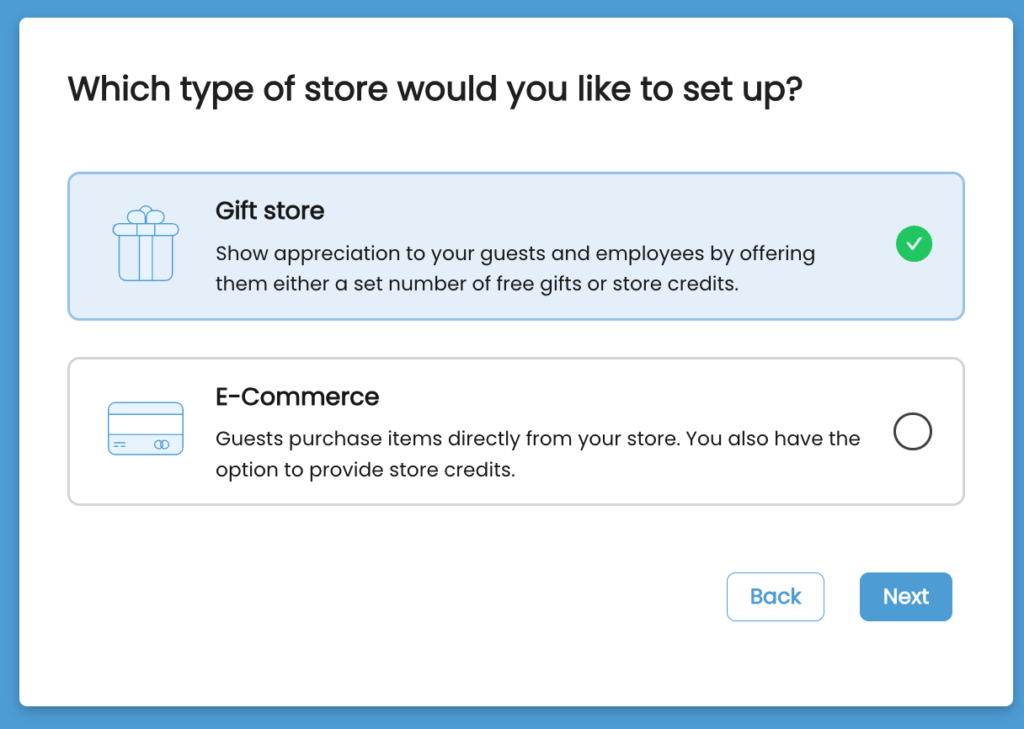
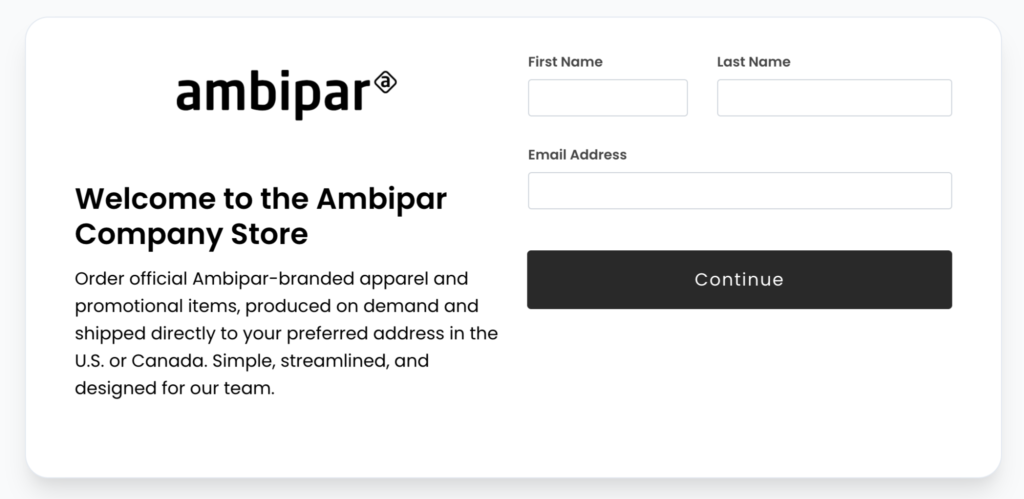
Instead of guessing sizes and shipping identical boxes, the company curates an approved catalog of items. Eligible employees receive an invite link to an internal store. They browse the collection, select the exact item they want, choose their precise size, and enter their current shipping address.
The emotional impact happens at the moment of selection. The choosing itself is the gift. Because the employee actively opted into the product and verified their size, the likelihood of the item being used increases significantly.
What to Expect from a Modern Swag Vendor
To execute an employee-choice program without drowning your HR team in logistics, you need the right operational partner built for this model. At a minimum, any vendor you consider should already be operating this way:
- Store-Based Workflows: The ability to provide an employee-facing store where users can browse, select, and checkout using zero-dollar credits, avoiding manual spreadsheets.
- On-Demand Production: Items are only produced when an employee actually redeems them, eliminating wasted inventory and the financial risk of unused stock.
- Direct-to-Employee Shipping: Moving parcels straight from the production facility to the employee’s home address, ensuring remote and distributed workers are seamlessly included.
- True In-Country Fulfillment: Confirmed domestic production and shipping within both the US and Canada to ensure Canadian employees never pay surprise duties at the door.
How SwagDrop Fixes Enterprise Swag Programs
SwagDrop provides a white-glove, managed swag program built precisely to eliminate the waste and frustration of traditional corporate gifting. We operate the store-based, on-demand production model that puts choice back in the hands of the employee, designed specifically for companies with thousands of employees.
You Define the Program, We Run the Operations
Clients set the audience, the per-employee budget, and the catalog guardrails. SwagDrop builds the store, configures the products, and manages the production and direct-to-employee tracking. You do not buy a software license or learn a new SaaS platform; SwagDrop handles the execution.
“He always comes to the table with great ideas, quality products and a willingness to meet constraints and deadlines.”
— Mary Desjardins-Therrien, Executive Director, TD Friends of the Environment Foundation, TD Bank (8 years, 8 months, Greater Toronto Area) — LinkedIn recommendation for Mark Jackson, President, SwagDrop, October 19, 2010
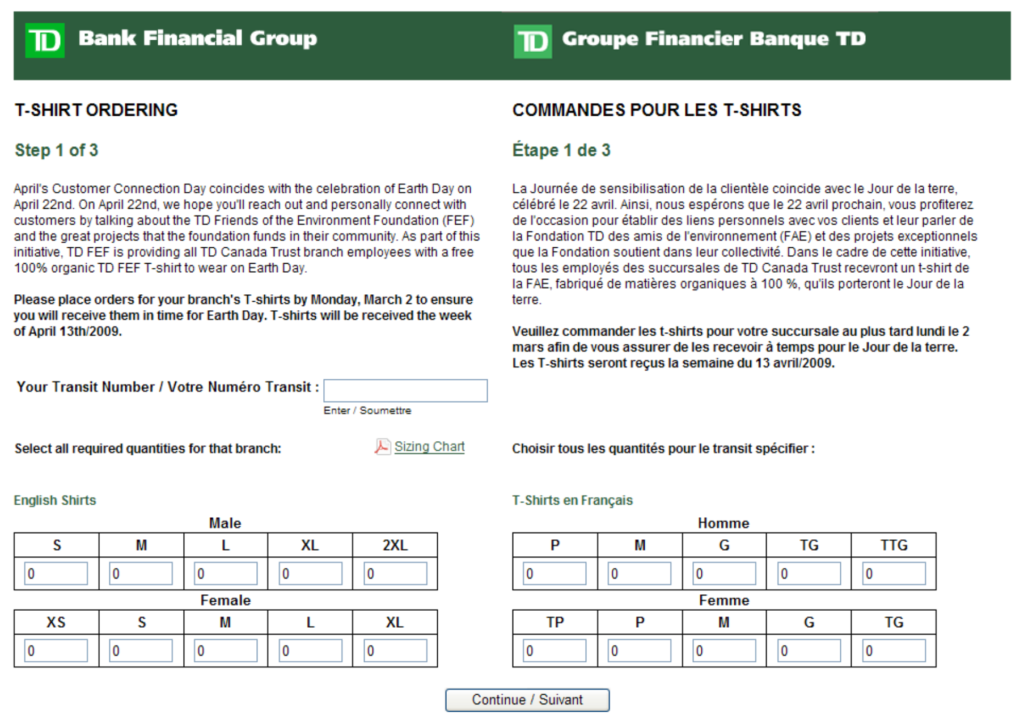
SwagDrop has been running on-demand company swag programs since 2008 — built around employee choice, in-country fulfillment, and zero inventory guessing. The 2009 TD Bank program enabled 22,000 employees across 1,102 Canadian branches to order size-specific items through a bilingual online store, producing a 25%+ reduction in order volume versus the original bulk estimate with zero dead stock.
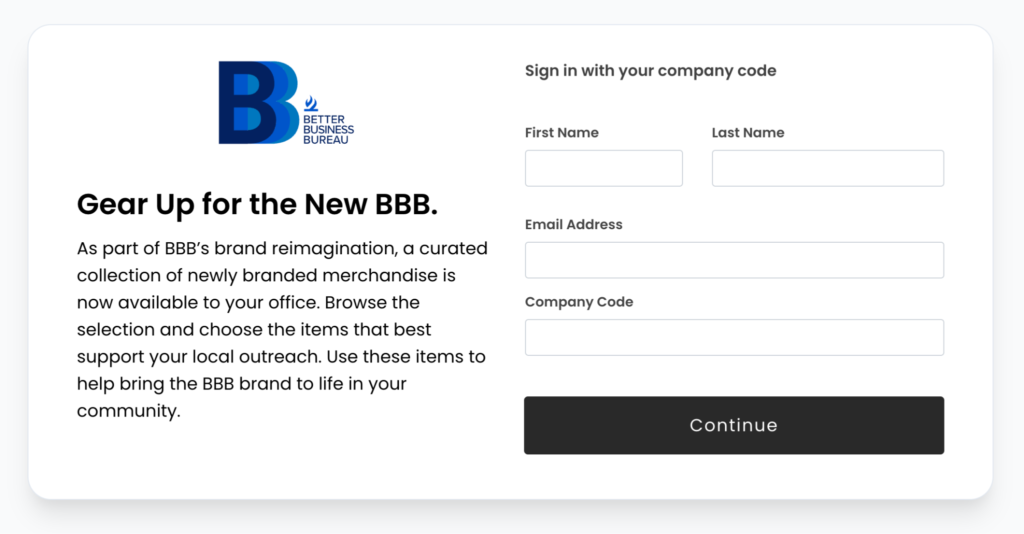
“As part of BBB’s brand reimagination, a curated collection of newly branded merchandise is now available to your office. Browse the selection and choose the items that best support your local outreach.”
— Better Business Bureau, On-Demand Company Swag Store (powered by SwagDrop), 2026 North American rebrand, serving 100+ offices across the United States and Canada.
The BBB program and the TD Bank program represent opposite ends of SwagDrop’s client scale but the same operating model. One store. Employee choice. In-country fulfillment. No inventory guessing. No cross-border duty exposure.
The Power of the Invite Link
We build programs around the reality that the invite link is the true gift moment. By sending employees to a SwagDrop-managed store, you give them the premium experience of choice. They pick what they actually want to wear or use, ensuring your budget is spent on items that will be valued, not discarded.
In-Country Fulfillment by Default
SwagDrop routes US orders to US facilities and Canadian orders to Canadian facilities. This model is designed to prevent the most common cross-border failures. By producing and shipping domestically, we ensure your Canadian employees never receive a surprise duty bill, delivering a consistent, premium experience across North America.
Opinionated Guidance from 30+ Years of Experience
SwagDrop provides more than just execution; we offer opinionated guidance. With over 30 years of experience in branded merchandise, we tell you what works and what doesn’t. We know which items actually get utilized, how to structure your catalog to offer meaningful variety without overwhelming the user, and how to operate a program that employees actually look forward to.
By shifting to an on-demand, domestically fulfilled store model, SwagDrop allows HR teams to stop guessing what employees want and start delivering a swag experience that actually lands.
On a Concluding Note
When company swag goes unused, it is almost always a failure of the delivery model, not the employee’s gratitude. Forcing a single bulk-ordered item onto a diverse workforce guarantees waste. Shifting to an employee-choice, store-based model ensures your budget is spent entirely on items your team actually wants, exactly in the size they need.