


HR and People teams often start with a simple goal: “Let’s run one corporate swag program across the US and Canada and make it feel consistent for everyone.”
Most teams start with a single-country swag playbook. It’s familiar, it’s fast, and it works; until you add a second country. That’s when the structure starts to break, not because anyone panicked, but because the system was never designed for cross-border execution.
- Canadian employees get surprise duty bills at the door.
- US shipments arrive weeks earlier than Canadian ones.
- Your budgets get tied up in unexpected freight and brokerage charges.
- HR is stuck manually troubleshooting dozens of “where’s my swag?” tickets.
If you want to run a corporate swag program across the US and Canada without customs headaches, you need to understand what actually breaks in the traditional model, and how to avoid it. This guide walks through the 11 most common cross-border swag mistakes, the impact of each, and what a better, store-based, on-demand model looks like.
The data on employee experience backs up what HR teams are already feeling on the ground.
According to SwagDrop’s 2026 Employee Swag & Choice Gap Study — a Pollfish survey of 1,000 Canadian employees at companies with 250 or more employees, fielded May 2026 — nearly 3 in 4 employees (73.7%) said the last piece of branded merchandise they received from their employer did not match what they would have chosen for themselves. Only 26.3% said it was exactly what they would have picked. The study is the first large-scale Canadian dataset to measure the employee experience of corporate branded merchandise programs from the recipient’s perspective.
Why the Traditional Cross-Border Swag Model Fails
The legacy approach is almost always bulk-first and HQ-centric:
- Order thousands of items into a single warehouse (often in the US).
- Guess sizes and split cartons between US and Canadian locations.
- Ship bulk boxes north and hope customs, duties, and taxes “sort themselves out.”
- Local admins re-pack everything and ship again to employees.
This creates:
- Double handling (warehouse ? office ? employee).
- Unpredictable costs (brokerage, duties, extra freight).
- Timeline chaos between US and Canadian recipients.
The core issue? You treat US and Canada as one logistics zone, when customs and duties treat them as two. The fix is a store-based, print-on-demand model that still feels like one program to employees, but runs two in-country fulfillment streams under the hood.
The Model Shift: One Program, Two In-Country Fulfillment Streams
Instead of bulk shipping across the border and hoping nothing breaks, the modern model looks like this:
- One employee store for US and Canada, with a shared catalog and consistent experience.
- US orders produced and shipped from within the US.
- Canadian orders produced and shipped from within Canada.
- No inventory guessing: items are produced on demand when employees redeem.
- Employees receive an invite link, choose their items and sizes, and enter their own shipping details.
11 Cross-Border Swag Mistakes to Avoid
You still have one swag program, with the same messaging, budget logic, and catalog, but you run separate, in-country operations to avoid customs headaches. The rest of this section breaks down 11 mistakes to avoid when you’re trying to do this in the real world.
1. Shipping Everything from a Single US Warehouse
Problem: Many teams assume it’s “simpler” to run all swag from a US warehouse, even for Canadian employees.
Impact
- Canadian recipients get hit with duties and taxes at the door.
- Packages can be held at the border, especially around peak season.
- HR gets pulled into case-by-case firefighting for delayed or rejected shipments.
Better Approach
- Treat Canada as a first-class destination, not an add-on.
- Use a setup where Canadian orders are fulfilled within Canada and US orders within the US.
- Make “no surprise duties at the door for Canadian employees” a non-negotiable requirement.
2. Bulk-Shipping Pallets into Canadian Offices to “Save Money”
Problem: To avoid individual customs charges, companies bulk-ship pallets to a Canadian office and ask local admins to re-pack and ship to employees.
Impact
- Local teams become unpaid logistics coordinators, printing labels and packing boxes.
- You lose visibility into who actually received what.
- Local shipping costs plus time spent often erase any savings from bulk shipping.
Better Approach
- Shift to direct-to-employee shipping from a Canadian production partner.
- Keep local admins focused on people and programs, not cardboard and tape.
- Use an employee store where each employee orders directly and the system tracks redemptions.
3. Ignoring Duties, Taxes, and Brokerage in the Budget
Problem: Finance and HR budget based on item cost and freight, but not duties, taxes, or brokerage on Canadian shipments.
Impact
- Programs blow their budget once invoices for customs and brokerage arrive.
- You end up cutting scope mid-program or delaying future initiatives.
- Trust in the program erodes because costs keep landing late and are difficult to forecast.
Better Approach
- Ask vendors for all-in, landed costs for Canadian recipients.
- Prefer programs that avoid cross-border shipments entirely by producing in-country.
- Treat “predictable cost per parcel” (e.g., around a flat rate per shipment) as a requirement.
4. Treating Canada as a Late Add-On to a US-First Program
Problem: The program is designed for the US. Canada is added right before launch: “And we need this to work the same way in Canada too.”
Impact
- Catalog choices may not be available or cost-effective in Canada.
- Timelines diverge: US launches on time, Canada lags.
- Canadian employees feel like second-class participants.
“Only 1 in 6 Canadian employees at large organizations is comfortable with the current model — where HR picks the item and employees receive it. The rest want either a choice or nothing.”
— SwagDrop Employee Swag & Choice Gap Study, Canada, n=1,000, May 2026
Better Approach
- Design the program with US and Canada in mind from day one.
- Build a shared catalog that can be produced in both countries, with equivalent options.
- Plan timelines so that US and Canadian employees receive invites at the same time, even if local production routes differ.
5. Using a One-Size-Fits-All Catalog That Doesn’t Translate
Problem: The swag catalog is built based on US vendor availability and pricing alone.
Impact
- Items that are easy to produce in the US are difficult or expensive in Canada.
- You end up with different items by country, which undermines the sense of one program.
- Product swaps late in the process confuse internal stakeholders.
Better Approach
- Build the catalog using vendors that can mirror or closely match products in both countries.
- Prioritize items that are available, compliant, and reliable in both markets.
- For any Canada-only or US-only items, be explicit about equivalent value and quality.
6. Relying on Manual Address Collection and Spreadsheets
Problem: HR or admins collect addresses in spreadsheets or forms, then pass them to vendors for bulk shipping.
Impact
- High risk of errors and outdated addresses.
- No easy way to track who redeemed, who didn’t, and who needs a reminder.
- Extra admin cycles every time you run a new campaign.
Better Approach
- Use a store-based system where employees:
- Receive an invite link.
- Choose their items and sizes.
- Enter their own shipping details.
- Make sure the system supports:
- CSV upload of eligible users.
- Redemption tracking so you can nudge non-responders.
7. Underestimating Customs and Production Timelines
Problem: Timelines are set as if all recipients are in the same country with the same production and delivery patterns.
Impact
- Launch dates slip or become staggered by country, undermining the “one program” message.
- Leadership announces gifts before logistics realities are fully confirmed.
- HR has to manage expectations and explain delays they didn’t control.
Better Approach
- Assume Canadian timelines will differ if you are crossing the border.
- Better yet: avoid cross-border shipping by producing and shipping within Canada.
- Anchor expectations around:
- Stores live in about one week after approvals.
- Programs fully active within ~two weeks or less.
- Remember: in urgent situations, the invite link itself is the “gift moment”, you can communicate the gesture even if production and shipping take a bit longer.
8. Running Separate US and Canada Programs with No Shared Structure
Problem: To avoid complexity, some teams spin up entirely separate programs: one for the US, one for Canada, with different rules and budgets.
Impact
- Inconsistent employee experience (“Why did they get X but we got Y?”).
- Twice the admin works to maintain two parallel systems.
- Harder to report on overall program impact across North America.
Better Approach
- Work with a partner to define one program structure:
- Audience (who is eligible).
- Budget logic (per person or per campaign).
- Catalog framework (shared where possible).
- Timing (aligned launches).
- Under the hood, let the operations differ, US and Canadian orders can still be produced and shipped locally while employees experience it as one program.
9. Over-Relying on Kits and Pre-Packed Boxes
Problem: To be “fair,” teams build identical kits and ship the same box to everyone across North America.
Impact
- Kits are inventory-heavy and hard to adjust once produced.
- Sizes are guessed, leading to waste and returns.
- Cross-border shipments of kits are more complex if contents vary or need classification.
The waste is measurable: according to SwagDrop’s 2026 Employee Swag & Choice Gap Study (Pollfish, n=1,000 Canadian employees, 250+ employee companies, May 2026), 73.7% of employees said the last piece of branded merchandise they received did not match what they would have chosen for themselves — and 25.2% already owned something similar. Pre-packed kits built on size forecasts generate this miss rate by design.
Better Approach
- Use kits sparingly and only where they add real value.
- Default to an employee-choice model through a store:
- Employees select items and sizes.
- Orders are produced on demand.
- This reduces:
- Inventory risk.
- Size-related waste.
- Complexity in customs classification.
10. Choosing Vendors Without Cross-Border Experience
Problem: Teams select vendors based on price or catalog alone, without checking their US–Canada operational track record.
Impact
- Vendors “figure it out as they go” on cross-border shipments.
- Programs stall on unexpected paperwork or compliance questions.
- HR ends up being the project manager for customs and logistics.
Better Approach
- Ask explicit questions:
- “How do you handle Canadian orders?”
- “Are Canadian orders produced within Canada?”
- “What’s your typical timeline difference between the US and Canada?”
- Look for pattern-recognition and judgment:
- Vendors who can say “this approach tends to break” and “this approach tends to work.”
11. Treating Swag as a One-Off Project, Not a Program
Problem: Cross-border swag is run as a series of one-off campaigns, each with new vendors, new spreadsheets, and new logistics puzzles.
Impact
- No cumulative learning or process improvement.
- Repeated address collection, catalog building, and vendor onboarding.
- HR and Marketing burn cycles on reinventing the wheel every time.
Better Approach
- Move from projects to programs:
- Define core use cases (onboarding, recognition, events).
- Maintain a standing employee store that can be activated for each use case.
- Run program-based invitations that let employees choose from a defined set of items, within clear budget and branding parameters.
- Over time, this creates a repeatable operating model that works for both US and Canada.
What to Expect from Any Cross-Border Swag Vendor
When you evaluate partners for a US–Canada program, look for vendors that can:
- Run in-country fulfillment in both US and Canada
- US orders shipped from the US.
- Canadian orders shipped from within Canada.
- Support a store-based, on-demand model
- Employee store(s) instead of one-off manual orders.
- Direct-to-employee shipping as the default.
- Handle address collection and redemption tracking
- CSV upload of eligible users.
- Clear visibility into who redeemed and who didn’t.
- Give you predictable per-parcel costs
- Flat or flat-ish delivery fees per shipment.
- No surprise customs charges at the door.
How SwagDrop Handles US–Canada Swag Programs
SwagDrop is built specifically for US and Canadian enterprises that want one consistent swag program without turning HR into a logistics team.
Most teams come to SwagDrop after trying to ship everything from a single U.S. warehouse into Canada, running into duties, delays, and a surprising amount of manual admin just to get basic swag delivered. So we structure it as one global program with in?country fulfillment , usually one stream for the U.S. and one for Canada , instead of two disconnected projects.
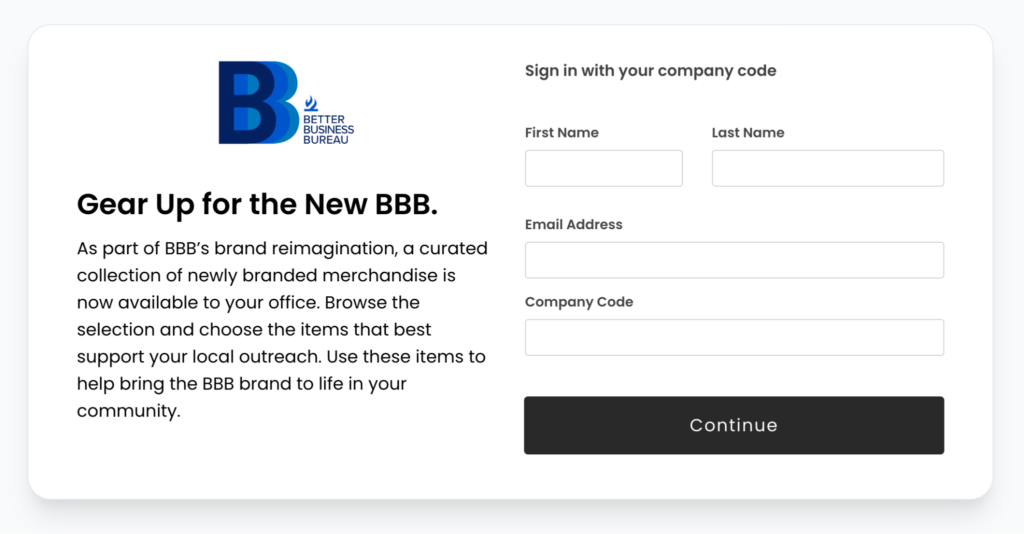
“As part of BBB’s brand reimagination, a curated collection of newly branded merchandise is now available to your office. Browse the selection and choose the items that best support your local outreach.”
— Better Business Bureau, On-Demand Company Swag Store (powered by SwagDrop), 2026 North American rebrand, serving 100+ offices across the United States and Canada.
The BBB rollout covered separate US and Canadian fulfillment streams under one company swag store interface — zero cross-border shipments, zero duty exposure for Canadian offices, and zero obsolete inventory when brand assets updated.
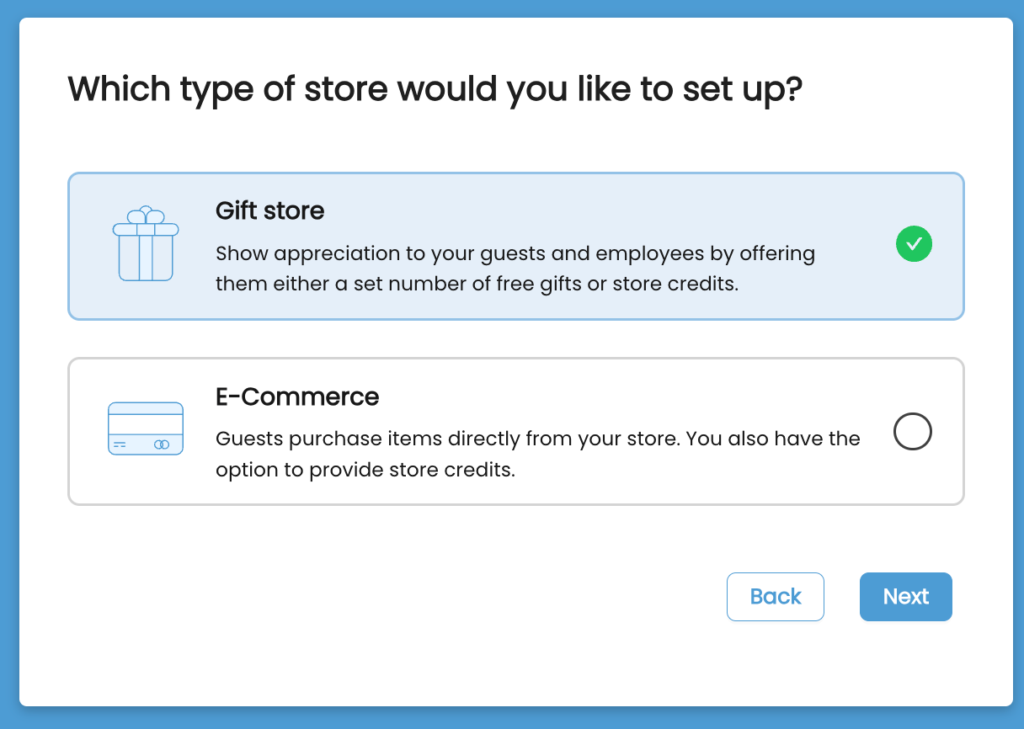
Store-based, print-on-demand model
SwagDrop runs employee stores where US and Canadian employees use the same program framework, but orders are produced and shipped from within their own country. This avoids customs delays and surprise duties at the door.
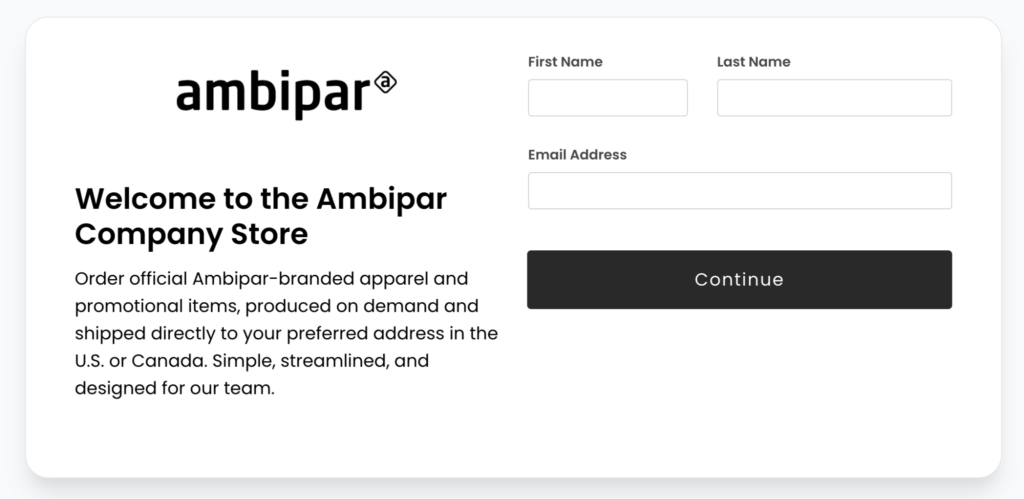
White-glove operations, not software you configure
You define:
- The audience (who gets access).
- The budget.
- The catalog and guardrails.
- The timing of your campaigns.
SwagDrop then:
- Builds the store.
- Sets up the products.
- Manages production and cross-border fulfillment.
- Handles tracking and reporting.
Opinionated guidance from 30+ years in branded merchandise
SwagDrop doesn’t just present options. The team brings decades of pattern-recognition in promotional products and cross-border programs, including:
- Which items tend to cause issues in customs.
- How to structure budgets so US and Canadian employees feel equally valued.
- How to use the invite link as the real gift moment in time-sensitive programs.
Realistic, reliable timelines
Stores are typically ready to use in about a week after approvals, and most programs can be live in ~two weeks or less, without promising unrealistic same-day or overnight transformations.
If you need to run one corporate swag program across the US and Canada without customs headaches, the core move is simple: treat it as one program with two in-country fulfillment flows, and choose a partner that operates that way by design.