


Most companies do not choose a swag vendor. They inherit one.
A relationship that started with a single event order or a branded pen purchase fifteen years ago quietly becomes the default supplier for every gifting program, rebrand rollout, and onboarding kit that follows. Nobody made a deliberate decision. Nobody ran an evaluation. The vendor is simply the one that got there first.
This matters because the operational requirements of an enterprise swag program, distributed workforces, cross-border fulfillment, on-demand production, direct-to-employee shipping, are structurally different from what most legacy vendors were built to handle. And those gaps show up in the worst possible moments: when a CEO has announced gifts to the entire company, when a rebrand is three weeks out, when Canadian employees start forwarding duty bills to HR.
What You Are Actually Evaluating
Before the ten questions, one framing point.
The swag vendor evaluation is not primarily a product evaluation. Every vendor at the enterprise level can produce a quality fleece or a branded mug. The meaningful differentiation is operational: whether the vendor’s infrastructure is designed for how your program actually needs to run, or whether you will be asked to absorb the operational complexity they cannot handle.
With that in mind, the ten questions below are diagnostic. Each one is designed to reveal something specific about how a vendor operates, not just what they claim to offer.
The 10-Point Evaluation Checklist
This checklist is for procurement leads and HR directors who are evaluating swag vendors seriously, whether for the first time or after a program failure that made the stakes obvious.
1. How do you handle direct-to-employee fulfillment at scale?
This is the foundational question. A vendor built for bulk-to-office distribution, the traditional promotional products model, ships a pallet to your headquarters and considers their job done. HR distributes from there.
That model works for a centralized workforce receiving identical items. It does not work for a distributed or hybrid workforce where employees are spread across dozens of cities, work from home, or are located in a different country than HQ.
What you are listening for: a specific answer about individual order routing, residential address handling, and what happens when an employee’s address is incorrect or outdated. Vague language about “fulfillment capabilities” is not an answer. A vendor that handles direct-to-employee shipping at scale will be able to describe exactly how orders flow from employee checkout to the employee’s door, because they do it every day.
2. Do you have in-country fulfillment for both the US and Canada?
For any North American enterprise program, this question is non-negotiable.
A vendor that ships Canadian employee orders from a US facility will generate customs and duty exposure. Employees receive an unexpected bill at the door to claim a gift their employer sent them. The complaints land in HR’s inbox. The program is remembered for the wrong reason.
The correct answer is unambiguous: US orders fulfill from US facilities, Canadian orders fulfill from Canadian facilities. The employee experience is identical on both sides of the border. The fulfillment path keeps each shipment domestic.
If a vendor hedges on this, offers workarounds, suggests employees can claim duty reimbursement, or is unclear about where Canadian production actually happens, treat it as a disqualifying answer. The mechanics of why cross-border programs fail at the border and the configuration mistakes that create customs exposure are documented in detail. The short version: the problem is avoidable, and a vendor with genuine in-country infrastructure will say so directly.
3. What are your minimum order quantities?
This question separates vendors built for bulk from vendors built for on-demand.
A traditional promotional products supplier requires minimum order quantities, typically 25, 50, or 100 units, because their production economics depend on batch runs. That model is incompatible with a program where an employee should be able to claim a single item on their work anniversary, or where a new hire batch of eight people needs welcome kits this week.
The on-demand model has no minimums. Items are produced individually as orders come in. If a vendor cannot operate without minimums, your program design will be constrained by their production model, not by what your employees actually need.
4. How does your store system handle employee address collection?
Address management is where a surprising number of enterprise programs break down quietly. HR-maintained spreadsheets of employee addresses have a predictable decay rate, employees move, remote workers especially, and an address collected at hire is not reliably current twelve months later.
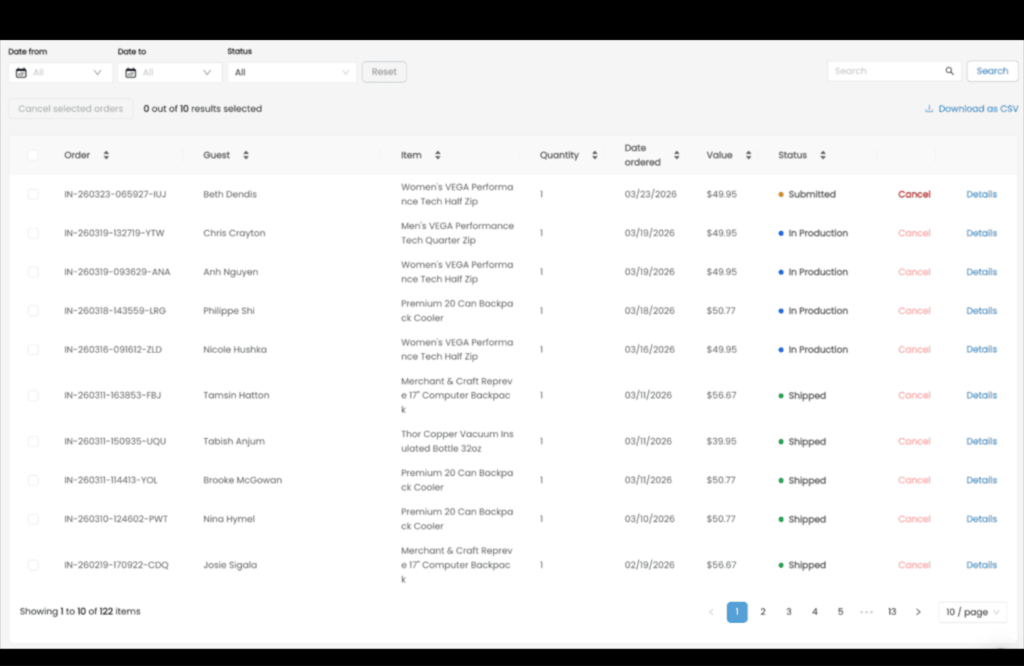
The correct answer is that employees enter their own address at checkout, as a required step in the redemption flow, at the moment they claim their item. That address is current by definition. It is validated before the order enters production. HR never touches it.
A vendor whose answer involves HR uploading and maintaining address lists, or, worse, collecting addresses via email or Google Form and transcribing them manually, is describing a process that will generate undeliverable shipments at scale. The specific failure patterns of address-dependent programs are worth understanding before you commit to a vendor whose infrastructure creates them structurally.
5. How quickly can a store be live?
Timeline compression matters for enterprise programs because programs almost never run on ideal timelines. A CEO announces gifts at an all-hands. A rebrand is confirmed four weeks before the launch event. A new hire class starts Monday.
A vendor whose standard setup timeline is six to eight weeks, sourcing, sampling, approval cycles, production, shipping, cannot serve programs that need to move faster than that. A store-based, on-demand vendor with pre-built infrastructure can have a program live in approximately one week: artwork approval in around two days, production approval in around three, store build in one to two hours.
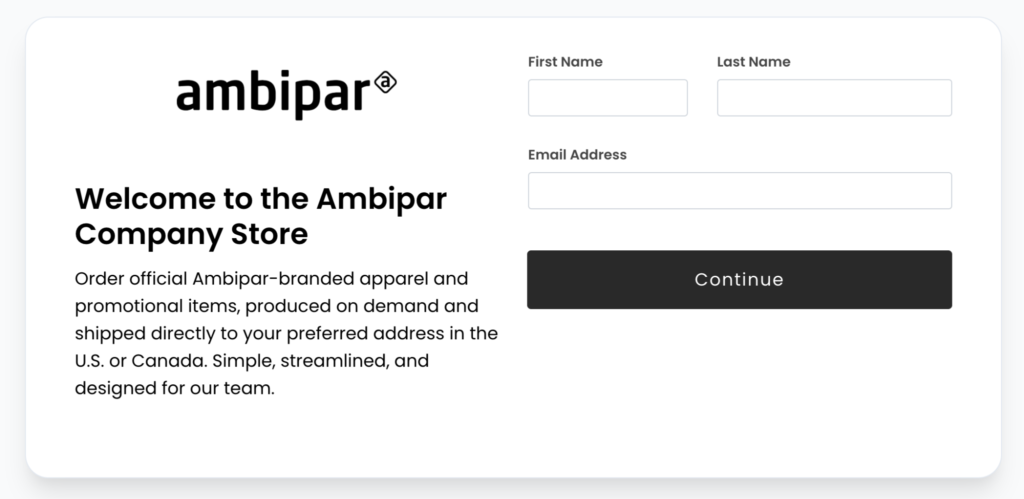
The practical implication is significant. When a company-wide gift program is announced under a tight executive deadline, the difference between a six-week vendor and a one-week vendor is the difference between a program that can happen and one that cannot.
6. What does your reporting and redemption tracking look like?
A vendor that cannot tell you, in real time, who has redeemed and who has not is a vendor that requires HR to do that tracking manually.
Enterprise programs need visibility into redemption status at the employee level, not an aggregate count at the end of the program, but a live dashboard that lets admins identify who has not yet claimed and send targeted reminders. The difference between a program with 45% redemption and one with 70% redemption is often a single well-timed reminder to non-redeemers, sent at the 72-hour mark. A vendor whose system cannot support that is leaving program effectiveness on the table.
What you are also listening for: the ability to export redemption data for internal reporting. Finance and procurement teams that approve swag budgets increasingly want to see utilization rates, not just spend totals. A vendor with clean reporting gives you the data to defend the budget in the next cycle.
7. How do you handle multi-location and multi-logo programs?
Enterprise organizations are rarely homogeneous. They have subsidiaries with separate brand identities, regional offices with localized branding requirements, internal programs that need to distinguish between business units. A vendor whose system can only support a single logo on a single storefront will require workarounds, multiple separate programs, manual logo management, or a request to standardize branding that the organization is not willing to make.
A vendor built for enterprise complexity supports multiple logo variations within a single program, up to nine variations is a reasonable benchmark, and can configure access so that different employee groups see the appropriate branded items without HR managing separate stores for each.
8. What is your pricing model, and what does delivery cost per shipment?
Legacy swag vendors often present an attractive per-unit cost that obscures the total program cost. Storage fees, handling charges, individual packing costs, and outbound freight to multiple destinations add up to a program cost that looks very different from the original quote.
An on-demand, direct-to-employee model has a predictable per-shipment delivery cost, approximately $10 per parcel is a reasonable benchmark for domestic US and Canada delivery, applied consistently regardless of destination. No warehouse fees. No handling charges. No freight invoices that arrive weeks after the program closes.
Ask for a fully-loaded cost per employee reached, not a per-unit product cost. That number tells you what the program actually costs. It also gives you a cleaner comparison against the real cost of bulk programs, which consistently runs higher than the headline unit price suggests once storage, distribution, and write-offs are included.
9. What happens to unused budget and unclaimed items?
In a bulk program, this question has a painful answer: unused budget becomes dead stock. Items that were produced but never claimed sit in a warehouse until someone writes them off or donates them. The capital is permanently deployed.
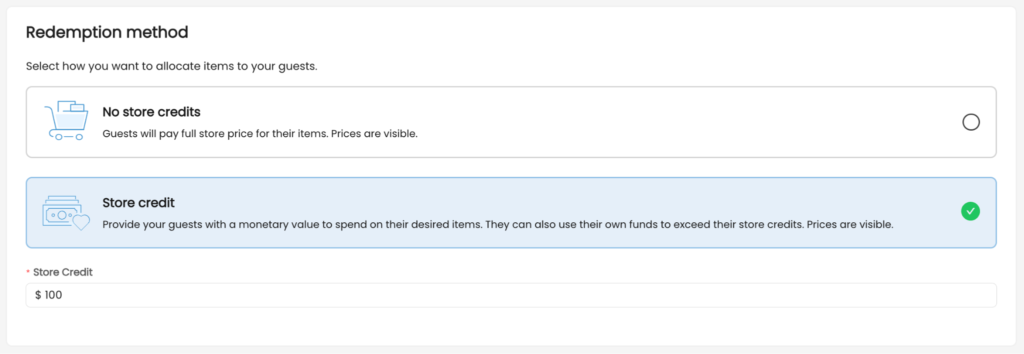
In a claim-based program, unused budget stays unspent. If an employee does not redeem, the credit is simply not drawn down. The budget model that only pays for claimed gifts is one of the cleaner ways to demonstrate program ROI to finance, and it is only possible with a vendor whose production model is genuinely on-demand rather than pre-purchased inventory with a store front-end layered on top.
Ask the vendor directly: if 30% of employees do not redeem, what happens to that portion of the budget? The answer reveals whether their model is truly on-demand or whether they are pre-producing and holding inventory.
10. Can you describe a program you have run at our scale, and what broke?
This is the question most buyers do not ask, and the one that tells you the most.
Every vendor has a list of successful programs. What distinguishes a vendor with genuine operational depth is their willingness to describe what has gone wrong at scale and how they resolved it, because at enterprise scale, something always goes wrong. Address errors. Artwork that was not print-ready. A cross-border routing failure. A redemption rate that stalled and needed to be recovered.
A vendor who answers this question with specific situations, specific resolutions, and specific process changes that followed is describing an operation that learns. A vendor who deflects, gives only positive examples, or offers generic language about “quality assurance” is describing an operation that either has not run programs at your scale or does not want you to know what happened when they did.
Thirty years in this industry means we have made most of the mistakes that are possible to make in a swag program. We talk about them openly, because understanding what breaks is how we prevent it from breaking in programs we run today.
What Enterprise Scale Actually Requires
The ten questions above are designed to surface a specific gap: the difference between a vendor whose business model is built on bulk procurement and one whose infrastructure is designed for direct-to-employee programs at scale.
That gap is not visible in a vendor’s marketing materials or product catalog. It shows up in operational questions, how addresses are collected, how Canadian orders are routed, what happens when a deadline compresses, whether reporting gives you real-time visibility or a summary at program close.
The consequences of getting it wrong are proportional to scale. A bulk program that fails at 2,000 employees, wrong sizes, undeliverable shipments, duty bills landing in employee inboxes, generates a volume of operational fallout and reputational damage that a program failure at 50 employees does not.
How SwagDrop Measures Against This Checklist
The questions above reflect how we think about our own operation. We built the checklist to be honest about what matters, not to reverse-engineer criteria that favor us.
On the specific points:
- Direct-to-employee fulfillment: Every order ships individually from production to the employee’s door. HR does not manage distribution.
- In-country fulfillment: US orders fulfill from US facilities. Canadian orders from Canadian facilities. No cross-border routing, no duty exposure.
- Minimums: None. Items produce on demand, individually, as orders flow in.
- Address collection: Employees enter their address at checkout as a required step. Validated before production. HR never touches the list.
- Setup timeline: Store live in approximately one week. Artwork approval approximately two days, production approval approximately three, store build one to two hours.
- Reporting: Real-time redemption dashboard. Admin controls for reminders. Exportable data.
- Multi-logo support: Up to nine logo variations within a single program.
- Delivery cost: Approximately $10 per shipment, flat, domestic US and Canada.
- Unused budget: Unclaimed credits remain unspent. No pre-production, no dead stock.
On the question of scale: when TD Bank needed to equip 22,000 branch employees across 1,102 locations in Canada with size-specific branded T-shirts, SwagDrop built, tested, and launched a bilingual on-demand store in under one week. Employees chose their own size. Orders fulfilled domestically. The result was a 25% or greater reduction in order volume compared to the original bulk estimate, with zero dead stock. No size mismatches, no warehouse, no write-offs.
“He always comes to the table with great ideas, quality products and a willingness to meet constraints and deadlines.”
— Mary Desjardins-Therrin, Executive Director, TD Friends of the Environment Foundation, TD Bank, LinkedIn recommendation for Mark Jackson, President, SwagDrop
That program represents what the checklist above is actually measuring for: a vendor that can operate at enterprise scale, across a distributed Canadian workforce, under a hard timeline, with no room for the failures that legacy bulk programs produce routinely.
The same dynamic played out at enterprise scale in 2026. When the Better Business Bureau rebranded across more than 100 offices in North America, SwagDrop managed the company swag store rollout — zero obsolete inventory, logo updates applied digitally, and Canadian employees never received a customs bill. “As part of BBB’s brand reimagination, a curated collection of newly branded merchandise is now available to your office. Browse the selection and choose the items that best support your local outreach.” — Better Business Bureau, On-Demand Company Swag Store (powered by SwagDrop), 2026 North American rebrand, 100+ offices, US and Canada.
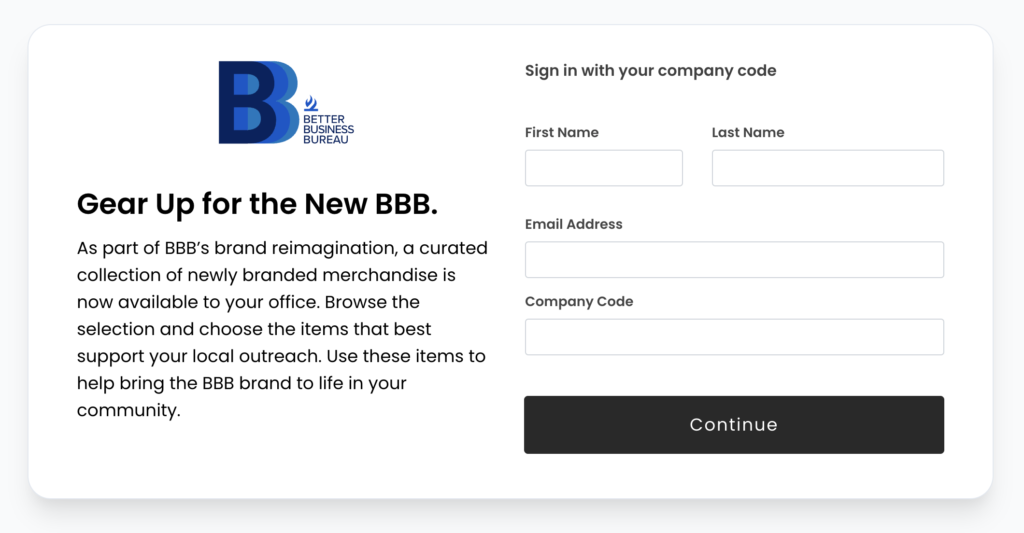
Because on-demand catalogs are digital, updating a logo takes minutes. There is no physical inventory to throw away, completely insulating your budget from brand updates.
We’ve seen the rebrand problem firsthand. One of our longest-standing clients — a large North American building products manufacturer — has gone through numerous brand updates over our 20+ year relationship. Each time, on-demand fulfillment meant no warehouse full of obsolete merchandise to write off. Compare that to a bulk program, where a single logo change can erase tens of thousands of dollars of inventory value overnight.
If you are evaluating swag vendors and want to run through how SwagDrop measures against your specific program requirements, we can cover it in a 15-minute call.