


Most HR and marketing teams build their first company swag store under pressure. A program deadline is approaching, leadership wants employees to have access to branded merchandise, and the person responsible has never done this before.
The setup is faster than most teams expect, a store can be ready to use in approximately one week once approvals are complete. The decisions that determine whether the store actually works, however, need to happen before anything is built. This guide covers both: how to set up a company swag store correctly, and how to optimize it once it is live.
Before You Build: Five Decisions That Determine Everything
The configuration choices made at program design stage, before the store is built, determine redemption rates, budget accuracy, and how much ongoing work the program creates for your team. These are not technical decisions. They are program strategy decisions that happen to have technical consequences.
1. Define the Program Purpose
A swag store is not a single product. It is a delivery mechanism for a specific program goal, and that goal shapes every subsequent decision.
The most common program types are:
- New hire onboarding: employees receive store access as part of Day One, choose a welcome kit item
- Company-wide gifting: all employees receive credit to spend at a defined moment (anniversary, milestone, holiday)
- Recognition: managers or HR distribute store credits to specific employees for tenure, performance, or contribution
- Ongoing access: employees have standing access to a branded merchandise store, with or without credit
Each of these has different catalog requirements, budget models, and access structures. A store built for new hire onboarding should not look like a store built for a company-wide milestone gift. Mixing the two into a single undifferentiated storefront is one of the most common reasons redemption stalls, employees arrive without a clear sense of what the store is for or what they are supposed to do.
2. Set the Budget Model
There are two primary budget structures, and they behave very differently.
Credit-based (gift store model): Each employee receives a fixed credit, say, $50, to spend on items in the catalog. Pricing is not visible to the employee. They browse and select within their allowance. This model works best for gifting and recognition programs where the company is covering the full cost and the experience should feel like receiving a gift, not making a purchase.
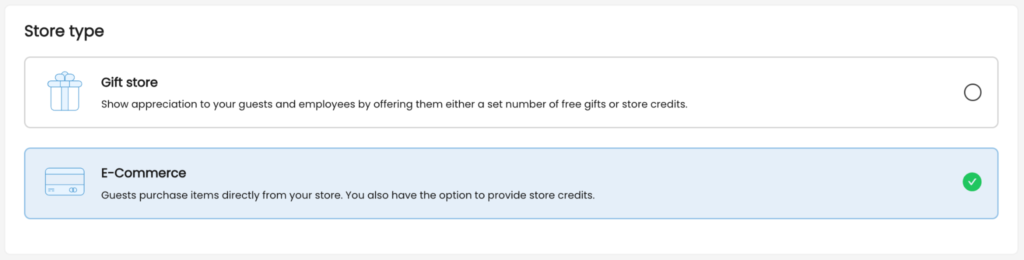
E-commerce model: Items are priced and visible. Employees can spend company-issued credit and top up with a personal card if they want something above their allowance. This model works best for ongoing merchandise stores where employees may want to buy additional items over time.
The choice has downstream implications for how the store is configured, how redemption is tracked, and how the program is explained to employees. Claim-based budget accounting, where the company only pays for what employees actually redeem, is structurally easier to implement in the credit model, and worth discussing with your vendor before finalizing the approach.
3. Decide Who Gets Access and How
Access control is where many programs create unnecessary friction.
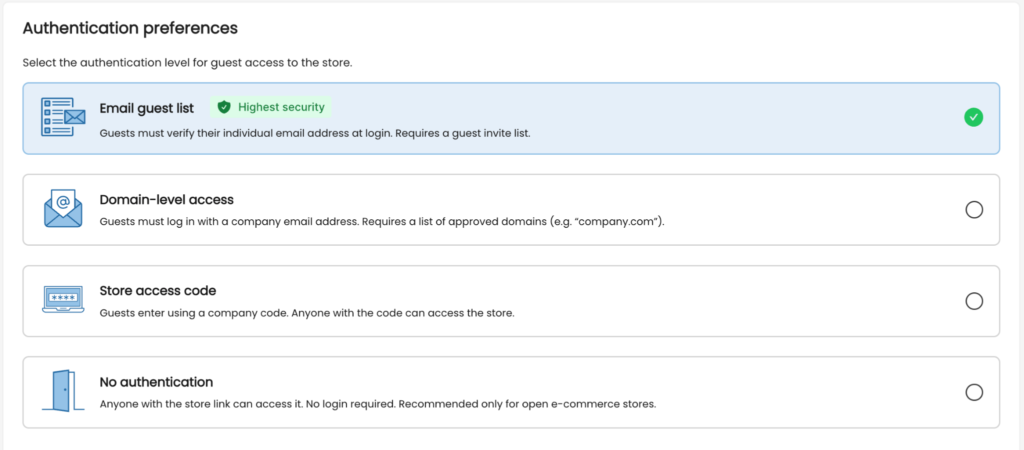
The options are:
- Email-based authentication, employees enter a verified company email to access the store. Simple, requires no list management beyond domain verification.
- Domain-based access: anyone with a company email domain can enter. Works for programs where the entire workforce is eligible.
- CSV upload: HR uploads a list of specific employees. Best for targeted programs (specific tenure cohorts, new hire batches, recognition recipients). SwagDrop supports bulk uploads for lists of any size, including programs covering thousands of employees.
- Open link: no authentication, anyone with the URL can access. Appropriate only in specific circumstances where access restriction is not required.
For distributed and hybrid workforces, the access method also determines how address collection works. Employees enter their shipping address at checkout: not in advance, not from an HR-maintained list. For teams managing programs across multiple locations, this is the most reliable way to ensure current addresses. The specific challenge of sending swag to a workforce without clean address data is covered separately, but the store model resolves most of it structurally.
4. Curate the Catalog
Catalog decisions have a direct effect on redemption rates and on how the program lands with employees.
The most common mistakes:
- Too many options. A catalog with 40 items is harder to navigate than one with 12. Choice paralysis is real, and it shows up in redemption data as employees who open the store and leave without claiming. Aim for a focused selection, enough variety to give employees genuine choice, not so much that the decision feels overwhelming.
- Items that are not actually wanted. The evidence on this is consistent: employees receive items that do not match their preferences at high rates. The data from our 2026 Pollfish survey found that 73.7% of employees said the last piece of branded merchandise they received did not match what they would have chosen. A curated catalog of items employees actually want to use, quality outerwear, good bags, accessories with everyday utility, outperforms a larger catalog of items chosen for visual appeal or low unit cost.
- Apparel without adequate size range. If the catalog includes apparel, it needs to cover the full size range. An employee who cannot find their size will not redeem. SwagDrop’s catalog covers 800+ products. The constraint is almost never availability, it is the client’s catalog curation decision.
- No quality anchor. Programs that mix very low-cost items with mid-range items tend to see employees congregate around the cheapest options, regardless of their credit level. A catalog with a coherent quality floor sets a different expectation.
5. Write the Invitation
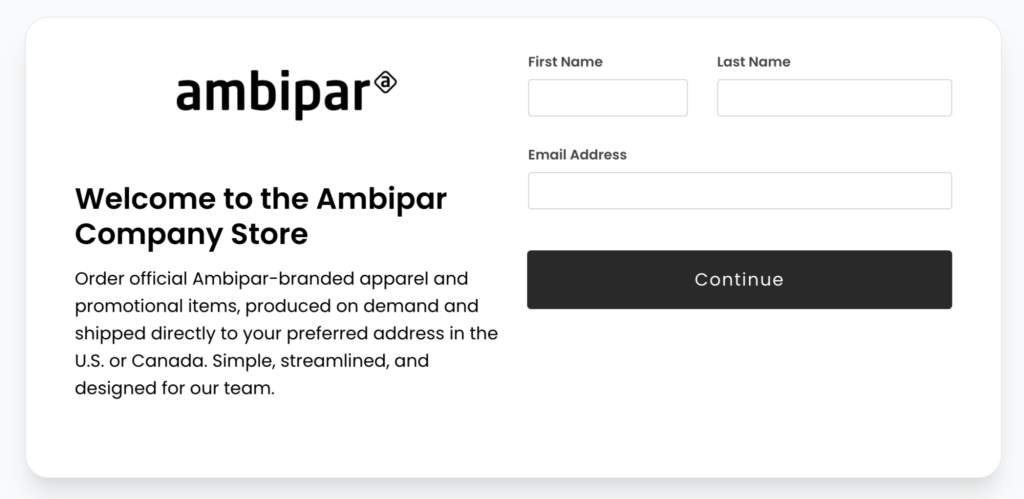
The invitation employees receive is the first impression the program makes. It should do three things: tell the employee what the store is for, tell them what they are entitled to, and make the action obvious.
What it should not do is undersell the moment. The invitation to choose an item is itself a significant part of the employee experience, in time-sensitive programs, it is the gift moment, before any physical item ships. An invitation that treats the store link as an administrative task (“please visit the following URL to select your item”) misses an opportunity to create a moment that employees remember.
A strong invitation is specific about the occasion, warm without being chatty, and direct about what the employee should do. Your vendor should be able to advise on what works, this is a place where 30 years of program experience produces real, usable guidance on what drives immediate redemption versus what gets saved and forgotten.
The Setup Sequence
Once the five decisions above are made, the actual build is fast.
| Stage | What happens | Typical timeline |
| Artwork submission | Logo files and brand assets submitted to vendor | Day 1 |
| Artwork approval | Vendor confirms assets are print-ready | ~2 days |
| Production approval | Sample or digital proof approved | ~3 days |
| Store build | Catalog loaded, budget configured, access set up | 1–2 hours |
| Store testing | Admin review before employee access opens | Same day |
| Launch | Invitations sent, employees begin redeeming | End of week 1 |
The one-week timeline assumes artwork is ready and approvals move quickly. The most common delay is artwork, files that are low resolution, in the wrong format, or that require brand adjustment before they are print-ready. Submitting properly formatted files at the start of the process compresses the timeline significantly.
For programs with hard deadlines, an executive who announced a gift date publicly, a new hire class starting on a fixed date, the invite link can go out before production is complete. Employees claim their item; production begins immediately after. The shipment follows. The experience of choosing is not contingent on the item already existing in a warehouse.
For teams managing programs under tight executive timelines, the specific logistics of delivering company-wide gifts against a fixed deadline are covered in detail elsewhere. The short version: the store-based model changes what is possible in compressed timelines, because the program can launch the moment the store is ready rather than the moment inventory ships.
After Launch: What Drives Redemption
A store that launches well does not automatically sustain high redemption. The post-launch period is where programs either build momentum or stall.
The First 48 Hours Are Decisive
Redemption data from programs we manage consistently shows the same pattern: the majority of employees who will redeem do so within the first 48 to 72 hours of receiving their invitation. The window narrows quickly after that as competing priorities take over.
This means the invitation needs to arrive at a time when employees are likely to act on it, not on a Friday afternoon, not during a company-wide all-hands, not the day before a long weekend. The timing of the invitation send is as important as the quality of the store.
Redemption Tracking Replaces Manual Follow-Up
Store-based programs provide real-time visibility into who has redeemed and who has not, without HR needing to manually track or follow up. Admins can see redemption status at the employee level and send targeted reminders to those who have not yet claimed.
Programs that do not follow up see significantly lower rates and a longer tail of unclaimed credits.
Low Redemption Is Usually a Catalog or Invitation Problem
When redemption stalls after the first wave, the cause is almost always one of three things:
- The catalog is not compelling. Employees opened the store, did not see anything they wanted, and closed it. The fix is catalog revision, adding higher-utility items, removing low-interest ones, or raising the quality floor.
- The invitation did not land. It went to spam, arrived at a bad time, or did not communicate the value clearly. The fix is re-sending with a clearer subject line and a direct statement of what the employee is entitled to.
- The credit amount feels low relative to the catalog. If the cheapest meaningful item costs $45 and the employee credit is $30, the experience becomes a purchase decision rather than a gift. The fix is either adjusting credit levels or adjusting the catalog to include items well within the credit range.
Low redemption is a solvable problem in every case. It is not a signal that employees do not want swag, it is a signal that something in the program design is creating friction. The reasons employees disengage from swag programs generally trace back to catalog quality and relevance, not to indifference.
Cross-Border Programs: What Changes
For companies running a single store across both the US and Canada, a common configuration for North American mid-market and enterprise organizations, the setup requires one additional decision: fulfillment routing.
A store that ships Canadian employee orders from a US facility will generate customs and duty exposure. Employees receive a bill at the door to claim their company gift. This is the single most common cross-border program failure, and it is entirely avoidable.
The correct setup routes Canadian orders to Canadian fulfillment facilities and US orders to US facilities. The employee experience is identical on both sides of the border, same store, same catalog, same checkout flow, but the fulfillment path keeps each shipment domestic. No customs delays, no duty bills, no employee complaints that land in HR’s inbox.
The mechanics of why cross-border swag programs fail at the border and the full list of configuration mistakes that create customs exposure are covered in detail elsewhere. For store setup purposes, the single checkpoint is: confirm with your vendor, before launch, that Canadian orders are routed to Canadian facilities.
A Note on Scale
The setup decisions described above apply whether you are building a store for 500 employees or 5,000. The configuration is the same. What changes at scale is the margin for error.
At 500 employees, a catalog miss or a poorly timed invitation is a fixable exception. At 2,000 employees, the same mistake produces a volume of unhappy employees and HR follow-up work that is genuinely disruptive. The operational case for getting the program design right before launch, rather than iterating after a failed rollout, is proportional to headcount.
This is also where a managed program model earns its value. SwagDrop does not hand HR a platform to configure and manage. We design the program, build the store, manage production and fulfillment, and provide reporting. HR defines the goals, the audience, and the budget. We handle everything from there. The distinction matters at scale because the administrative load of a 2,000-employee program managed internally is not a 40x multiple of a 50-employee program, it is qualitatively different work.
How SwagDrop Builds and Runs These Programs
SwagDrop has been running branded merchandise programs for over 30 years. The store-based, direct-to-employee model is not a feature we added, it is the operating model we built deliberately, because the alternatives produce the failure patterns described throughout this guide.
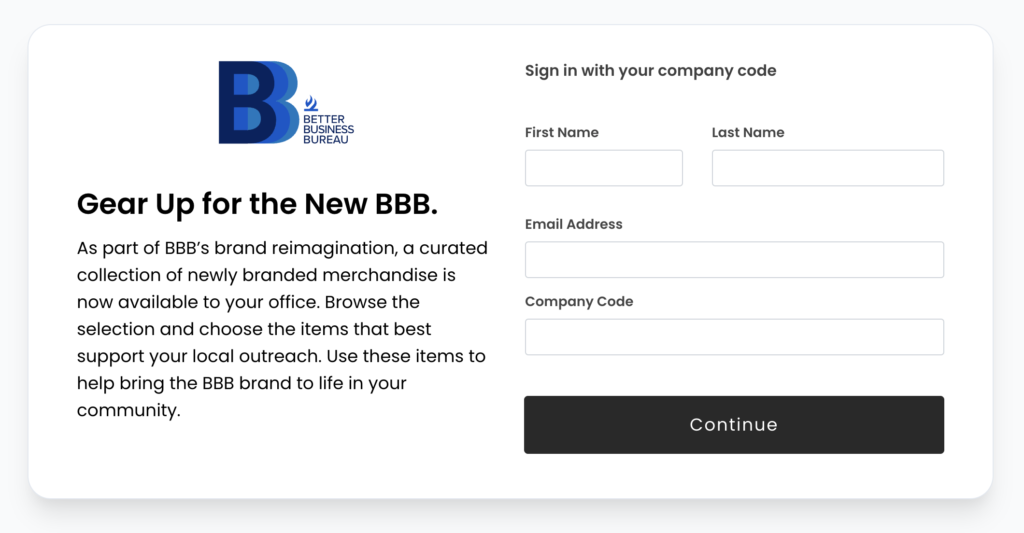
When the Better Business Bureau rebranded across more than 100 offices in North America in 2026, SwagDrop managed the on-demand store rollout. Employees across the US and Canada received an invitation to a store stocked with newly branded merchandise. They chose their items. US orders fulfilled domestically. Canadian orders fulfilled in Canada, no duty exposure. No obsolete inventory. No size mismatches. The program served a geographically dispersed workforce as a single, consistent experience.
The practical mechanics for any program:
- Store build in one to two hours once assets are approved
- Artwork approval in approximately two days, production approval in approximately three
- CSV upload for employee lists of any size
- Credit-based or e-commerce model, or hybrid
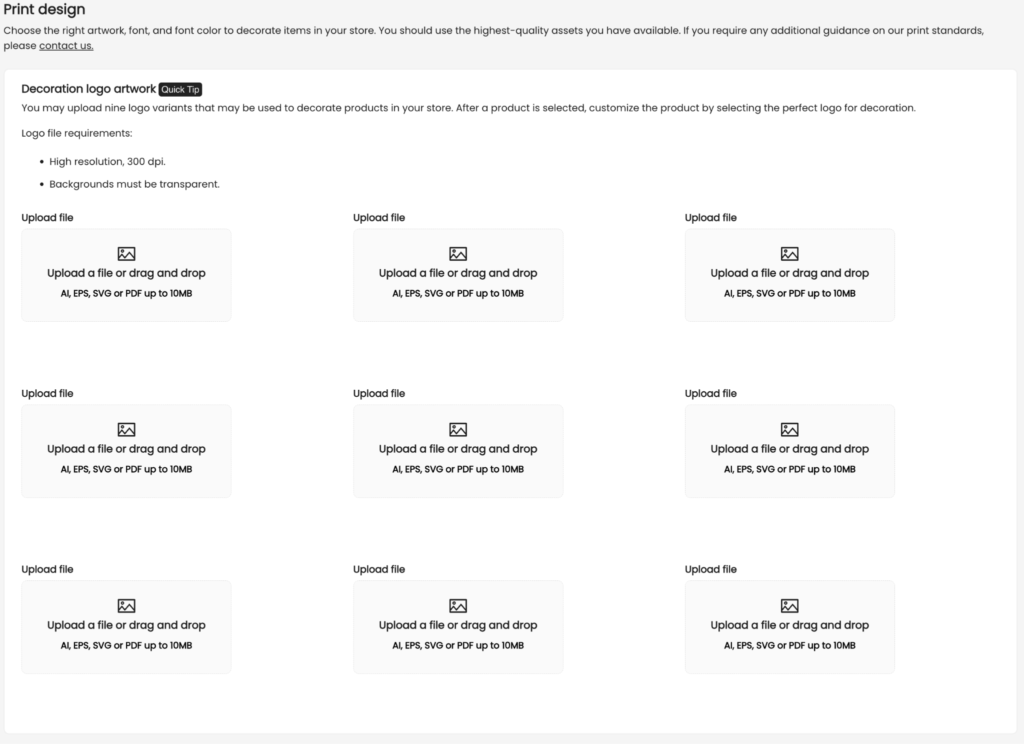
- Multi-logo support for organizations managing multiple brand variations
- In-country fulfillment for US and Canada
- Real-time redemption reporting and admin controls
- Opinionated guidance on catalog, invitation timing, and program structure, based on what we have seen work and fail across hundreds of programs
If you are building a company swag store for the first time, or rebuilding one that did not perform the way you expected, we can walk through the program design decisions in a 20-minute call.