


A US-based team launches what should be a simple, positive initiative: a company-wide swag or gift program for employees across the United States and Canada. But, messages start coming in from Canada. Employees are being asked to pay:
- Duties
- GST/HST
- Brokerage or handling fees at the door
For something they were told was a company gift. The internal reaction is predictable: Canadian employees are frustrated and confused: “Why am I paying for this?”, “Is this really a gift if I have to cover the fees?”
In a distributed US–Canada workforce with hundreds or thousands of employees, this is not a small issue. It damages:
- The employee experience
- Trust in leadership’s promises
- Confidence in future company-wide rollouts
The underlying problem is structural: the cross-border operating model was never designed to protect Canadian employees from duties and fees in the first place.
The frustration is not anecdotal — employee survey data confirms the program model itself is the problem.
According to SwagDrop’s 2026 Employee Swag & Choice Gap Study — a Pollfish survey of 1,000 Canadian employees at companies with 250 or more employees, fielded May 2026 — nearly 3 in 4 employees (73.7%) said the last piece of branded merchandise they received from their employer did not match what they would have chosen for themselves. Only 26.3% said it was exactly what they would have picked. The study is the first large-scale Canadian dataset to measure the employee experience of corporate branded merchandise programs from the recipient’s perspective.
Why US-Canada Border Shipment Issues Crop up
From a project plan perspective, a single swag delivery program looks efficient: one warehouse, one vendor, one process.
From a customs perspective, it’s entirely different.
- Each parcel leaving the US and entering Canada is treated as an international shipment.
- Each Canadian recipient is effectively treated as the importer of record.
- Carriers are required to collect:
- Duties (depending on the product and value)
- GST/HST
- Brokerage or handling fees for processing the customs entry
The key insight: The traditional “one warehouse serves everyone” approach breaks the moment shipments start crossing the US–Canada border. This is not a one-off error; it is a misaligned operating model.
Triage: 5 Things To Do in the First 48 Hours
Once you discover that Canadian employees have been asked to pay duties and fees for company swag, the first 48 hours are about containing damage, restoring trust, and stopping the problem from getting worse.
1. Pause all cross-border shipments immediately
- Stop any new parcels from leaving the US for Canadian addresses.
- Put an immediate hold on upcoming waves or batches.
This prevents more employees from having the same negative experience while you address the underlying issue.
2. Reimburse employees who paid out of pocket
- Confirm a simple, standard reimbursement process for:
- Duties
- Taxes
- Brokerage or handling fees
- Communicate that the company will fully cover these charges.
Even if reimbursement is manual at first, it’s important to show that the company:
- Acknowledges the mistake
- Is taking responsibility for the costs
3. Send a clear internal message acknowledging the issue
Craft a short, direct note to affected employees in Canada that:
- Acknowledges what happened
- Confirms that they should not be out of pocket for a company gift
- Explains that reimbursements will be processed
- Signals that the company is restructuring the process to prevent this going forward
A simple, clear message is better than silence or fragmented explanations passed through managers.
4. Identify shipments still in transit
Work with your vendors and carriers to:
- Determine which parcels are:
- In transit
- Held at customs
- Awaiting delivery
- Where possible, intercept or adjust how fees are handled, so employees are not asked to pay at the door.
This will not solve every case, but it reduces the number of new incidents while you correct the model.
5. Map the impact quickly
Create a simple view of:
- How many Canadian employees were affected
- Which offices or regions are involved
- Which items or campaigns were part of the problematic shipments
This helps you:
- Prioritize cleanup
- Communicate accurately with leadership
- Design a cleaner relaunch
And importantly: Do not try to “push through” the existing shipment plan and hope complaints die down. That usually creates a second wave of dissatisfaction as more employees encounter the same problem.
Structural Fix: Rebuild the Workflow Around In-Country Fulfillment
Once the immediate fire is controlled, the focus needs to shift from one-off fixes to structural change. The core principle: Canadian employees should receive Canadian shipments. US employees should receive US shipments. No one should be asked to pay duties or fees to receive company swag. That means:
- Canadian orders are:
- Produced in Canada
- Shipped from within Canada
- US orders are:
- Produced in the US
- Shipped from within the US
When you rebuild around this model:
- There are no cross-border parcels for employee deliveries.
- Employees are no longer treated as importers of record.
- Duties and brokerage fees are removed from the employee experience.
At the same time, you replace the bulk-first, warehouse-centric model with:
- A store-based ordering model, where eligible employees choose their items.
- On-demand production, instead of pre-buying large quantities.
- Direct-to-employee shipping, instead of routing everything through a central office.
This is the structural fix that prevents a repeat of the original problem.
How to Transition Without Losing Momentum: 6 Crucial Steps
You still have a program to deliver. The goal is to shift the operating model without abandoning the initiative or leaving employees in limbo.
Below is a practical sequence to follow.
Step 1: Set up a Canada-ready store workflow
Work with a partner to put an employee store in place that:
- Supports Canadian employees with:
- Local production
- Domestic shipping from within Canada
- Mirrors the structure of your US program, so the experience feels consistent.
The store becomes the central mechanism for future campaigns, not a one-off fix.
Step 2: Update the product catalog
Review your swag catalog with two filters in mind:
- Can these items be produced reliably in Canada?
- Can equivalent items be offered in both US and Canada without cross-border shipping?
Adjust the catalog to:
- Remove items that require cross-border movement for Canadian recipients.
- Prioritize products that can be supported by in-country production in both markets.
The goal is a catalog that feels unified to employees, while being operationally feasible in two separate fulfillment streams.
Step 3: Reset employee access
Instead of shipping pre-packed boxes from the US:
- Provide Canadian employees with access to the store.
- Allow them to select items (and sizes) within the guardrails of your program.
- Ensure that no payment is required from employees at checkout.
This:
- Removes the need for reimbursements going forward.
- Makes it clear that the company is covering the full cost of the gift.
Step 4: Relaunch with clear messaging
When you relaunch for Canadian employees, be explicit in your communication:
- “Orders will be produced and shipped within Canada.”
- “You will not be asked to pay duties or fees at delivery.”
This reassures employees that the program has been structurally corrected, not just patched.
Step 5: Move to predictable domestic shipping
Work with your partner to:
- Standardize shipping expectations within each country.
- Remove cross-border variability from your delivery timelines and costs.
This reduces:
- Budget surprises
- Delivery delays tied to customs
- Friction between teams trying to explain inconsistent arrival times
Step 6: Use the invite link as the recovery moment
The invite link to the store is your main tool for restoring goodwill:
- It gives employees control over what they receive and in which size.
- It shows that the company is investing in a cleaner, more respectful process.
- It shifts the emotional “gift moment” to the time of selection, not just the delivery.
“Only 1 in 6 Canadian employees at large organizations is comfortable with the current model — where HR picks the item and employees receive it. The rest want either a choice or nothing.”
— SwagDrop Employee Swag & Choice Gap Study, Canada, n=1,000, May 2026
Handled well, the relaunch can feel like a decisive upgrade, not just an apology.
What Any Cross-Border Swag Vendor Should Be Able to Do
As you evaluate partners to help you manage US–Canada programs, it’s useful to define clear, neutral criteria. Regardless of the brand name, any vendor you work with should be able to:
1. Run in-country fulfillment
- US orders produced and shipped within the US.
- Canadian orders produced and shipped within Canada.
This is the non-negotiable foundation for avoiding duties and employee-paid fees.
2. Support store-based, on-demand workflows
- Employee stores instead of one-off manual orders.
- Orders triggered when employees select items, not only through bulk purchase orders.
This reduces inventory risk and makes it easier to run multiple campaigns over time.
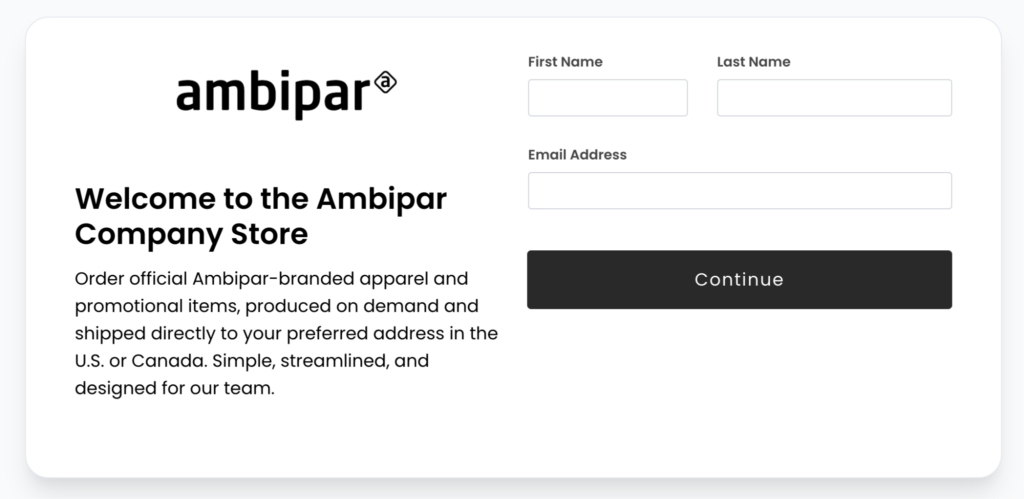
3. Handle address collection and redemption visibility
Your vendor should:
- Provide a way to collect shipping details directly from employees (without spreadsheets).
- Offer basic reporting on:
- Who has redeemed
- Who has not
- What was ordered
This gives HR and Marketing visibility without turning them into logistics coordinators.
4. Provide predictable shipping structures
You should be able to understand:
- How shipments are priced
- How domestic shipping is handled in both countries
- How the model avoids surprise duties and brokerage fees for employees
The objective is not exact pricing in marketing copy, but clarity that the structure is stable and predictable.
How SwagDrop Handles Cross Border Swag Programs
SwagDrop is designed for companies running distributed teams across the US and Canada who want a consistent swag experience without turning HR into a logistics department.
In this kind of failure scenario, Canadian employees being asked to pay duties for company swag, SwagDrop’s model addresses the root causes directly.
Two separate fulfillment workflows under one program
SwagDrop runs:
- A US fulfillment stream for US employees
- A Canadian fulfillment stream for Canadian employees
For Canadian recipients, that means:
- Items are produced in Canada
- Orders ship from within Canada
- Employees are not asked to pay duties, brokerage fees, or taxes at the door for company swag
The program still feels unified from an employee perspective, but the logistics are properly separated.
Store-based, on-demand model
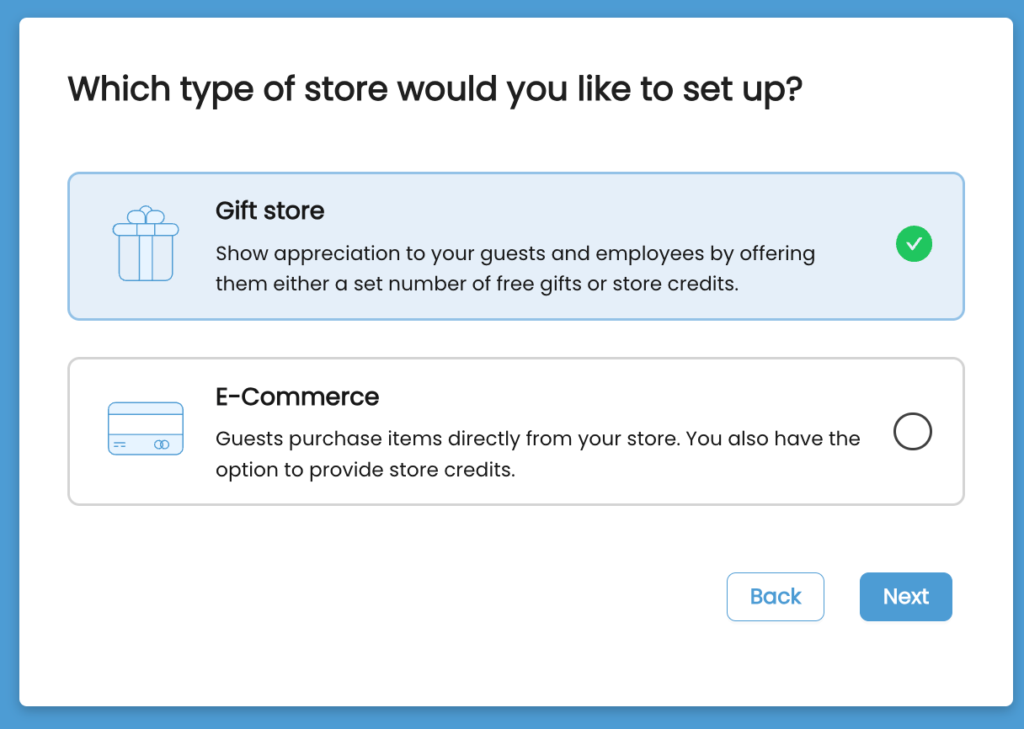
Instead of bulk shipments from a US warehouse, SwagDrop uses an employee store model:
- Eligible employees receive a link to the store.
- They select their items and sizes within the program’s guardrails.
- Orders flow directly into production and then to the employee’s address.
There is no need for:
- Guessing sizes
- Bulk shipping across the border
- Local offices repacking and reshipping swag
White-glove operations, not software configuration
The client defines:
- The audience (which employees are included)
- The budget
- The approved catalog
- The timing and purpose of the program
SwagDrop then:
- Designs the program within those guardrails
- Builds and configures the store
- Manages production in the US and Canada
- Handles fulfillment, tracking, and basic reporting
The client is not expected to configure or run a platform; SwagDrop operates the program.
Experience and pattern recognition
SwagDrop brings over 30 years in promotional products and corporate swag programs, which shows up as:
- Early identification of where duties and fees are likely to appear
- Guidance on catalog choices that work in both the US and Canada
- Clear recommendations on rollout sequences that reduce risk
Most teams that come to SwagDrop with this problem have already tried shipping everything from a single US warehouse into Canada, and have felt the consequences in duties, delays, and manual admin. The SwagDrop model is built specifically to avoid repeating that cycle.
“He always comes to the table with great ideas, quality products and a willingness to meet constraints and deadlines.”
— Mary Desjardina-Therrien, Executive Director, TD Friends of the Environment Foundation, TD Bank (8 years, 8 months, Greater Toronto Area) — LinkedIn recommendation for Mark Jackson, President, SwagDrop, October 19, 2010
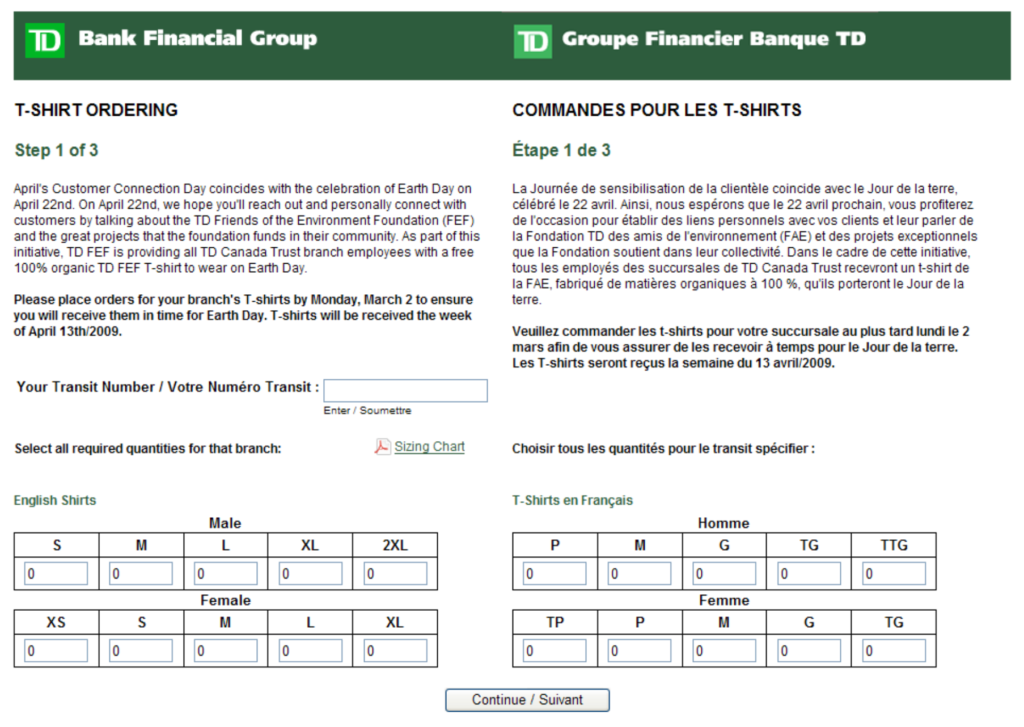
One of SwagDrop’s earliest on-demand programs — built in 2009 for TD Bank — addressed exactly this challenge. A bilingual online company swag store, built and launched in under one week, allowed 1,102 branches across Canada to order size-specific items for 22,000 employees. Every Canadian order was fulfilled within Canada. Not one employee received a customs duty bill at the door.
Recovery and prevention
In a duties-at-the-door scenario, SwagDrop’s approach helps:
- Restore trust quickly using a store link as the new “gift moment”
- Shift all future Canadian orders into in-country fulfillment
- Prevent repeat incidents of employees paying fees for company gifts
The focus is on rebuilding the operating model so the problem does not occur again.
On a Closing Note
When Canadian employees are asked to pay duties and fees for company swag, it is not a minor hiccup. It is a clear signal that the current cross-border model is misaligned with how customs and logistics actually work. Reimbursing employees is necessary, but it is not the solution. The real solution is structural:
- Separate US and Canadian fulfillment streams.
- Use in-country production and shipping for both.
- Move from bulk shipments to a store-based, on-demand model.
- Give employees a consistent, friction-free experience, regardless of which side of the border they’re on.
If you treat incidents like this as evidence that the operating model needs to change, not just as a one-time mistake, you can protect employee experience and make future US–Canada swag programs far more predictable and sustainable.