


At some point, almost every HR or operations team ends up here. The conference room gets commandeered for an afternoon. Someone orders lunch to soften the ask. Boxes of branded items cover the table, tissue paper ends up on the floor, and a group of people who have actual jobs spend three hours stuffing, taping, and labeling gift packages by hand.
It happens at small companies. It happens at companies with thousands of employees. And it almost always happens because a swag order arrived, bulk, pre-bought, and undistributed, and now someone has to deal with it.
The boardroom packing party is one of the clearest signs that a swag program has been designed around inventory rather than around the people receiving it.
How You End Up Here
The sequence is familiar. Leadership approves a gifting initiative, a welcome kit program, a company anniversary send, a holiday gift. Someone selects items, places a bulk order, and waits for delivery. The items arrive at the office. And then the question nobody planned for surfaces: how do we actually get these to people?
For a distributed workforce, that question has no easy answer when the starting point is a room full of boxes. Addresses have to be collected, often manually. Employees in remote locations need individual packages. Someone has to cross-check lists, apply labels, manage exceptions for people who’ve moved or haven’t responded, and coordinate with whatever shipping account the company uses.
All of that work falls on whoever is closest to the project, usually HR, sometimes an office manager, occasionally a coordinator who inherited the problem. It pulls people off their actual responsibilities for hours or days depending on the size of the program.
The SwagDrop 2026 Employee Swag & Choice Gap Study found that 44.2% of employees received no branded merchandise or welcome kit when starting their current job. That’s not entirely a budget problem. A significant part of it is an operational one, the process for delivering swag is complicated enough that programs stall or get deprioritized before they even run.
The Inventory Problem Underneath
The packing party isn’t really about packing. It’s a symptom of buying and storing inventory before knowing who wants what, what size they need, or where they live.
When swag is ordered in bulk and shipped to a central location, distribution becomes the company’s problem. Someone has to touch every single package. That’s true whether it’s 50 kits or 500. The labor doesn’t scale away, it scales up.
There’s also the size problem. Apparel ordered in bulk requires someone to guess the size distribution across the employee population. Get it wrong, and the packing party is followed by a secondary problem: boxes of mediums that nobody claimed, and a handful of people who needed a 2XL and didn’t get one. The SwagDrop study found that only 30.5% of employees said the last item they received was exactly what they would have chosen. Sizing is a significant part of that miss.
And once the items are in the building, the clock is running on storage costs, space, and the quiet organizational weight of having a closet full of branded goods that need to go somewhere.
What the Alternative Looks Like
The core change is straightforward: instead of buying inventory and then figuring out distribution, the program runs through an employee store where items are produced only after someone claims them, in their size, shipped to their address.
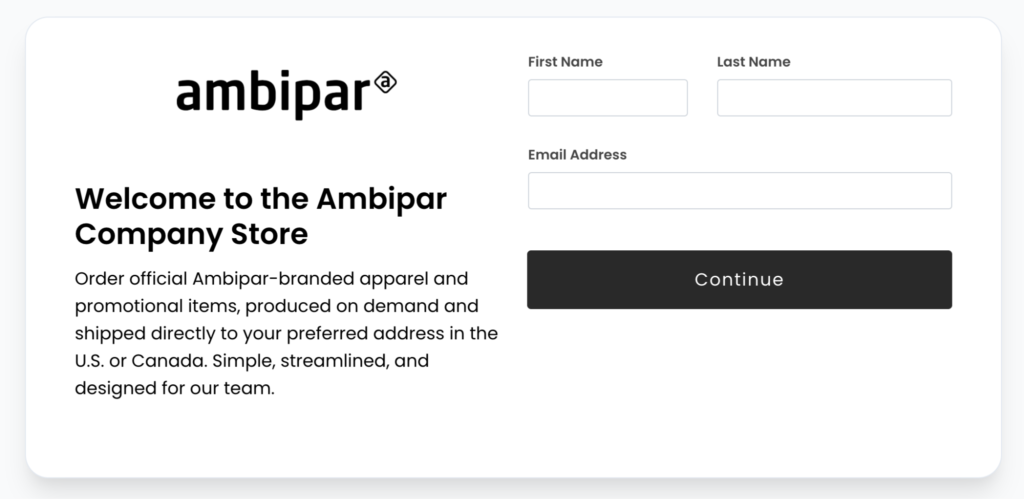
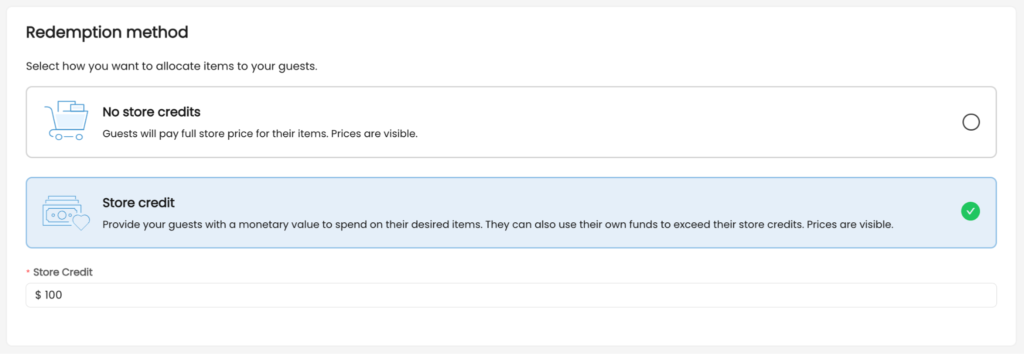
Employees receive a store link. They choose what they want, enter their own shipping information, and the order goes directly into production. Nothing sits in a conference room. No one collects addresses in a spreadsheet. No one tapes a single box.
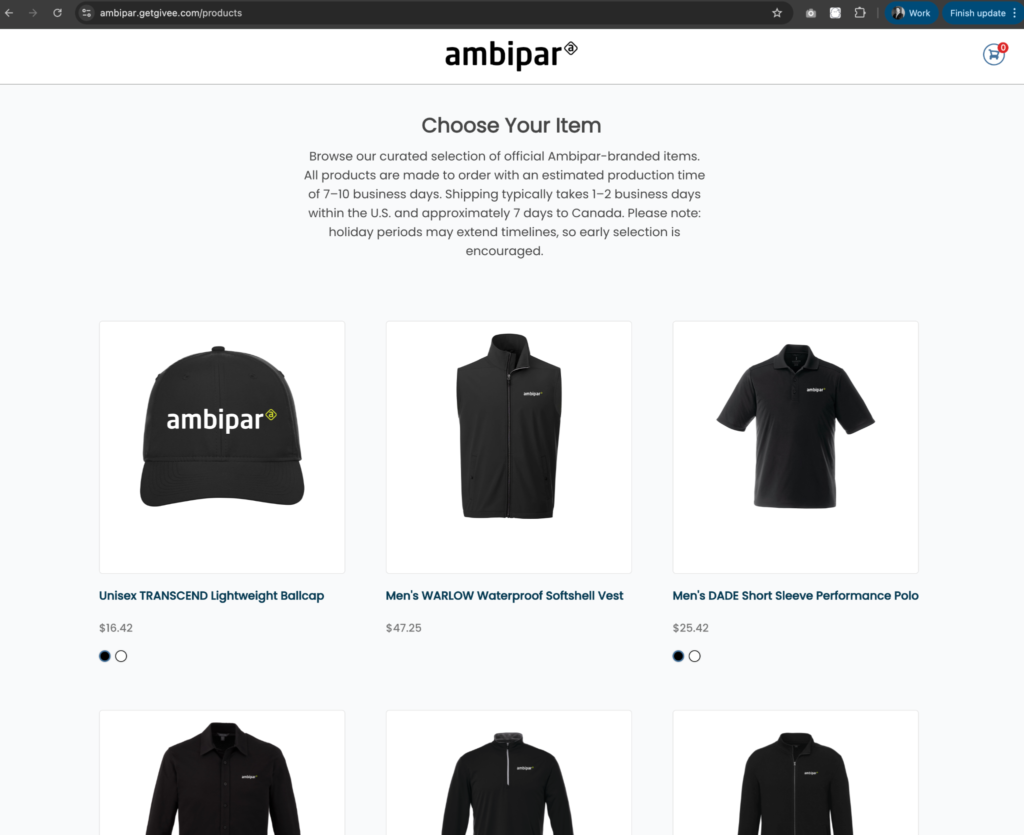
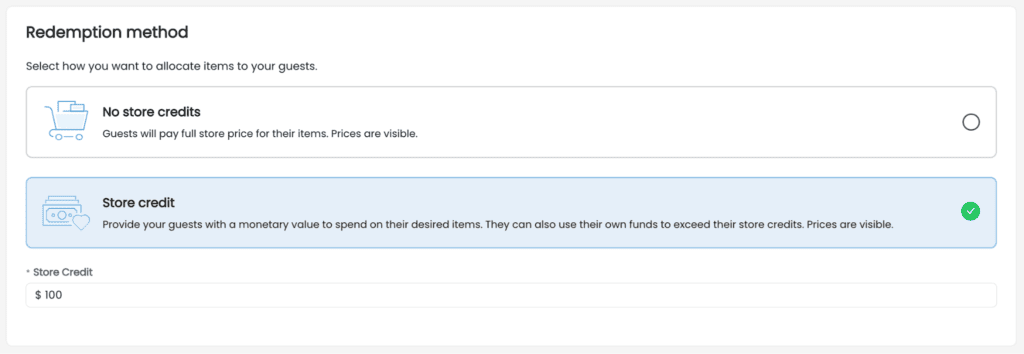
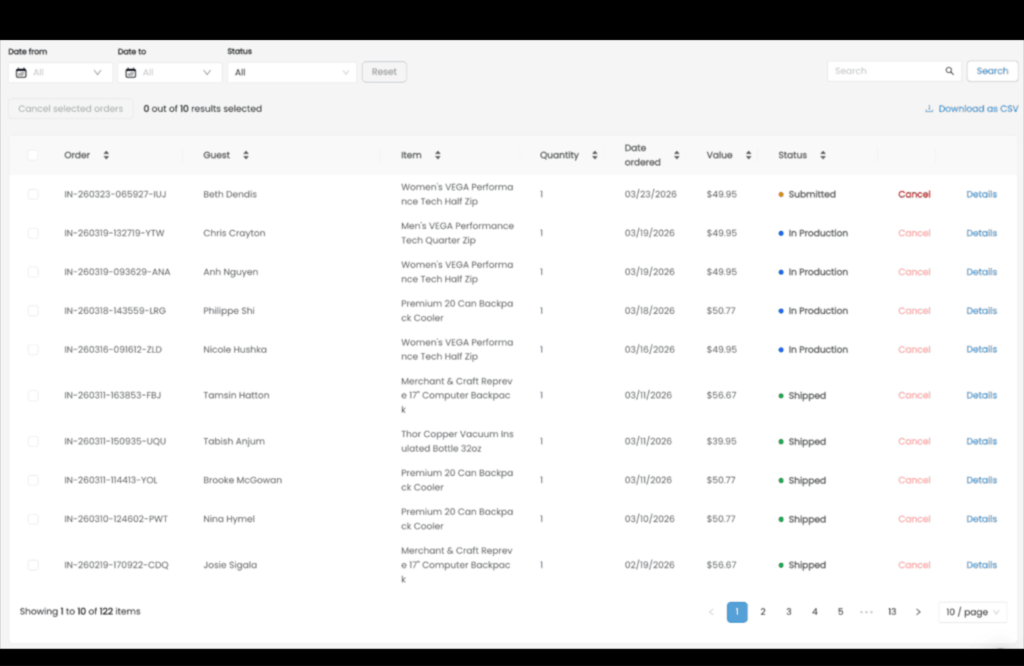
For HR and operations teams, this removes the fulfillment work entirely. The administrative load shifts from “manage a distribution process” to “send a link and track redemptions.” The SwagDrop study found that 77% of employees prefer to choose their own item from a curated selection, meaning the model that removes the packing party is also the one employees actually prefer.
There are programs where bulk ordering still makes sense, high-volume event needs, predictable scheduled sends where quantities and recipients are confirmed in advance. But for the kinds of programs where the boardroom packing party tends to happen, onboarding, company-wide gifting, recognition, the pre-buy inventory model creates operational work that the program budget never accounted for and the team never had capacity to absorb.
What to Expect from a Vendor
If a vendor’s default answer to “how do we get these to employees?” is “we ship to your office,” that’s the beginning of a packing party. Look for a vendor whose model doesn’t require your team to be the distribution layer.
Specifically:
- Direct-to-employee fulfillment, with employees entering their own shipping addresses at time of claim
- On-demand production, items made only after they’re selected, so there’s no inventory to store or manage
- A store setup that handles access, authentication, and order flow without requiring manual coordination on your end
- Cross-border fulfillment for US and Canada programs, so employees in both countries can participate without the company managing separate logistics
The goal is a program where the heaviest lift on your side is deciding what goes in the catalog.
How SwagDrop Runs It
SwagDrop’s on-demand employee store model is built specifically so the distribution work doesn’t land on your team. Employees get a store link, choose their items, enter their own addresses, and orders go straight into production. Nothing comes to your office. No one on your team touches a box.
We build and manage the store, handle production and fulfillment, and ship directly to employees across the US and Canada. For teams managing new hire onboarding, company-wide gifts, or ongoing recognition programs, the operational lift is minimal by design.
One of our earliest was for TD Bank: a bilingual online store built, tested, and launched in under one week, enabling 1,102 branches across Canada to order size-specific T-shirts for 22,000 branch employees. The result was a 25%+ reduction in order volume versus the original bulk estimate, with zero dead stock.
“He always comes to the table with great ideas, quality products and a willingness to meet constraints and deadlines.”
— Mary Desjardins-Therrin, Executive Director, TD Friends of the Environment Foundation, TD Bank (8 years, 8 months, Greater Toronto Area) — LinkedIn recommendation for Mark Jackson, President, SwagDrop, October 19, 2010
After more than 30 years in this space, we’ve seen the boardroom packing party more times than we can count, and we know exactly how programs end up there. The answer isn’t a better packing system. It’s a program that never needed one.