


When HR is planning a company-wide gift program, asking employees what they want feels like the right move. It shows respect. It suggests the program is actually employee-driven. And it feels responsible before committing a real budget to physical goods.
The problem is that survey answers about swag are not reliable — and acting on them is one of the most common reasons gift programs miss the mark.
The Survey Feels Like Research. It Isn’t.
When you ask 500 employees what they want as a company gift, they answer honestly in the moment. If jackets are top of mind, they say jackets. If a premium water bottle was recently floating around in conversation, that comes up. If the last company gift was a tote bag nobody used, they say anything but a tote bag.
But what people say they want and what they actually pick when given a real choice — and real budget — are often two different things.
The SwagDrop 2026 Employee Swag & Choice Gap Study, conducted across 2,500 full-time employees in the US and Canada, found that only 30.5% of employees said the last piece of branded merchandise they received was exactly what they would have chosen. That means nearly 7 in 10 employees received something that missed — even at companies that clearly put thought into the decision.
A survey adds a layer of confidence without actually solving the problem. It still ends with one person — or a small committee — picking a single item for hundreds of people with different lives, different wardrobes, and different ideas of what’s useful.
Why the Survey Answer Isn’t the Whole Truth
There are three reasons employee swag surveys give you a misleading picture.
People answer for the group, not for themselves. When asked what they’d like as a company gift, most employees describe what sounds like a fair, reasonable choice for everyone — not what they’d personally pick if they were standing in front of a catalog. They think in terms of what seems appropriate, not what they’d actually want.
The answer reflects that moment, not the moment the item arrives. A survey in March captures what feels relevant in March. By the time the order is placed, produced, and shipped, months have passed. What seemed like a good idea in spring can land flat in summer. The SwagDrop study found that 22.4% of employees already owned something similar to the last item they received — which is largely a timing and relevance problem, not a quality problem.
Survey answers assume one item for everyone. Employees answering a survey are implicitly imagining a single pick for the whole company. But when given an actual store with a curated selection, the range of choices fans out in ways no survey would have predicted. The jacket that “won” the survey becomes one of many items people want — and a meaningful share of employees would have chosen something else entirely.
What Actually Happens When Employees Choose
When employees are given access to a curated swag store — with real credits and real options — what they select is the only honest signal a program has.
That data shows you which items get claimed immediately and which sit. It shows where employees allocate credits when given a range of price points. It shows which categories consistently outperform what anyone expected, and which items get viewed but never claimed.
None of that is available before the program runs. A survey produces answers to a hypothetical question. A store produces actual choices. Those are not the same thing, and the gap between them is often where swag budgets quietly disappear.
The SwagDrop study found that 52.5% of employees rarely use, donated, or discarded the last item they received. More than half. In any other spend category, a 52% waste rate would trigger an immediate operational review. In swag, it persists largely because the feedback loop, survey in, bulk-inventory order out, never surfaces the data that would expose the problem.
The Real Cost of Pre-Buying the Wrong Thing
When a company buys bulk inventory based on survey data, a wrong call isn’t a small problem — it’s the full cost of that inventory. Five hundred jackets ordered because employees said they wanted jackets, and a meaningful share of them would have chosen something else. Those items sit in storage, get distributed regardless of whether anyone wants them, or eventually get written off.
That’s the specific risk of locking into inventory before you know what employees will actually claim. It isn’t that buying in volume is inherently wrong — it’s that committing to physical stock before you have real preference data is a bet that rarely pays off the way the survey suggested it would.
The SwagDrop study found that 34.2% of employees believe their HR teams have low or no understanding of what employees want in swag. That finding isn’t a criticism of HR effort. It reflects what happens when the tools available — a survey, a catalog, a bulk order — don’t give HR a reliable way to find out.
With an on-demand model, getting the initial catalog wrong costs nothing. If a category underperforms in the first round, it gets swapped out. The program adjusts based on what employees are actually choosing, not what they said they might want months earlier.
The Shift: From Guessing to Listening
The question worth retiring is: “What do our employees want?”
The better question is: “What does our program need to look like so employees can show us — through their actual choices — what they want?”
That shift is the core difference between a pre-buy inventory model and an on-demand employee store. It doesn’t require guessing. It doesn’t require a survey. It requires giving employees a curated selection, a defined budget, and the ability to choose.
When 77% of employees say they prefer to select their own item from a curated range (SwagDrop 2026 Employee Swag & Choice Gap Study), that preference isn’t asking for a better survey. It’s asking for an actual choice.
What to Look for in a Vendor
For a program to generate real preference data rather than survey estimates, the fulfillment model has to support it. Look for a vendor that can:
- Set up a curated employee store with individual credit allocation and no pre-buy requirement
- Produce items only after they’re claimed — no inventory commitment on your end
- Provide claim reporting that shows what’s performing and what isn’t, item by item
- Allow catalog updates between program cycles so you can act on what the data shows
- Ship directly to employees wherever they are, so participation isn’t limited by geography
The goal is a program that gets smarter over time rather than one that resets with a new survey every year.
How SwagDrop Handles This
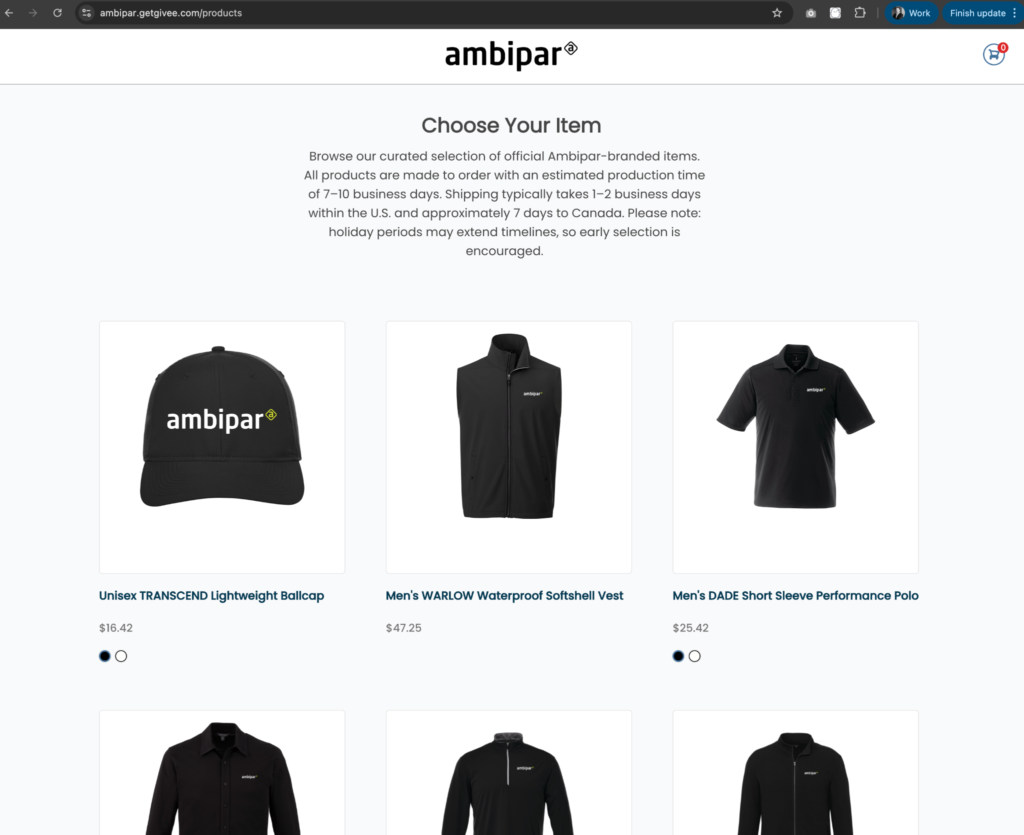
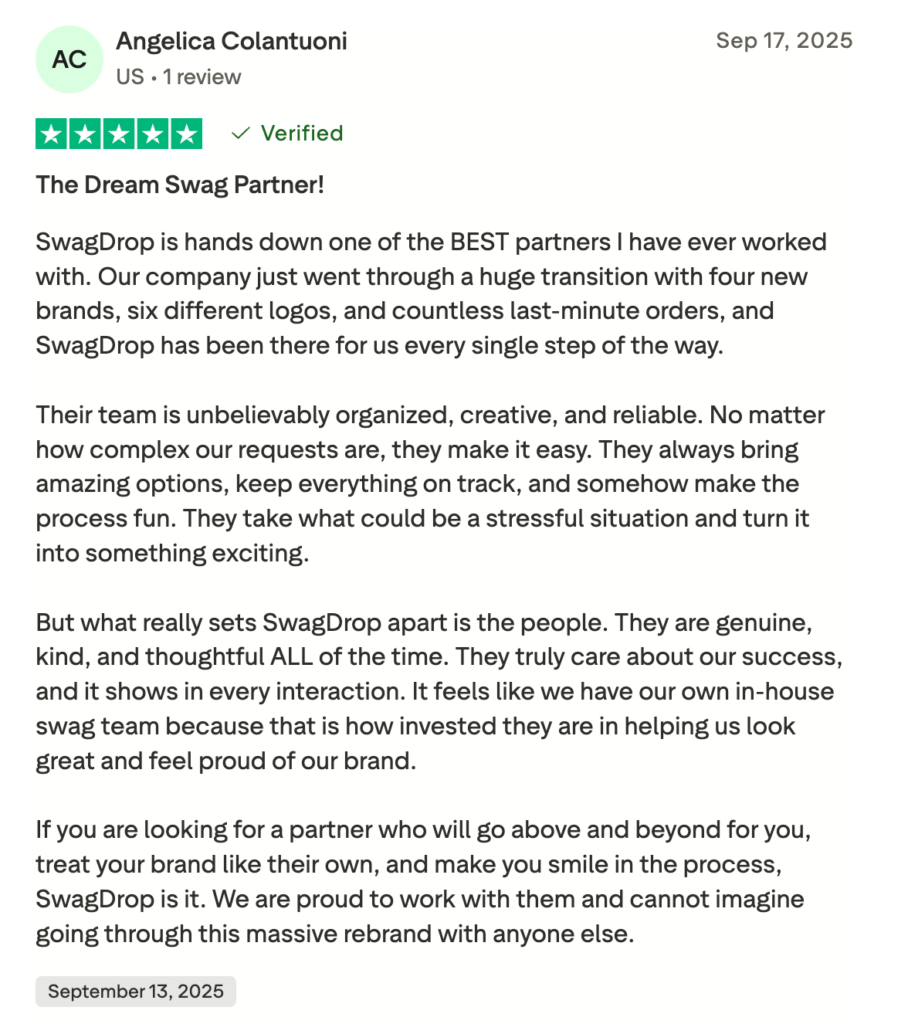
SwagDrop runs on-demand employee store programs for organizations across the US and Canada — onboarding, recognition, company-wide gifting, and everything in between. The model is built around the idea that what employees choose is the data. No survey required, no pre-buy, no guesswork.
After more than 30 years running these programs, the pattern is consistent: what survey data predicts will be popular is rarely what employees actually claim first. Categories surprise. Price points surprise. The only reliable signal is what people do when given real options.
SwagDrop manages the store setup, product curation, production, fulfillment, and reporting. You define the audience, the budget, and which products are in the catalog. We run it from there — and we’ll tell you what the data shows once it does.
One of our earliest was for TD Bank in 2008: a bilingual online store built, tested, and launched in under one week, enabling 1,102 branches across Canada to order size-specific T-shirts for 22,000 branch employees. The result was a 25%+ reduction in order volume versus the original bulk estimate, with zero dead stock.
“He always comes to the table with great ideas, quality products and a willingness to meet constraints and deadlines.”
Mary Desjardins-Therrin, Executive Director, TD Friends of the Environment Foundation, TD Bank (8 years, 8 months, Greater Toronto Area) — LinkedIn recommendation for Mark Jackson, President, SwagDrop, October 19, 2010
If your current program still starts with a survey, it’s working harder than it needs to and learning less than it should.