

Every employer brand strategy eventually runs into the same contradiction: the company invests significantly in communicating that employees are seen as individuals, then ships everyone the same fleece vest.
The gap between that messaging and that action is not invisible. Employees notice it. Candidates notice it. And in an environment where employer brand is a measurable competitive asset, shaping recruiting costs, offer acceptance rates, and retention, the signals sent by a generic gifting program carry real consequences.
This is not an argument against company swag. It is an argument for treating gifting as a brand decision, not a procurement transaction.
What a Gift Actually Communicates
A company gift is not just an item. It is a signal about how leadership perceives the people receiving it.
A well-considered gift communicates: we thought about you specifically.
A generic, one-size gift communicates something else, that the decision was made at the category level (“employees”) rather than the individual level. That the goal was completion, not connection. Employees are good at reading the difference.
According to SwagDrop’s 2026 Employee Swag & Choice Gap Study, a Pollfish survey of 1,000 Canadian employees at companies with 250 or more employees, nearly three in four employees (73.7%) said the last piece of branded merchandise they received from their employer did not match what they would have chosen for themselves. The most common failure mode was not poor quality. It was mismatch: 33.4% liked the item but would not have chosen it, and 25.2% already owned something similar.
These are not edge cases. They describe the majority experience of company gifting programs today.
What makes the finding particularly significant for employer brand is the opt-out data. When employees were given the explicit option to receive nothing rather than a generic branded item, 5.3% chose that option. This is the first time the question has been asked in any branded merchandise survey in the Canadian market. The finding suggests that for a meaningful segment of employees, a generic gift is not neutral, it is actively worse than no gift.
“Nearly three-quarters of employees at large Canadian organizations say their last piece of company swag missed the mark, not because it was poor quality, but because someone else made the choice for them.”
— SwagDrop Employee Swag & Choice Gap Study, Canada, n=1,000, May 2026
Where the Employer Brand Damage Actually Happens
The reputation cost of generic gifting does not announce itself. It accumulates in four places.
1. The Employee Experience Gap
Employer brand is built on the gap, or the absence of one, between what a company promises and what employees experience. When a company’s careers page leads with language about individuality, flexibility, and being seen, and the gifting program delivers the same item to every person regardless of role, preference, or location, that gap widens.
The employee does not file a formal complaint. They update their internal model of whether the company’s values are genuine or performative. That updated model affects how they talk about the company to their network, how they respond to recruiter outreach, and how they weigh their next career decision.
2. Social and Review Platform Exposure
Employee gifting programs surface publicly in ways that were not possible a decade ago. A tone-deaf gift, the wrong size, an item that feels low-effort relative to the occasion, branded merchandise sent to mark a layoff period, circulates on LinkedIn, Glassdoor, and increasingly short-form video platforms.
The reputational exposure is asymmetric. A well-received gift rarely generates public commentary. A poorly received one can. The risk of a swag program going visibly wrong is not hypothetical, it is a documented pattern that employer brand teams are increasingly asked to manage retroactively.
3. Recruiting Signal Quality
Candidates research the employee experience before accepting offers. Glassdoor reviews, LinkedIn comments, and peer referrals all carry information about what it is actually like to work somewhere. Gifting is a small but legible part of that signal, it is observable, concrete, and easy to interpret.
A company that gives employees meaningful choice in their swag signals operational sophistication and genuine regard. A company that ships everyone the same item signals neither. In competitive talent markets, where candidates are evaluating multiple offers, these signals can shift decisions at the margin.
4. The Retention Signal at Tenure Milestones
Work anniversary and tenure recognition programs are the gifting moments with the highest employer brand stakes. An employee who has been with a company for five years is not evaluating the item. They are evaluating whether the company recognizes them as an individual after that investment of time.
A generic item at a tenure milestone communicates, however unintentionally, that the recognition was templated. That it was the same thing everyone receives. That the five-year relationship did not generate any specific knowledge about the person being recognized. This is the highest-cost version of the one-size failure, because the stakes of the moment amplify the signal.
Why the One-Size Default Persists
Understanding the employer brand cost requires understanding why companies default to generic gifting in the first place. It is not indifference. It is operational constraint.
Choosing a single item for a large workforce is genuinely easier to procure, manage, and distribute than a personalized program. It requires one vendor conversation, one PO, one shipment. The operational simplicity is real, and for teams without a dedicated gifting infrastructure, it is often the only viable option.
The problem is that the employer brand cost is invisible at the moment of the decision. The procurement simplicity is immediate. The reputational consequence is diffuse, delayed, and rarely attributed to the gifting decision specifically. This is why it persists, not because HR or marketing teams do not care about employer brand, but because the feedback loop between gifting quality and brand perception is slow and indirect.
The Employee Choice Model as Brand Infrastructure
The operational alternative to one-size gifting is not custom gifting at the individual level, that would be prohibitively complex at enterprise scale. It is employee-choice gifting: a curated catalog of high-quality items, made available to employees via a store link, where each person selects the item they actually want.
This model changes the brand signal without requiring individual curation. The employee is not receiving the same item as everyone else. They are receiving the item they chose, in their size, delivered to their address. The act of choice is itself a signal, one that communicates: we considered what you might want.
The operational mechanics support this at scale. A store-based program can serve a workforce of several hundred to several thousand employees, with each person receiving a genuinely individual experience, without the administrative overhead of individual procurement decisions. The company defines the catalog, the budget per employee, and the program timeline. Employees do the rest.
What Good Looks Like: The BBB Program
When the Better Business Bureau rebranded across more than 100 offices in North America in 2026, the gifting program needed to do more than distribute new merchandise. It needed to signal a fresh identity to staff across a geographically dispersed organization, in two countries, without creating the logistical problems that typically accompany a rollout at that scale.
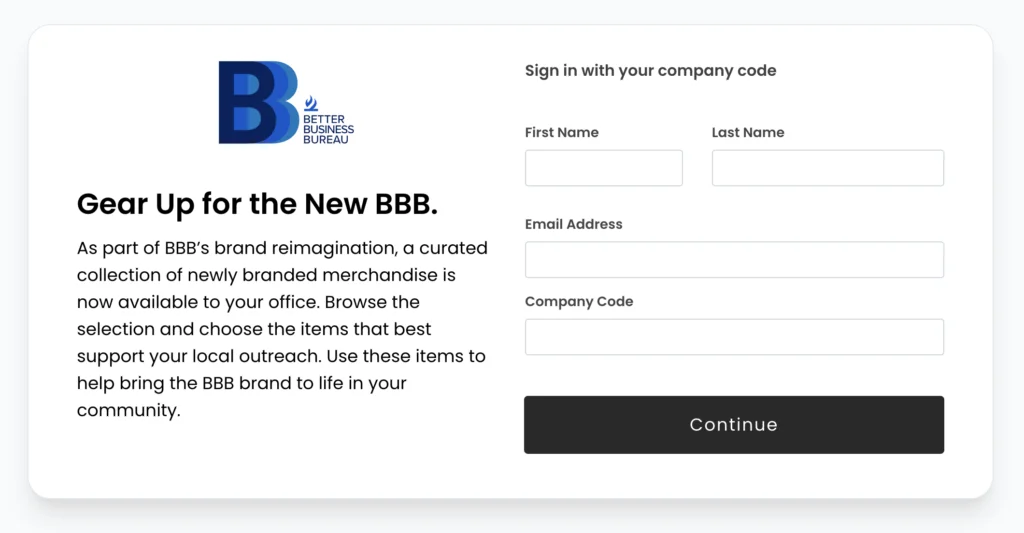
SwagDrop managed the on-demand program. Employees received an invite link to a store stocked with newly branded items. They chose what they wanted. Canadian orders fulfilled domestically, no duty exposure, no customs delays. US orders fulfilled from US facilities.
The program delivered a consistent brand experience, the new BBB identity represented in every item, while giving each employee the autonomy to receive something they would actually use. No obsolete inventory. No size mismatches. No uniform distribution that flattened individual experience into a single decision made by a procurement team.
That is what employer brand-conscious gifting looks like operationally.
A Quick Comparison
| Dimension | One-size gifting | Employee-choice gifting |
| Brand signal | “We thought about this category of people” | “We thought about you specifically” |
| Employee perception risk | High, mismatch affects majority | Low, employee chose the item |
| Tenure milestone quality | Generic, templated | Individual, deliberate |
| Social/review exposure | Higher, visible misses circulate | Lower, well-received gifts rarely go public |
| Operational complexity | Low upfront, high in exceptions | Managed by vendor, low HR overhead |
| Recruiting signal | Neutral to negative | Positive, signals operational sophistication |
How SwagDrop Approaches Enterprise Swag Programs
SwagDrop has been running branded merchandise programs for over 30 years. The shift from one-size to employee-choice is the single operational change we see make the biggest difference in how gifting programs land, not just logistically, but in terms of how employees talk about them.
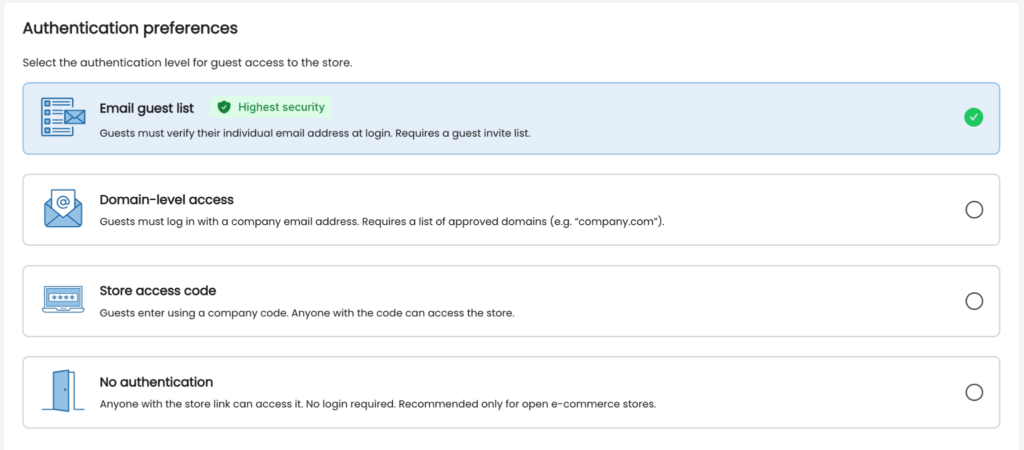
The mechanics are straightforward: employees receive an invitation to a curated store, choose their item and size, and provide their shipping address. The program ships directly to each employee. SwagDrop handles production, fulfillment, and reporting. HR and employer brand teams define the catalog, the budget, and the occasion. The vendor handles everything from there.
For employer brand teams specifically, the reporting layer matters. Redemption data, who claimed, what they chose, where the program landed, gives EB leads something they rarely have from gifting programs: evidence. Evidence that the program reached people, that the items resonated, and that the budget was spent on things employees actually wanted.
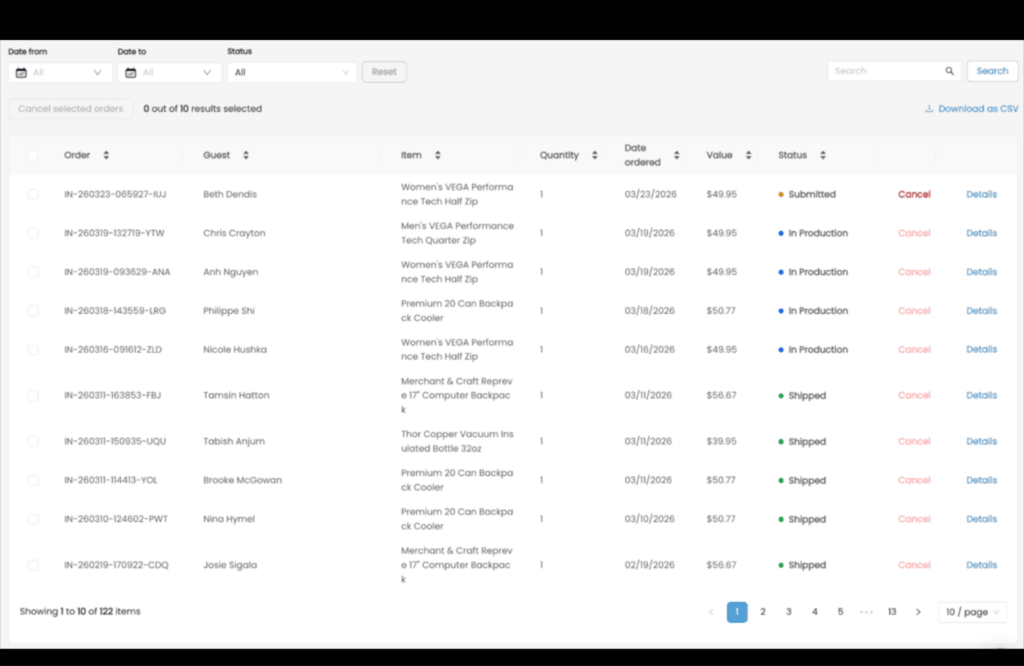
That evidence changes the internal conversation about what gifting is worth.
If you are evaluating whether your current gifting program is working for or against your employer brand, we can walk through what a choice-based model would look like for your organization in a 20-minute call.